
Scotland welcomes dogs to attractions that would refuse them elsewhere. Historic castles, ancient battlefields, steam railways, boat trips and botanical gardens all open their gates to well-behaved dogs. The country's cultural attitude, shaped by working dog tradition and outdoor living, extends genuine welcome rather than grudging tolerance.
The range of dog-friendly attractions surpasses any comparable destination. Where English stately homes typically restrict dogs to car parks, Scottish castles welcome them into grounds and gardens. Where boat trips elsewhere exclude dogs, Scottish operators invite them aboard. The difference transforms family holidays, allowing dogs to participate in experiences rather than waiting in vehicles.
Understanding what is possible changes holiday planning. Rather than seeking dog sitters or kennels, dog owners can include their dogs in cultural exploration. Castles become proper days out. Steam trains create shared memories. Boat trips include the whole family. Scotland makes this possible in ways other destinations do not.
Charlie, Buster, Ember, Simba, Max and Molly have explored Scottish attractions from ruined abbeys to working distilleries. We have discovered what works, what restrictions apply, and which attractions genuinely welcome dogs rather than merely tolerating them. This comprehensive guide shares the best dog-friendly attractions across Scotland.
Dog-Friendly Castles
Scotland contains over 2,000 castles and ruins, more than any other country per square mile. Many welcome dogs into grounds, gardens and even ruined buildings. The combination of dramatic settings and genuine access creates exceptional days out.
Understanding castle policies helps planning. Ruined castles typically welcome dogs throughout, as there are no interiors to protect. Intact castles usually welcome dogs in grounds and gardens but restrict interior access. National Trust for Scotland and Historic Environment Scotland properties generally follow clear dog policies posted on their websites.
Highland Castles
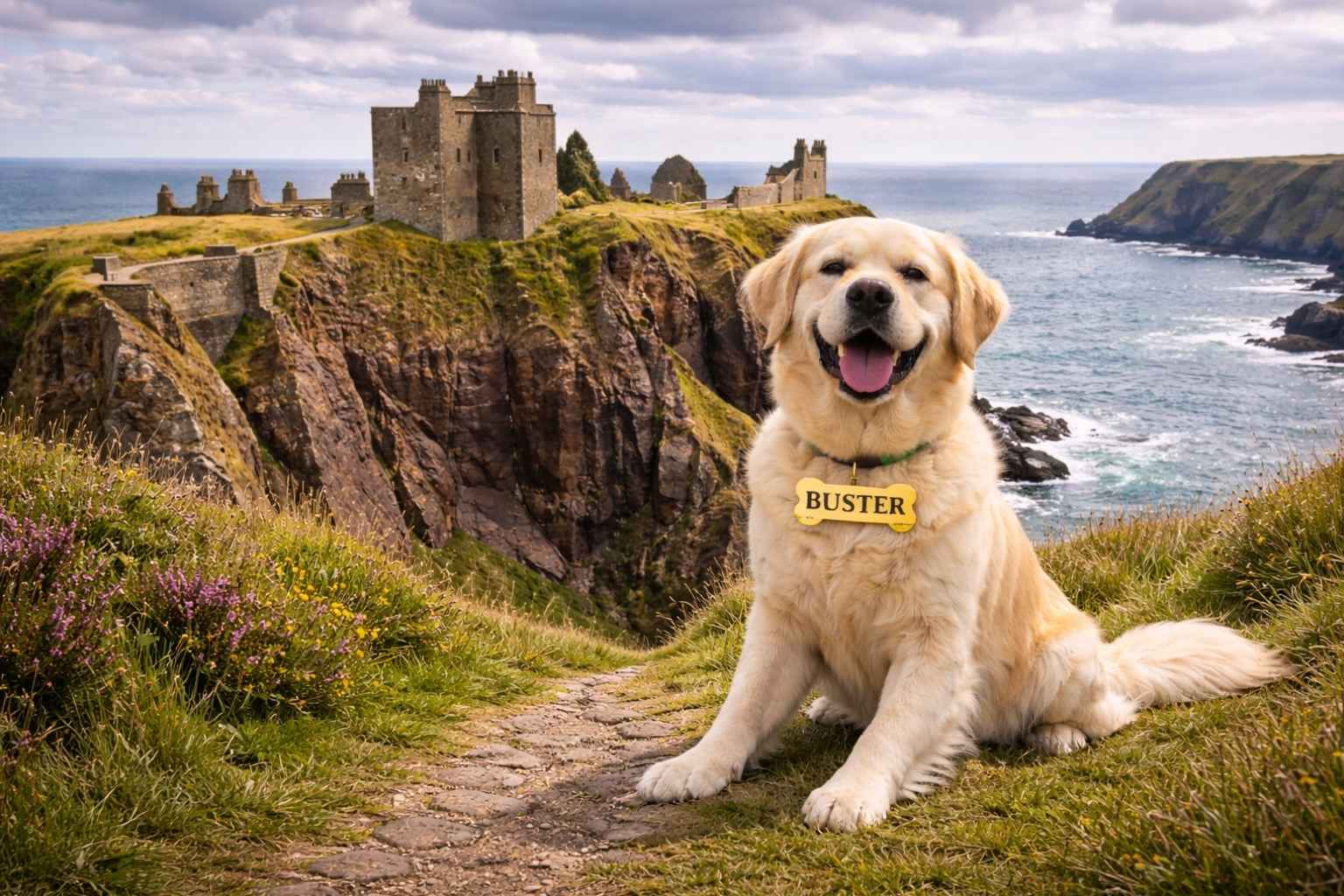
Dunnottar Castle (Aberdeenshire)
One of Scotland's most dramatic castles, Dunnottar perches on a rocky headland jutting into the North Sea. Dogs on leads are welcome throughout the ruined castle and grounds. The clifftop setting, reached via winding paths, provides spectacular photography opportunities. Views extend across the North Sea from walls that once protected Scotland's crown jewels.
The walk from nearby Stonehaven along the Aberdeenshire Coastal Trail (approximately 1.5 miles) provides excellent approach, combining coastal walking with castle exploration. The castle withstood siege by Cromwell's army, and the Honours of Scotland (Scottish crown jewels) were smuggled out during the siege. This history adds depth to the dramatic setting.
Urquhart Castle (Loch Ness)
The iconic ruins overlooking Loch Ness welcome dogs in the grounds but not the visitor centre or indoor areas. The setting, with dramatic loch views and famous monster-hunting opportunities, justifies the visit despite limitations. Dogs can explore the castle ruins where they date from the open air. The tower provides Nessie-watching platform.
Eilean Donan Castle (Kyle of Lochalsh)
Scotland's most photographed castle sits on a small tidal island where three lochs meet. Dogs can cross the bridge with an exterior ticket (reduced price, currently around £3.50) and explore the base of the castle and lochside rocks. They cannot enter the castle interior. The setting makes this worthwhile even with restrictions. The approach provides excellent photography regardless of interior access.
Cawdor Castle (near Inverness)
Immortalised in Shakespeare's Macbeth, Cawdor Castle welcomes dogs in the extensive gardens and grounds. The castle itself remains off-limits, but the gardens provide substantial exploration. Three different garden areas (the Flower Garden, the Walled Garden and the Wild Garden), woodland walks and the Big Wood nature trail offer variety. The drawbridge and tower give authentic castle atmosphere from the exterior.
Brodie Castle (Moray)
National Trust for Scotland property welcoming dogs in grounds and gardens. Woodland walks surround the castle. The extensive estate provides proper walking beyond mere garden strolling. The daffodil collection in spring is particularly notable.
Kilchurn Castle (Argyll)
Dramatically sited at the head of Loch Awe, Kilchurn Castle welcomes dogs throughout the ruins. The setting, with mountains rising behind and the loch stretching before, ranks among Scotland's finest. Access involves a short walk from the car park, adding to the experience.
Central Scotland
Stirling Castle
Scotland's grandest castle does not permit dogs beyond the esplanade, but the views from this approach area reward the journey. The castle's commanding position over the Forth Valley provides dramatic vistas. Combine with walks on the Wallace Monument grounds nearby, where dogs are welcome in the exterior areas.
Blackness Castle (West Lothian)
The "ship that never sailed" welcomes dogs throughout. This dramatic fortress, famous for appearances in Outlander (as Fort William and Wentworth Prison), sits on the Firth of Forth. Dogs on leads can explore the entire site. The setting and atmosphere make this excellent for photography. The ship-like shape of the castle becomes apparent from certain angles.
Craigmillar Castle (Edinburgh)
One of Scotland's best-preserved medieval castles, Craigmillar welcomes dogs throughout the ruins. Located just outside Edinburgh, this provides dramatic castle experience without the crowds of Edinburgh Castle (which does not permit dogs). Mary Queen of Scots connections add historical interest. The castle's murder room, where nobles plotted against Lord Darnley, provides historical drama.
Tantallon Castle (East Lothian)
Dramatic clifftop ruins facing the Bass Rock gannet colony. Dogs on leads welcome throughout. The setting, with North Sea views and volcanic island backdrop, rivals anywhere in Scotland. Strong winds add atmosphere. The massive curtain wall, one of the most formidable in Scotland, impresses from any angle.
Castle Campbell (Dollar)
Set in a dramatic gorge in the Ochil Hills, Castle Campbell welcomes dogs. The approach walk through Dollar Glen, known as "Dollar Burn Walk", provides excellent exercise before castle exploration. The setting combines natural beauty with historical interest. The castle was known as "Castle Gloom" in a glen called "Gloom" beside burns called "Care" and "Sorrow" before the Earl of Argyll changed its name.
Linlithgow Palace (West Lothian)
Birthplace of Mary Queen of Scots, this magnificent ruined palace welcomes dogs in the grounds and ruins. The scale impresses. The great hall and courtyard provide atmospheric exploration. Combine with walks around Linlithgow Loch.
Doune Castle (Stirlingshire)
Famous from Monty Python and the Holy Grail and more recently Outlander, Doune Castle welcomes dogs in the courtyard and grounds. The great hall's impressive roof survives. Audio guides include commentary by Terry Jones. Dogs cannot access the spiral staircases to upper levels.
Southern Scotland
Caerlaverock Castle (Dumfries and Galloway)
Unique triangular castle surrounded by moat. Dogs on leads welcome throughout. The geometric design and defensive features fascinate. Combine with walks in the adjacent nature reserve (noting bird sanctuary restrictions during nesting season).
Threave Castle (Dumfries and Galloway)
Reached by ferry across the River Dee, Threave welcomes dogs. The island setting and ferry crossing add adventure. The castle ruins provide exploration. Dogs travel on the ferry.
Island Castles
Dunvegan Castle (Isle of Skye)
The oldest continuously inhabited castle in Scotland, seat of Clan MacLeod for over 800 years. Dogs welcome in the award-winning five-acre gardens but not inside the castle. The gardens, woodland trails and lochside walks provide substantial exploration. Seals often visible from the shore. Garden museum and conservatory also accessible with dogs.
Armadale Castle (Isle of Skye)
Now romantic ruins covered in ivy, Armadale Castle welcomes dogs throughout the extensive gardens and grounds. The setting on the Sound of Sleat combines sea views with woodland walks. The rewilded gardens have their own character.
Brodick Castle (Isle of Arran)
National Trust for Scotland property welcoming dogs in the extensive grounds and country park. The woodland garden and trails provide excellent walking. The castle itself remains off-limits, but grounds justify the visit.
Aberdeenshire Castles
Aberdeenshire contains more castles than any other Scottish region. Many welcome dogs.
Crathes Castle
Fairytale tower house with extensive grounds welcoming dogs. The wildlife includes pine martens, red squirrels and roe deer. Dogs must remain on leads to avoid disturbing wildlife.
Craigievar Castle
Pink-harled tower house resembling something from Disney. Dogs welcome in grounds. The castle's distinctive appearance provides excellent photography.
Balmoral Castle
The Royal Family's Scottish residence welcomes dogs in grounds and gardens when open to the public (typically April to July when royals are not in residence). The 45 acres of formal gardens and wider estate provide substantial exploration. The Cairn Trail offers woodland walking with castle views. Outdoor seating at restaurant accommodates dogs.
Historic Battlefields and Sites
Scotland's turbulent history left battlefields and ancient sites that now welcome visitors and their dogs.
Culloden Battlefield (near Inverness)
The site of the last major battle on British soil (1746) welcomes dogs on the moor. The battlefield itself remains atmospheric and moving. Dogs can explore where 1,500 Jacobites fell. The visitor centre does not permit dogs, so parties with dogs should take turns viewing the exhibition. The surrounding fields allow off-lead exercise.
Combine with nearby Clava Cairns (free entry, dogs welcome) where 4,000-year-old burial cairns and standing stones create prehistoric atmosphere.
Fort George (near Inverness)
One of Europe's finest 18th-century military fortifications welcomes dogs in outdoor areas. Built after Culloden to prevent future Jacobite risings, the fort remains active military facility while welcoming visitors. Dogs must be on leads and cannot enter roofed areas. The ramparts provide dolphin-watching opportunities across the Moray Firth.
Bannockburn (Stirling)
The site of Robert the Bruce's famous victory welcomes dogs in the grounds. The battlefield landscape has changed considerably, but the visitor experience contextualises the history. Dogs cannot enter the indoor exhibition.
Abbeys and Religious Sites
Scotland's ruined abbeys provide atmospheric exploration for dogs and owners.
Melrose Abbey (Scottish Borders)
One of Scotland's finest ruined abbeys, where the heart of Robert the Bruce lies buried. Dogs on leads welcome throughout the ruins. The Gothic architecture and carved stonework reward close examination.
Dryburgh Abbey (Scottish Borders)
Set in a bend of the River Tweed, Dryburgh welcomes dogs throughout. Sir Walter Scott lies buried here. The peaceful setting and riverside location add atmosphere.
Jedburgh Abbey (Scottish Borders)
Impressive ruins in the historic Border town. Dogs on leads welcome in the abbey grounds. The visitor centre does not permit dogs.
Sweetheart Abbey (Dumfries and Galloway)
Named for the heart of its founder's husband, enshrined within. Dogs welcome throughout the romantic ruins. The nearby Abbey Tearoom also welcomes dogs.
Inchcolm Abbey (Firth of Forth)
Reached by boat trip from South Queensferry, Inchcolm Island welcomes dogs. The medieval abbey, often called the "Iona of the East", provides historical interest. Dogs should remain on leads and outside roofed areas. The Maid of the Forth boat trip welcomes dogs.
St Giles' Cathedral (Edinburgh)
Unusually for a working cathedral, St Giles' on the Royal Mile welcomes well-behaved dogs. The High Kirk of Edinburgh provides unexpected dog-friendly cultural experience in the city centre.
Steam Railways
Scotland's heritage railways welcome dogs, creating memorable experiences beyond ordinary attractions.
The Jacobite Steam Train (Fort William to Mallaig)
The "Harry Potter train" crosses the famous Glenfinnan Viaduct on its 84-mile round trip. Dogs travel for a small fee and are welcome in standard class carriages. The journey passes Britain's highest mountain (Ben Nevis), deepest freshwater loch (Loch Morar), and offers views of the Small Isles.
The stop at Glenfinnan allows leg-stretching. The fishing port of Mallaig provides lunch stop before the return journey. Book well in advance as this sells out quickly.
Strathspey Railway (Aviemore to Broomhill)
Heritage railway through the Cairngorms National Park. Dogs welcome on trains (not first class or dining areas) free of charge. The route passes through spectacular Highland scenery. Broomhill station featured in Monarch of the Glen.
Bo'ness and Kinneil Railway (West Lothian)
Scotland's largest railway museum welcomes dogs in outdoor areas. Heritage trains run to Birkhill. The Museum of Scottish Railways provides historical context. Dogs travel on trains.
Royal Deeside Railway (near Banchory)
Runs alongside the River Dee through beautiful Aberdeenshire countryside. Dogs welcome. The Milton of Crathes complex provides craft shops and refreshments. Combine with visit to nearby Crathes Castle.
Boat Trips and Cruises
Scottish boat operators welcome dogs more readily than their English counterparts, opening wildlife watching and loch cruising to dog owners. The combination of spectacular scenery and genuine dog welcome creates memorable experiences.
Loch Ness Cruises
Jacobite Cruises (Loch Ness)
Dogs welcome on the Inspiration and Reflection cruises from Inverness. Free of charge. The cruises explore Loch Ness and the Caledonian Canal, with commentary on the loch's famous monster and the engineering achievement of the canal. Note: Dogs cannot visit Urquhart Castle so the Freedom and Temptation cruises that include castle admission are not suitable for dog owners.
The company warns to keep an eye on your dog "in case Nessie is feeling peckish", which captures their welcoming attitude.
Cruise Loch Ness
Alternative Loch Ness operator welcoming dogs. Various cruise options from different departure points. Loch exploration without monster guarantees. The company provides water bowls and treats.
Loch Lomond and the Trossachs
Sir Walter Scott Steamship (Loch Katrine)
Historic steamship cruising Loch Katrine in the Trossachs. Dogs welcome for small fee (approximately £1). The scenery includes mountains, forests and pristine loch waters. One of Scotland's most scenic cruises. The steamship dates from 1900 and provides genuine heritage experience. The loch supplies Glasgow's drinking water, so remains exceptionally clean.
Cruise Loch Lomond
Loch Lomond cruises welcoming dogs. Various routes exploring the islands and shores. The loch's proximity to Glasgow makes this accessible day trip. The islands include Inchcailloch (part of Loch Lomond and The Trossachs National Park) with walking trails.
Sweeney's Cruises (Loch Lomond)
Alternative Loch Lomond operator welcoming dogs. Family-run business with various cruise options including the historic island of Inchmurrin.
Edinburgh and the Forth
Maid of the Forth (Firth of Forth)
Daytime trips from South Queensferry welcome dogs. Cruises to Inchcolm Island provide abbey visit opportunity. The views of the three Forth bridges, including the UNESCO-listed Forth Bridge, add interest. Note: Evening cruises do not permit dogs (assistance dogs excepted). Dogs should remain on leads on Inchcolm Island, particularly during bird nesting season.
Highland and Island Cruises
Bella Jane (Isle of Skye)
Boat trips from Elgol to Loch Coruisk beneath the Cuillin mountains. Dogs welcome. The scenery is extraordinary, with the dramatic Cuillin ridge rising directly from the loch. Combine with the walk to Camasunary. The journey includes seal watching opportunities.
Turus Mara (Mull)
Trips to Staffa and the Treshnish Isles welcoming well-behaved dogs. Puffin watching opportunities on the Treshnish Isles (May to August). Fingal's Cave on Staffa provides geological drama. Wildlife boat trips in spectacular settings.
Dolphin Spirit (Inverness)
Wildlife watching trips from Inverness welcoming dogs. Moray Firth bottlenose dolphins, one of the most northerly resident populations, regularly spotted. Combine with Fort George visit for full day.
Cruise Loch Linnhe (Oban)
Cruises from Oban welcoming dogs. The Argyll coast and islands provide scenic backdrop. Wildlife spotting opportunities include seals and sea birds.
CalMac Ferries
While not strictly cruises, Caledonian MacBrayne ferries to Scotland's islands welcome dogs throughout (except food service areas). Dogs travel free on most crossings. The ferry journeys to Skye, Mull, Arran and the Outer Hebrides become attractions themselves, with wildlife watching and spectacular scenery.
Gardens and Parks
Scotland's gardens increasingly welcome dogs, providing horticultural interest combined with walking.
Royal Botanic Garden Edinburgh
Scotland's premier botanical garden welcomes dogs in most areas. The 70 acres provide woodland, rock gardens, glasshouses (exterior viewing) and extensive lawns. Free entry to grounds (glasshouse admission separate). Excellent city walking.
Benmore Botanic Garden (Argyll)
Spectacular garden with one of Britain's finest redwood avenues. Dogs on leads welcome. The rhododendrons and magnolias particularly impressive in spring.
Crarae Garden (Argyll)
Woodland garden on the shores of Loch Fyne. Dogs on leads welcome. The gorge setting and burn create dramatic landscape.
Arduaine Garden (Argyll)
Coastal garden with rhododendrons, magnolias and sea views. Dogs on leads welcome. The mild climate allows plants unusual for Scotland.
Castle Kennedy Gardens (Dumfries and Galloway)
75 acres of landscaped gardens between two lochs. Dogs on leads welcome. Woodland and lochside walking beyond formal gardens.
Drummond Castle Gardens (Perthshire)
Featured in Outlander as the gardens of Versailles. Dogs welcome in the spectacular formal gardens. One of Scotland's finest parterre gardens.
Branklyn Garden (Perth)
National Trust for Scotland property welcoming dogs. Compact but exceptional plant collection. Tearoom available.
Inveresk Lodge Garden (East Lothian)
National Trust for Scotland property near Edinburgh. Dogs on leads welcome. Peaceful walled garden.
Museums and Unusual Attractions
Some indoor attractions welcome dogs, providing options for poor weather or cultural variety.
Camera Obscura and World of Illusions (Edinburgh)
Unexpectedly dog-friendly, this five-floor attraction near Edinburgh Castle welcomes dogs throughout. Optical illusions may confuse dogs as much as humans. Treats provided on arrival. One of Edinburgh's most dog-friendly indoor attractions.
Inveraray Jail (Argyll)
One of the world's best-preserved 19th-century jail and courtroom complexes. Dogs welcome free of charge. The Torture, Death and Damnation exhibition adds drama. Unusual but genuinely interesting.
Scottish Seabird Centre (North Berwick)
Marine conservation centre welcoming dogs on leads in all public areas (indoor and outdoor). The live camera feeds show seabird colonies on the Bass Rock. Wildlife boat trips also welcome dogs.
The Kelpies (Falkirk)
The famous 30-metre horse-head sculptures at Helix Park welcome dogs throughout the outdoor areas. The park provides walking around the sculptures and canal. Free entry to grounds.
Greyfriars Bobby (Edinburgh)
Visit the statue of Edinburgh's most famous dog, the Skye terrier who guarded his master's grave for 14 years. The statue on George IV Bridge provides photo opportunity. The nearby Greyfriars Kirkyard welcomes dogs, with Bobby's own grave just inside the gate. Visitors often leave sticks as tribute.
Distilleries
Whisky tourism increasingly accommodates dogs, though most cannot join production tours for health and safety reasons.
Lindores Abbey Distillery (Fife)
One of Scotland's few distilleries offering dog-friendly tours. Dogs can join you through the distillery and into the tasting room. The 12th-century abbey setting adds historical interest. Whisky and chocolate tastings available.
Bruichladdich Distillery (Islay)
Dogs welcome in the visitor centre shop but not on tours or warehouse tastings. The shop stocks all three Islay single malts plus The Botanist gin.
Ardbeg Distillery (Islay)
Dogs welcome in the shop on short leads. Tours and tastings exclude dogs. The cafe has outdoor seating.
Glen Moray Distillery (Speyside)
Dogs welcome in outdoor seating area. Tours exclude dogs but drivers and dog-minders can enjoy the cafe.
The Cairn Distillery (Cairngorms)
Dogs welcome in the grounds and on the nature trail to the River Spey. They must remain on leads to protect wildlife. Tours exclude dogs.
Crafty Distillery (Dumfries and Galloway)
Gin distillery with spectacular views from the Tree Bar. Dogs welcome in bar areas. Look out for the distillery dog, Finn.
What Dogs Cannot Access
Understanding restrictions prevents disappointment and helps planning.
Edinburgh Castle: Dogs not permitted beyond the entrance gate. Views from outside excellent. Combine with dog-friendly alternatives like Craigmillar Castle.
Edinburgh Zoo: Dogs not permitted.
National Museum of Scotland: Dogs not permitted (except assistance dogs).
Most distillery production tours: Health and safety regulations typically exclude dogs from production areas.
Castle interiors: Most castle interiors exclude dogs. Gardens and grounds provide the dog-friendly experience.
Some visitor centres: Where attractions include visitor centres, these often exclude dogs while grounds remain accessible.
Planning Dog-Friendly Days Out
Timing
- Arrive early at popular attractions to avoid crowds
- Allow time for gardens and grounds, not just buildings
- Consider that dogs may tire before humans finish exploring
- Check seasonal opening times (many attractions close or restrict winter access)
- Summer months (June to August) bring longest days but busiest conditions
- September and October often provide ideal balance of weather and accessibility
Practical Considerations
- Carry water for dogs (especially on warm days)
- Bring leads suitable for heritage settings (short leads often required)
- Check in advance for specific restrictions
- Consider whether multiple sites can be combined into single day trips
- Book in advance for steam railways and boat trips (popular services sell out)
- Allow extra time for castle approaches that involve walking
- Prepare for Scottish weather (waterproofs for dogs and humans)
Regional Planning
Scotland's size means realistic planning helps. Consider basing in areas with multiple attractions:
Inverness area: Culloden, Fort George, Clava Cairns, Cawdor Castle, Brodie Castle Aberdeenshire: Dunnottar, Crathes, Craigievar, Balmoral (seasonal) Edinburgh area: Craigmillar, Tantallon, Blackness, Linlithgow, plus Camera Obscura Argyll: Inveraray Jail, Kilchurn Castle, boat trips from Oban Skye: Dunvegan, Armadale, boat trips from Elgol
Dog-friendly cottages in each region provide bases for multiple attraction visits.
Combining Attractions with Walking
Many attractions sit near excellent walking opportunities:
- Dunnottar Castle combines with Aberdeenshire Coastal Trail
- Fort George combines with dolphin watching at Chanonry Point
- Culloden combines with Clava Cairns walk
- Brodick Castle combines with Goatfell (for fit dogs and owners)
- Castle Campbell combines with Dollar Glen walk
- Melrose Abbey combines with Eildon Hills walking
Combining Attractions with Beaches
Coastal attractions combine well with beach visits:
- Tantallon Castle sits near excellent East Lothian beaches
- Dunnottar Castle near Stonehaven beach
- Eilean Donan near Silver Sands beaches on the road to Skye
- Culzean Castle has beach access within grounds
Weather Contingency
Scottish weather requires flexibility. Dog-friendly indoor options include:
- Camera Obscura (Edinburgh)
- Inveraray Jail (Argyll)
- Scottish Seabird Centre (North Berwick)
- Distillery visitor centres (shops typically welcome dogs)
- Dog-friendly pubs
Book Your Stay
Ready to explore Scotland's attractions? Browse dog-friendly cottages near the best days out, or find accommodation across Scotland.
FAQs
Are dogs allowed in Scottish castles?
Many Scottish castles welcome dogs in grounds and gardens. Ruined castles like Dunnottar, Tantallon and Caerlaverock welcome dogs throughout. Intact castles typically allow dogs in gardens but not interiors. Always check individual castle policies, but expect more welcome than typical English castles provide.
Can I take my dog to Edinburgh Castle?
No, Edinburgh Castle does not permit dogs beyond the entrance gate (assistance dogs excepted). However, views from the entrance are excellent, and alternative castles like Craigmillar Castle welcome dogs throughout.
Are dogs allowed on the Jacobite Steam Train?
Yes, dogs travel on the Jacobite Steam Train for a small fee. They are welcome in standard class carriages. Book in advance as this popular attraction sells out quickly.
Can dogs visit Culloden Battlefield?
Yes, dogs on leads are welcome on Culloden Battlefield itself. They cannot enter the visitor centre. The battlefield, where 1,500 Jacobites fell in 1746, provides moving and atmospheric walking. Surrounding fields allow off-lead exercise.
Are dogs allowed on Loch Ness boat trips?
Yes, several operators welcome dogs on Loch Ness cruises. Jacobite Cruises and Cruise Loch Ness both accommodate dogs. Note that dogs cannot visit Urquhart Castle, so cruises including castle admission are not suitable.
Which Scottish distilleries allow dogs?
Most distilleries welcome dogs in shops and outdoor areas but not on production tours. Lindores Abbey Distillery offers dog-friendly tours. Bruichladdich, Ardbeg and Glen Moray welcome dogs in visitor centre areas.
Can I take my dog to Scottish gardens?
Many Scottish gardens welcome dogs on leads. The Royal Botanic Garden Edinburgh, Benmore Botanic Garden, Castle Kennedy Gardens and numerous National Trust for Scotland properties all welcome dogs. Check individual gardens for specific restrictions on certain areas.
Are dogs allowed at Scottish abbeys?
Yes, most Scottish abbey ruins welcome dogs on leads. Melrose, Dryburgh, Jedburgh and Sweetheart Abbeys all permit dogs. Some visitor centres within abbey complexes may restrict access.
Final Thoughts
Scotland opens its heritage to dogs in ways that transform family holidays. The ability to include dogs in castle visits, boat trips, steam train journeys and garden exploration creates shared experiences impossible elsewhere. Rather than leaving dogs behind, families can explore together.
The welcome is genuine rather than grudging. Staff engage with dogs. Facilities accommodate their needs. The assumption is that dogs belong rather than intrude. This reflects Scottish culture, where working dogs have always accompanied people into buildings and onto boats.
Charlie, Buster, Ember, Simba, Max and Molly have shaped our understanding of Scottish attractions. They have explored castle ruins, sailed lochs, ridden steam trains and wandered historic gardens. Each experience was enriched by their presence. Each memory includes them.
The attractions we have shared represent highlights rather than comprehensive coverage. Scotland contains hundreds of dog-friendly sites awaiting discovery. Historic houses, lighthouses, standing stones, nature reserves and museums increasingly welcome dogs. The trend is positive, with more attractions recognising that dog owners represent significant visitor numbers deserving accommodation.
Planning helps. Checking policies before visiting prevents disappointment. Combining attractions with walking maximises enjoyment. Allowing time for gardens and grounds, not just buildings, ensures dogs find the experience rewarding. But the fundamental message is simple: Scotland welcomes your dog to its heritage in ways other countries do not.
Find your base for Scottish exploration and discover attractions that welcome your whole family.
Happy exploring.
Charlie, Buster, Ember, Simba, Max, Molly and Luke
Attraction policies change. Always confirm dog access before visiting, particularly for specific areas within larger sites. The information provided reflects our research but cannot guarantee current arrangements. Assistance dogs are welcome at all Scottish attractions.


⚠️ Comments Currently Disabled
We've had to temporarily disable our comment section due to a high volume of spam. We apologise for any inconvenience this may cause to our lovely readers!
If you'd like to share your thoughts, experiences, or feedback, please send us an email directly at info@thedogholiday.co.uk and we'll be happy to add your comment manually.
Thank you for your understanding! 🐾
Leave a Comment