
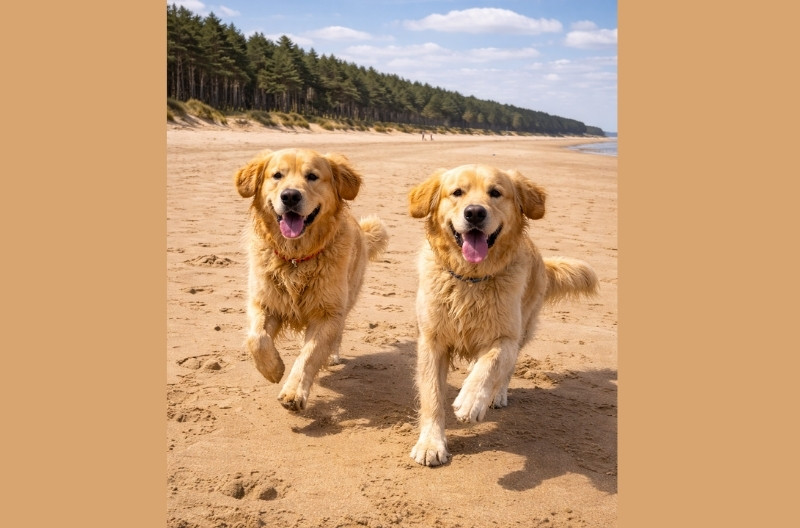
Norfolk boasts over 90 miles of coastline featuring some of England's finest dog-friendly beaches. From the vast golden expanses at Holkham and Wells to wildlife-rich shores where grey seals haul out in their thousands, this county delivers exceptional beach experiences for dogs and their owners throughout the year.
What makes Norfolk special is the sheer variety. You'll find wild, empty stretches where dogs can run for miles without seeing another soul, traditional seaside resorts with all the amenities, and unique wildlife spectacles found nowhere else in Britain. Most beaches welcome dogs year-round, with only a handful imposing summer restrictions on designated sections.
Year-Round Dog-Friendly Beaches
These beaches welcome dogs every day of the year without restrictions, making them reliable choices whatever the season.
Holkham Beach
Regularly voted Britain's most dog-friendly beach, Holkham delivers an almost overwhelming sense of space. This vast expanse of golden sand backed by pine woodland forms part of Holkham National Nature Reserve, creating a landscape that feels more like a remote wilderness than an English beach.
Park at Lady Anne's Drive (opposite Holkham Hall entrance) and walk through atmospheric pine woods along boardwalks until the trees open onto what seems like endless sand. At low tide, the beach stretches so far you can barely see the water. Dogs adore this place, with room to run flat-out without coming close to other visitors even on busy summer days.
From April to August, certain areas require dogs on leads to protect ground-nesting birds, but around 70% of the beach remains available for off-lead adventures. Roped cordons clearly mark sensitive zones, and responsible owners find plenty of space for dogs to enjoy freedom whilst wildlife thrives alongside. The dog-friendly Beach Café at the car park provides refreshments, and facilities include toilets at the main entrance.
Holkham has featured in films including Shakespeare in Love and Netflix's The Crown, so you might recognise the spectacular scenery. The combination of beach, dunes, and pine forest creates varied terrain dogs love exploring, and you can walk east towards Wells or west towards Burnham Overy for miles without running out of sand.
Brancaster Beach
Another magnificent North Norfolk beach, Brancaster offers miles of pristine sand popular with kite surfers as well as dog walkers. The beach sits within an Area of Outstanding Natural Beauty, and the vast skies and far-reaching views create an exhilarating environment for dogs who love to run.
A small seasonal restriction applies to the main beach approach area from May to September, but you can walk westward away from this zone to enjoy unrestricted access. The wreck of the SS Vina, visible at low tide, adds historical interest to beach walks, and the shallow waters suit dogs who enjoy paddling without venturing into deep water.
Park at the beach car park near the Royal West Norfolk Golf Club and access the beach directly. The Jolly Sailors pub in Brancaster Staithe welcomes dogs and serves excellent food after sandy adventures.
Thornham Beach
Thornham requires a walk to reach but rewards the effort with peaceful, unspoilt sands rarely crowded even in summer. From the village car park by the creek, follow the raised embankment for about a mile until you reach the beach. This approach walk offers lovely views across marshland teeming with birdlife.
No dog restrictions apply at Thornham, making it reliable year-round. The beach connects to Titchwell RSPB reserve, where dogs on leads can walk through the sanctuary before reaching the shore. Being more remote than accessible-by-car beaches, Thornham attracts fewer visitors, appealing to owners seeking quiet escapes.
Two excellent dog-friendly pubs in Thornham village provide refreshment options: the Lifeboat Inn and the Orange Tree, both warmly welcoming muddy paws.
Burnham Overy Staithe Beach
This hidden gem requires commitment to reach but delivers pristine, peaceful sands. Park at the pretty harbour with its bobbing boats and ice cream van (summer only), then walk approximately one mile along the coastal embankment to reach the beach.
The effort filters out casual visitors, leaving miles of unspoilt sand largely to serious walkers and their dogs. No restrictions apply, and you can continue along the coast path into Holkham's pine forest or eastward towards Wells. Bring everything you need as there are no facilities on the beach itself.
Horsey Beach
Famous for England's largest grey seal colony, Horsey offers unique wildlife experiences alongside dog-friendly beach access. From late October to February, thousands of grey seals haul out on the beach to give birth and nurse their pups, creating one of Britain's greatest wildlife spectacles.
During seal pupping season (November to January), the beach itself is closed, but viewing platforms on the dunes allow observation without disturbance. Dogs must stay on leads during this period and should not approach seals at any time. Outside pupping season, the beach reopens for walking, though seals remain present year-round and dogs should stay under close control.
The combination of wildlife watching and beach walking makes Horsey special, though it's not suitable for dogs who chase wildlife. Responsible owners with well-controlled dogs can enjoy extraordinary experiences here, watching seals swimming just offshore or basking on distant sandbanks.
Winterton-on-Sea Beach
Winterton's vast sandy beach backs onto the Winterton Dunes National Nature Reserve, one of Norfolk's finest dune systems. The beach stretches for miles, connecting northward to Horsey's seal colony and southward to Hemsby.
Dogs are welcome year-round, though leads are recommended during summer months and essential near seal areas. The Dunes Café welcomes dogs with water bowls and treats, providing a pleasant stop during beach walks. Late spring offers ideal conditions: long days, manageable temperatures, and fewer crowds than summer.
Like Horsey, Winterton now hosts breeding seals, so watch for them especially in winter and give all marine mammals a wide berth. Walking south towards Hemsby keeps you away from seal areas whilst providing miles of quality beach.
Waxham Beach
Less visited than neighbouring beaches, Waxham offers peaceful sandy shores without formal facilities or car park. This simplicity appeals to those seeking undisturbed walks away from crowds.
Dogs enjoy year-round access, though leads are advisable when walking towards Horsey's seal areas. The beach connects the main seal-watching zones, meaning seals may appear anywhere along this stretch. Bring water and supplies as the nearest amenities are in Winterton or Horsey villages.
Old Hunstanton Beach
Unique on the Norfolk coast, Old Hunstanton faces west, providing spectacular sunset views across The Wash. The distinctive striped cliffs create a dramatic backdrop, and the beach suits families and dogs equally well.
Year-round access makes this a reliable choice, and the clifftop car park provides convenient access. The Beach Café welcomes dogs, and the Le Strange Arms Hotel offers dog-friendly accommodation overlooking the beach. Shallow tidal waters make this popular with paddlers, including water-loving dogs.
Cart Gap Beach
Accessed via narrow farm lanes, Cart Gap maintains a wonderfully remote atmosphere despite relatively easy parking. The Smallsticks Café sits near the car park, offering outdoor seating where dogs can rest whilst owners refuel.
This eastern Norfolk beach sees fewer visitors than the famous North Norfolk coast, providing peaceful walks along sandy shores backed by farmland. Year-round dog access and the charming café make this an excellent destination for quieter beach days.
Happisburgh Beach
Pronounced "Haze-bruh" locally, Happisburgh offers sandy shores beneath dramatic eroding cliffs. The changing coastline creates an ever-evolving landscape, and the iconic striped lighthouse adds visual interest.
Dogs enjoy year-round access, and the beach extends southward to Cart Gap or northward towards Eccles and Sea Palling. The Hill House pub in the village welcomes dogs and provides refreshment after beach walks. Be aware that cliff erosion is ongoing, so follow safety signs regarding cliff edges.
Scratby Beach
This semi-shingle beach stretches for miles along Norfolk's eastern coast, connecting Great Yarmouth southward and Winterton northward. Year-round dog access and clifftop views make Scratby appealing for longer walks.
The beach suits anglers and surfers as well as dog walkers, and the relative lack of facilities maintains a peaceful atmosphere. Village amenities provide basic refreshments, and sunset views from the cliffs prove spectacular.
Beaches with Seasonal Restrictions
These beaches impose some restrictions during summer months (typically May to September) but still offer dog-friendly sections or year-round access to parts of their length.
Wells-next-the-Sea Beach
Wells won the Dog-Friendly Magazine award for most dog-friendly beach, testament to its genuine welcome despite some seasonal restrictions. The famous colourful beach huts create a picturesque backdrop, though dogs must avoid this section during summer.
Enter from the far end car park where the excellent dog-friendly Beach Café serves refreshments. At low tide, the beach expands enormously, and dogs can access vast areas away from restricted zones. Walking towards Holkham provides miles of unrestricted sand even in summer.
The combination of charming town, accessible beach, and connection to Holkham makes Wells a highlight of any Norfolk holiday. Boat trips to Blakeney Point seal colony depart from the harbour, and the narrow-gauge railway provides novelty transport.
Cromer Beach
Cromer's traditional seaside resort atmosphere includes pier, crab fishing, and excellent fish and chips. Dog restrictions apply on the main beach from May to September, but designated dog-friendly zones remain available year-round.
The restricted area covers the main beach near the pier and promenade, leaving sections at either end for dog walking during summer. Outside summer months, the entire beach welcomes dogs, and quieter conditions make winter visits particularly pleasant.
Cromer connects to the Norfolk Coast Path, and you can walk the cliffs westward to Sheringham or eastward towards Overstrand. The town's dog-friendly pubs and cafés provide excellent facilities.
Sheringham Beach
Another traditional resort, Sheringham restricts dogs on its main beach from May to September. Like Cromer, designated dog-friendly areas remain available during summer, and the entire beach opens to dogs outside these months.
The nearby Sheringham Park (National Trust) provides excellent walking for dogs excluded from the beach during summer, and the combination of parkland and town makes Sheringham viable whatever the season.
Sea Palling Beach
This Blue Flag beach imposes summer restrictions on the main section but allows dogs on beaches to the north and south year-round. The man-made reefs create sheltered bays with calmer waters than exposed stretches.
Walking north connects to Waxham and eventually Horsey, providing miles of unrestricted beach access. The reef-protected swimming areas suit nervous dogs who prefer gentler waves, and the village offers basic amenities.
Mundesley Beach
Award-winning Mundesley provides clean sandy beaches with very little shingle. Summer restrictions apply to the main beach area from May to September, but sections remain dog-friendly year-round.
The traditional seaside village offers cafés, shops, and accommodation within walking distance of the beach. Quieter than Cromer or Great Yarmouth, Mundesley suits families seeking traditional seaside holidays with dogs.
Great Yarmouth Beaches
Norfolk's largest seaside resort offers several beaches with varying dog policies. The main tourist beaches (North Beach and Central Beach) restrict dogs from May to September, but South Beach and areas towards Gorleston provide year-round access.
Great Yarmouth suits families seeking traditional seaside entertainment alongside beach time. Dogs can enjoy the promenade year-round, and the town's facilities exceed anywhere else on the Norfolk coast.
Hidden Gems
These lesser-known beaches reward those willing to venture beyond famous names.
Eccles-on-Sea Beach
Between Sea Palling and Happisburgh, Eccles offers peaceful sands accessible via the village. Year-round dog access and minimal visitor numbers create tranquil conditions for quality beach time.
The beach shows evidence of coastal erosion, with buildings occasionally claimed by the sea, adding dramatic atmosphere to walks. No facilities exist on the beach, so bring supplies.
Salthouse Beach
This shingle beach borders important nature reserves, and whilst dogs are welcome, consideration for wildlife is essential. The beach stretches towards Cley, where restrictions apply during nesting season.
Salthouse suits owners whose dogs remain under close control, offering coastal walks with excellent birdwatching opportunities. The Dun Cow pub in the village welcomes dogs.
Weybourne Beach
Between Sheringham and Cley, Weybourne's mixed sand and shingle beach provides year-round dog access. The beach slopes steeply into the sea, creating stronger currents than gently shelving Norfolk beaches, so supervise swimming dogs carefully.
The village offers minimal facilities, maintaining a peaceful atmosphere. Steam railway enthusiasts can combine beach visits with trips on the North Norfolk Railway.
Beaches for Seal Watching
Norfolk's seal colonies create unique opportunities for wildlife encounters, but responsible dog ownership proves essential.
Blakeney Point
England's largest seal colony includes both grey and common seals, visible year-round from boat trips departing Blakeney and Morston. The Point itself restricts access to protect wildlife, but seals can often be spotted from boats without landing.
Summer brings common seal pups (June to August), whilst grey seal pups arrive in winter (November to February). Boat trips welcome well-behaved dogs on leads, though operators may refuse dogs showing signs of excitement that might disturb seals.
Horsey and Winterton
The grey seal colony spreading from Horsey to Winterton offers land-based viewing opportunities unmatched elsewhere in England. Nearly 4,000 seal pups were born here in the 2022/2023 season, with numbers growing annually.
Dogs must stay on leads throughout this area, and walking on the beach during pupping season (November to January) is prohibited. Viewing platforms provide excellent observation points without disturbance. Outside pupping season, beach walking resumes with appropriate caution around any seals present.
Combine seal watching with Norfolk Broads walks by following the circular route via Horsey Windpump for varied terrain and wildlife throughout.
Beach Safety for Dogs
Norfolk's beaches are generally safe, but awareness of specific hazards ensures enjoyable visits.
Tides
Many Norfolk beaches transform dramatically between high and low tide. Holkham and Wells offer vastly more space at low tide, whilst some beaches virtually disappear when the tide is in. Check tide times before visiting, particularly if planning long walks along the shoreline.
Strong currents exist at some beach entrances and around groynes. Supervise swimming dogs and avoid areas with visible rips or unusual water movement.
Wildlife Considerations
Seals can bite severely if approached too closely. Never allow dogs off-lead near seals, and maintain at least 10 metres distance even from apparently sleeping animals. Seals move surprisingly fast when threatened.
Ground-nesting birds (April to August) require protection on many beaches. Observe rope cordons and on-lead requests, keeping dogs away from marked nesting areas. Little terns particularly suffer from disturbance, and their Norfolk colonies are nationally important.
Cliff Erosion
Norfolk's soft cliffs erode continuously, making cliff edges dangerous. Keep dogs away from cliff tops and bases where rockfalls occur. Happisburgh and nearby beaches show dramatic erosion, and what appears solid can collapse without warning.
Water Quality
Norfolk beaches generally maintain excellent water quality, with several holding Blue Flag status. However, avoid letting dogs drink seawater, which causes illness, and rinse ears after swimming to prevent infections.
Best Beaches by Dog Type
Different dogs thrive on different beaches. Consider your dog's preferences when choosing destinations.
For Water-Loving Dogs
Holkham and Wells provide shallow, gently shelving water perfect for dogs who love swimming. Brancaster's calm shallows suit paddlers, whilst the Broads offer freshwater alternatives to salty seas. Golden Retrievers Buster and Ember spend hours in Holkham's waves, emerging sandy but blissfully happy.
For Energetic Runners
The vast spaces at Holkham, Brancaster, and Winterton provide room for dogs to stretch their legs properly. Simba and Max, our Labradors, cover impressive distances on these beaches, returning exhausted but satisfied. Avoid smaller beaches where running dogs might disturb others.
For Nervous Dogs
Quieter beaches like Burnham Overy Staithe, Cart Gap, and Waxham offer peaceful conditions away from crowds. Avoid busy summer days at popular beaches if your dog finds crowds stressful. Winter visits provide almost empty beaches across the county.
For Older or Less Mobile Dogs
Beaches with close parking suit dogs who can't walk far. Old Hunstanton, Cromer (outside restrictions), and Cart Gap provide relatively short walks from car to sand. Avoid beaches requiring long approaches like Burnham Overy Staithe or Thornham if mobility is limited.
For Flat-Faced Breeds
Brachycephalic breeds like French Bulldog Molly need careful beach management. Avoid hot days entirely, visit early morning or evening, and ensure constant access to fresh water and shade. Norfolk's exposed beaches offer little natural shade, so bring your own.
Planning Your Beach Visit
What to Bring
Essential items include fresh water and a bowl (dogs shouldn't drink seawater), poo bags (no excuses on beaches), a towel for drying sandy or wet dogs, and a lead for areas requiring control. Sun protection matters for thin-coated or pink-skinned dogs, and a portable shade provides respite on hot days.
Parking
Most Norfolk beaches have paid parking, with costs typically £5-13 depending on duration. Holkham and Wells charge premium prices (up to £13.50 for all day), whilst quieter beaches often prove cheaper. Some smaller beaches have limited or no formal parking.
Facilities
Facilities vary enormously. Holkham, Wells, and Cromer offer toilets, cafés, and nearby shops. Remote beaches like Burnham Overy Staithe and Waxham have nothing. Check facilities before visiting, particularly with children or longer planned stays.
Combining with Attractions
Norfolk's beaches connect to excellent walks and attractions. The Norfolk Coast Path links multiple beaches for longer adventures, and National Trust properties like Blickling and Felbrigg provide inland alternatives when beaches are busy or weather challenging.
Frequently Asked Questions
Are Norfolk beaches dog-friendly? Norfolk offers exceptional dog-friendly beaches. Around 20 beaches welcome dogs year-round without restrictions, whilst others maintain dog-friendly sections even during summer restriction periods. The variety and quality rivals anywhere in England.
Which Norfolk beach is best for dogs? Holkham consistently ranks as Britain's most dog-friendly beach, with vast space, year-round access (on-lead areas April to August), and spectacular scenery. Brancaster and Winterton provide excellent alternatives with fewer visitors.
Do Norfolk beaches have summer dog bans? Some beaches restrict dogs from May to September, including main sections at Cromer, Sheringham, Sea Palling, and Mundesley. However, most maintain dog-friendly zones year-round, and many beaches have no restrictions at all.
Can dogs see the seals at Horsey? Dogs can visit Horsey but must stay on leads at all times and cannot walk on the beach during seal pupping season (November to January). Viewing platforms allow observation without beach access. Dogs should never approach seals.
Which Norfolk beaches allow dogs off-lead? Year-round off-lead beaches include Holkham (most areas), Brancaster, Thornham, Burnham Overy Staithe, Winterton (away from seals), Old Hunstanton, Cart Gap, and Happisburgh. Always maintain control and recall dogs immediately if livestock, wildlife, or nervous people appear.
Are there dog-friendly cafés at Norfolk beaches? Several beaches have dog-welcoming cafés including Holkham's Beach Café, Wells Beach Café, Winterton's Dunes Café, and Cart Gap's Smallsticks Café. Cromer and Sheringham towns offer numerous dog-friendly establishments near their beaches.
What's the best time to visit Norfolk beaches with dogs? Autumn (September to November) offers ideal conditions: fewer crowds, cooler temperatures, and no seasonal restrictions. Spring provides longer days before restrictions begin. Winter delivers dramatic empty beaches but cold conditions. Summer requires careful planning around restrictions and crowds.
How do I find dog-friendly parking at Norfolk beaches? Most beaches have dedicated car parks with clear signage. Holkham uses Lady Anne's Drive (£13.50/day), Wells has beach car parks (similar pricing), and smaller beaches typically charge £4-8. Some remote beaches have no formal parking.
Book Your Norfolk Beach Holiday
Norfolk's beaches offer everything dogs dream about: space to run, water to splash in, and fascinating smells at every turn. With so many year-round options, you can enjoy sandy adventures whatever the season.
Ready to explore? Find your perfect dog-friendly Norfolk cottage near these magnificent beaches and start planning the coastal escape your four-legged companion deserves. From vast Holkham sands to seal-watching at Horsey, Norfolk delivers unforgettable beach experiences for dogs and their devoted owners.
Luke explores Norfolk's coastline with Charlie the German Shepherd, Golden Retrievers Buster and Ember, Labradors Simba and Max, and French Bulldog Molly. The pack's favourite is Holkham, where even six dogs can run without bumping into each other.



⚠️ Comments Currently Disabled
We've had to temporarily disable our comment section due to a high volume of spam. We apologise for any inconvenience this may cause to our lovely readers!
If you'd like to share your thoughts, experiences, or feedback, please send us an email directly at info@thedogholiday.co.uk and we'll be happy to add your comment manually.
Thank you for your understanding! 🐾
Leave a Comment