
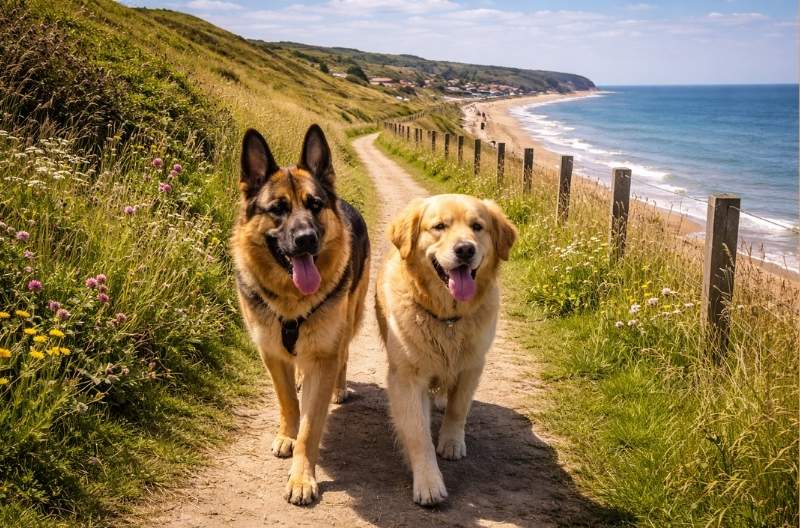
Norfolk delivers over 1,400 miles of dog-friendly trails spanning dramatic coastline, ancient forests, peaceful Broads waterways, and rolling countryside. From the vast golden sands of Holkham to the shaded pine trails of Thetford Forest, this county offers walks to suit every dog's preference and every owner's fitness level.
The landscape's predominantly flat terrain makes Norfolk accessible to dogs of all ages, whilst the variety of environments ensures interesting walks whatever the season. Coastal paths offer bracing sea air and open space, forest trails provide shade and shelter, and Broads walks deliver unique waterside adventures through Britain's magical waterland.
Coastal Walks
Norfolk's 90-mile coastline provides some of England's finest dog-friendly walking, with dramatic seascapes, wildlife-rich habitats, and vast beaches perfect for extending coastal adventures.
Norfolk Coast Path
This National Trail stretches 84 miles from Hunstanton to Hopton-on-Sea, offering breathtaking views and varied terrain throughout. Dogs can walk the entire length under control, though leads are required through nature reserves and during bird nesting season.
Holkham to Wells-next-the-Sea (4 miles) This classic section combines beach walking with pine forest and dune landscapes. Start at Lady Anne's Drive car park and walk through atmospheric pinewoods before emerging onto Holkham's vast golden beach. Continue eastward along the sand (or through dunes if tide is high) to Wells, with its colourful beach huts and charming harbour town.
Dogs enjoy year-round access to most of this route, though leads are required in certain areas from April to August to protect ground-nesting birds. The combination of forest shade, open beach, and seaside town makes this ideal for extended adventures with dogs who love variety.
Thornham to Holme-next-the-Sea (3.5 miles) A peaceful walk through coastal marshes and dunes, passing through Holme Dunes Nature Reserve. The terrain varies from raised embankments to sandy paths, with excellent birdwatching opportunities throughout. Dogs should stay on leads through the reserve, but the walk rewards with dramatic coastal scenery and far-reaching views.
Cromer to Overstrand (2.5 miles) Starting from Cromer's Victorian pier, this walk climbs to dramatic cliff tops before following the coast to Overstrand. On clear days, offshore wind farms dot the horizon whilst ships ply the North Sea below. The terrain includes steep steps near Cromer, so consider your dog's fitness, but views reward the effort.
Sheringham to Weybourne (4 miles) Combining cliff-top walking with heathland and woodland, this route passes through Sheringham Park (National Trust) before descending to Weybourne's shingle beach. The varied terrain suits energetic dogs, and refreshment stops in both towns bookend the walk nicely.
Brancaster and Burnham Overy
The stretch of coast around Brancaster offers exceptional dog walking with fewer crowds than Holkham or Wells. Vast sandy beaches at low tide provide unlimited running space, whilst the network of marshland paths delivers varied walking throughout the year.
Brancaster Beach Walk (2-4 miles) Park near the Royal West Norfolk Golf Club and access miles of pristine sand. At low tide, the exposed wreck of the SS Vina adds historical interest, whilst the views across The Wash stretch to Lincolnshire. Dogs can run off-lead across most of this quiet beach year-round.
Burnham Overy Staithe Circular (5 miles) Start at the harbour with its bobbing boats and summer ice cream van, then walk the embankment to Gun Hill and the beach beyond. Return via coastal paths through marshland, spotting wading birds and enjoying the ever-changing landscape of creeks and channels.
Forest and Woodland Walks
Norfolk's forests provide shaded alternatives to exposed coastal walks, particularly welcome on hot summer days or windy winter ones.
Thetford Forest
Britain's largest lowland pine forest covers 47,000 acres straddling the Norfolk-Suffolk border. Dogs enjoy almost unlimited off-lead walking through this vast woodland, with sandy paths, varied terrain, and numerous waymarked trails.
High Lodge Area The forest's main visitor centre offers several waymarked trails from gentle strolls to challenging hikes. Dogs welcome throughout, with water available at the visitor centre. The forest floor of pine needles provides comfortable walking, whilst clearings and firebreaks add variety.
Lynford Arboretum This remarkable collection houses some of the world's most beautiful trees across three waymarked trails. Uniquely, the arboretum includes a dog agility course, ensuring canine visitors leave thoroughly exercised. A lake with small sandy beach area allows swimming and paddling, and walks suit all abilities from easy meanders to more demanding routes.
Brandon Country Park On Thetford Forest's northern edge, this country park combines open heathland, nature trails, and pine forest. The mostly flat terrain features occasional hills adding interest, and dogs can explore off-lead throughout most of the park.
Bacton Woods
Near North Walsham, this peaceful forest provides 280 acres of woodland walking with over 30 tree species. The signposted Yellow Trail (1.3 miles) follows well-made tracks with frequent benches, whilst longer routes explore the full extent of this wildlife-rich woodland.
Dogs can explore off-lead year-round, though horse riding is popular, so maintain awareness and recall control. The forest's relatively small size makes it ideal for shorter walks or when time is limited.
Foxley Wood
Norfolk's largest ancient woodland offers trails through varied habitat supporting rare birds and plants. The woodland atmosphere provides escape from coastal winds, and the network of paths suits walks of varying lengths. Dogs welcome under control, with leads advisable when livestock graze nearby fields.
Broads Walks
The Norfolk Broads provide unique waterside walking through Britain's largest protected wetland. Over 190 miles of footpaths thread through reed beds, past windmills, and along riverbanks.
Horning and Hoveton
Three Rivers Way (2.5 miles) A scenic stretch between Hoveton and Horning through the heart of the Broads National Park. Riverside views, passing boats, and the charming villages at either end make this gentle walk consistently enjoyable. The flat terrain suits all dogs, and dog-friendly pubs at both ends provide refreshment options.
Horning Circular (4 miles) Starting from Horning village, this route follows the River Bure towards Horning Ferry before looping through Bure Marshes to Woodbastwick and Salhouse Broad. The varied terrain includes boardwalks, riverside paths, and country lanes, with excellent birdwatching throughout.
Ranworth and How Hill
Ranworth Broad Boardwalk (1.5 miles) An accessible boardwalk through fenland habitat to Ranworth Broad Wildlife Centre. Dogs welcome for a small charge (25p), with leads required throughout. The elevated walkway provides excellent views over reed beds and open water, with interpretation explaining the Broads' ecology.
How Hill Circular (7 miles) One of the Broads' most delightful areas, combining the How Hill estate with St Benet's Abbey ruins. The route passes through varied Broadland landscapes, with a summer café at How Hill providing refreshments. Dogs enjoy the mix of open marshland and wooded sections.
Long-Distance Broads Routes
Weavers' Way (61 miles) Cromer to Great Yarmouth via the northern Broads, passing historic estates and pretty villages. The well-signposted route breaks into manageable sections, with accommodation and refreshments available throughout.
Wherryman's Way (35 miles) Following the River Yare from Norwich to Great Yarmouth, this route connects ten circular village walks along its length. Accessible by foot, cycle, train, or river bus, it offers flexible exploration of the southern Broads.
Bure Valley Path (9 miles) Running alongside the Bure Valley Railway from Aylsham to Wroxham, this gentle path suits all abilities. Walk one direction and return by heritage train (dogs welcome aboard).
Country Estate Walks
Norfolk's historic estates provide beautifully maintained walking through varied landscapes.
Sheringham Park (National Trust)
Over 1,000 acres of parkland, woodland, and coastline make this one of Norfolk's finest dog-walking destinations. The grounds offer multiple trails from easy strolls to challenging hikes, with stunning rhododendron displays in late spring. Dogs welcome throughout the estate grounds on leads during nesting season.
Blickling Estate (National Trust)
Nearly 5,000 acres of woodland, parkland, and farmland surround this impressive Jacobean house. Dogs cannot enter the formal gardens but enjoy extensive walking through the wider estate. Multiple trails suit different abilities, and the Muddy Boots café welcomes dogs.
Felbrigg Hall (National Trust)
The estate offers 520 acres of woods and waymarked trails through typical Norfolk countryside. The Church and Ice House trail explores fields and woodland to a hidden lake, whilst the challenging Mountain Walk covers 16 miles with over 1,000 feet of ascent.
Holkham Hall
The Earl of Leicester's estate includes several walking trails through parkland and the wider estate. Dogs on leads welcome in the shop, walled garden, and Courtyard Café. Trails range from just over a mile to 6 miles, with deer and other wildlife throughout (leads essential).
Sandringham Estate
The Royal Family's Norfolk home welcomes dogs in its extensive grounds. Well-maintained paths and open spaces provide excellent walking, with the estate's gardens and woodland offering varied terrain.
Heathland Walks
Norfolk's heathlands provide distinctive walking through open landscapes of gorse, heather, and scattered birch.
Mousehold Heath
Just outside Norwich city centre, this 184-acre heath offers woodland and open heath walking within easy reach of the city. The Earth Heritage Trail provides structured exploration, whilst dogs enjoy the varied terrain and freedom to explore off-lead under control.
Kelling Heath
Part of the North Norfolk Area of Outstanding Natural Beauty, Kelling Heath provides excellent walking with far-reaching coastal views. The terrain combines heath, woodland, and scrub, with birds and butterflies adding interest throughout the year.
Roydon Common
One of Norfolk's finest lowland heaths, Roydon Common supports rare wildlife including nightjars and adders. Dogs welcome but should stay on leads to avoid disturbing ground-nesting birds and grazing ponies. The six trails range from 1 to 2.5 miles, including an accessible riverside route.
Walks by Difficulty
Easy Walks (Under 3 miles, flat terrain)
Ranworth Broad Boardwalk - 1.5 miles of accessible walking through fenland habitat.
Wells Beach and Pinewoods - 2 miles from car park through pines to beach and back.
Holme Dunes - 2 miles of gentle walking through coastal reserve.
Brandon Country Park - Multiple short trails through varied parkland.
Moderate Walks (3-6 miles, some terrain variation)
Holkham to Wells - 4 miles combining beach, forest, and dunes.
Horning Circular - 4 miles through classic Broadland scenery.
Sheringham to Weybourne - 4 miles of cliff-top and heathland walking.
Bittern Line Walk - 5.8 miles through the heart of the Broads.
Challenging Walks (6+ miles or significant terrain)
How Hill and St Benet's Abbey - 7 miles through varied Broadland landscapes.
Cromer to Sheringham - 6 miles of undulating coastal walking.
Peddars Way sections - Ancient trackway offering extended walking.
Felbrigg Mountain Walk - 16 miles with significant elevation.
Seasonal Considerations
Spring (March to May)
Wildflowers carpet woodland floors and coastal margins, whilst migrating birds return to breeding grounds. Lambing season requires leads near livestock, and ground-nesting birds begin nesting (leads required in nature reserves from April). Lighter evenings extend walking opportunities, though changeable weather demands layered clothing.
Summer (June to August)
Longest days and warmest weather encourage extended adventures, though heat management becomes essential. Early morning and evening walks suit dogs better than midday expeditions. Beach restrictions apply at some locations, but most coastal walking remains fully accessible. Carry extra water and seek shaded routes on hot days.
Autumn (September to November)
Perhaps Norfolk's finest walking season, with comfortable temperatures, golden colours, and diminishing crowds. Beach restrictions lift, migrating birds pass through, and seal pups begin appearing at Horsey. Paths may become muddy after rain, but conditions generally favour extended exploration.
Winter (December to February)
Dramatic skies and empty landscapes appeal to hardy walkers, whilst winter wildfowl gather on flooded marshes. Shorter days limit walking time, but atmospheric conditions reward those who venture out. Seal pupping season brings special opportunities at Horsey (leads essential near seals).
Safety and Practical Tips
Navigation
Norfolk's flat terrain can seem featureless in poor visibility, particularly on open marshes or heaths. Carry OS Explorer maps (OL40 for Broads, OL24/25 for coast, 229/230 for Thetford area) and know how to use them. Many routes are waymarked, but signage can be inconsistent.
Wildlife
Ground-nesting birds (March to July) require particular consideration, with leads essential in marked areas. Seals at Horsey and Winterton can bite if approached too closely, keep dogs on leads and maintain safe distances. Adders occur on heaths and in sunny woodland clearings, watch where dogs walk and keep them close in likely habitat.
Tides
Coastal walks require tide awareness. Some routes become impassable at high tide, whilst others offer vastly more beach at low water. Check tide times before walking and understand your route's relationship with tidal access.
Livestock
Cattle and sheep graze many areas, particularly marshland and estate grounds. Keep dogs on leads around livestock, and release your dog if cattle become agitated (aggressive cattle typically focus on dogs rather than people without dogs). Many routes pass through grazed land, so be prepared for livestock encounters.
Terrain
Norfolk's paths range from well-maintained boardwalks to muddy field edges. Waterproof footwear proves essential year-round, as even summer walks encounter wet sections. Some coastal paths include steep steps or clifftop sections requiring sure-footedness.
What to Bring
Essential items include:
Water and a portable bowl (dogs dehydrate quickly, especially on coastal walks where drinking seawater causes illness)
Poo bags (no excuses, particularly in nature reserves and on beaches)
Lead for areas requiring control and for emergency recall
Towel for post-swim or muddy-walk drying
Treats for training reinforcement and energy
First aid kit for minor injuries
Map and compass or GPS for longer routes
Phone with emergency contacts and fully charged
Weather-appropriate clothing including waterproofs
Sun protection for thin-coated dogs on exposed routes
Frequently Asked Questions
What are the best off-lead walks in Norfolk?
Thetford Forest offers extensive off-lead walking through varied woodland. Holkham Beach provides vast sandy space year-round (some areas require leads April to August). Bacton Woods allows off-lead exploration, and many estate grounds permit off-lead walking for dogs under control.
Are dogs allowed on the Norfolk Coast Path?
Yes, dogs can walk the entire 84-mile Norfolk Coast Path. Leads are required through nature reserves, near livestock, and during bird nesting season (March to July). Most sections allow off-lead walking for well-controlled dogs.
Which Norfolk walks are best for older dogs?
Flat routes suit older dogs best: Ranworth Broad boardwalk, Wells beach and pinewoods, Three Rivers Way between Hoveton and Horning, and the accessible trails at Brandon Country Park. Avoid routes with significant steps or steep terrain.
Can dogs swim during Norfolk walks?
Many walks pass swimming opportunities. Broads rivers and broads suit confident swimmers, whilst gentler paddling is available at beaches and some forest lakes. Avoid water with blue-green algae warnings, and supervise near strong currents or boat traffic.
What's the best time of year for Norfolk dog walks?
Autumn (September to November) offers ideal conditions: comfortable temperatures, beautiful colours, and fewer crowds. Spring provides wildflowers and returning wildlife, whilst summer offers longest days. Winter suits hardy walkers seeking dramatic landscapes.
Are there dog-friendly cafés near Norfolk walks?
Excellent refreshment options exist throughout Norfolk. The Beach Café at Holkham, Muddy Boots at Blickling, Lynford Arboretum café, and numerous village pubs welcome dogs. Most National Trust properties have dog-friendly outdoor seating at their cafés.
Do I need to keep my dog on a lead in Thetford Forest?
No, dogs can explore off-lead throughout most of Thetford Forest provided they remain under control. Leads are advisable near car parks, visitor centres, and if your dog's recall is unreliable. The forest's size means encounters with other dogs are relatively infrequent.
Which walks are best for multiple dogs?
Large spaces suit multiple dogs best: Holkham Beach, Thetford Forest, Brancaster Beach, and the larger National Trust estates. Avoid narrow paths or busy routes where managing several dogs becomes challenging.
Book Your Norfolk Walking Holiday
Norfolk's remarkable variety of walking terrain ensures dogs and their owners never tire of exploring. From dramatic coastal paths to peaceful forest trails, this county delivers exceptional adventures for four-legged companions.
Ready to explore? Find your perfect dog-friendly Norfolk cottage as a base for walking adventures, and discover why this East Anglian gem captivates dog owners seeking quality time with their canine companions.
Luke explores Norfolk's trails with Charlie the German Shepherd, Golden Retrievers Buster and Ember, Labradors Simba and Max, and French Bulldog Molly. The pack particularly loves Holkham's combination of forest shade and beach freedom.




⚠️ Comments Currently Disabled
We've had to temporarily disable our comment section due to a high volume of spam. We apologise for any inconvenience this may cause to our lovely readers!
If you'd like to share your thoughts, experiences, or feedback, please send us an email directly at info@thedogholiday.co.uk and we'll be happy to add your comment manually.
Thank you for your understanding! 🐾
Leave a Comment