
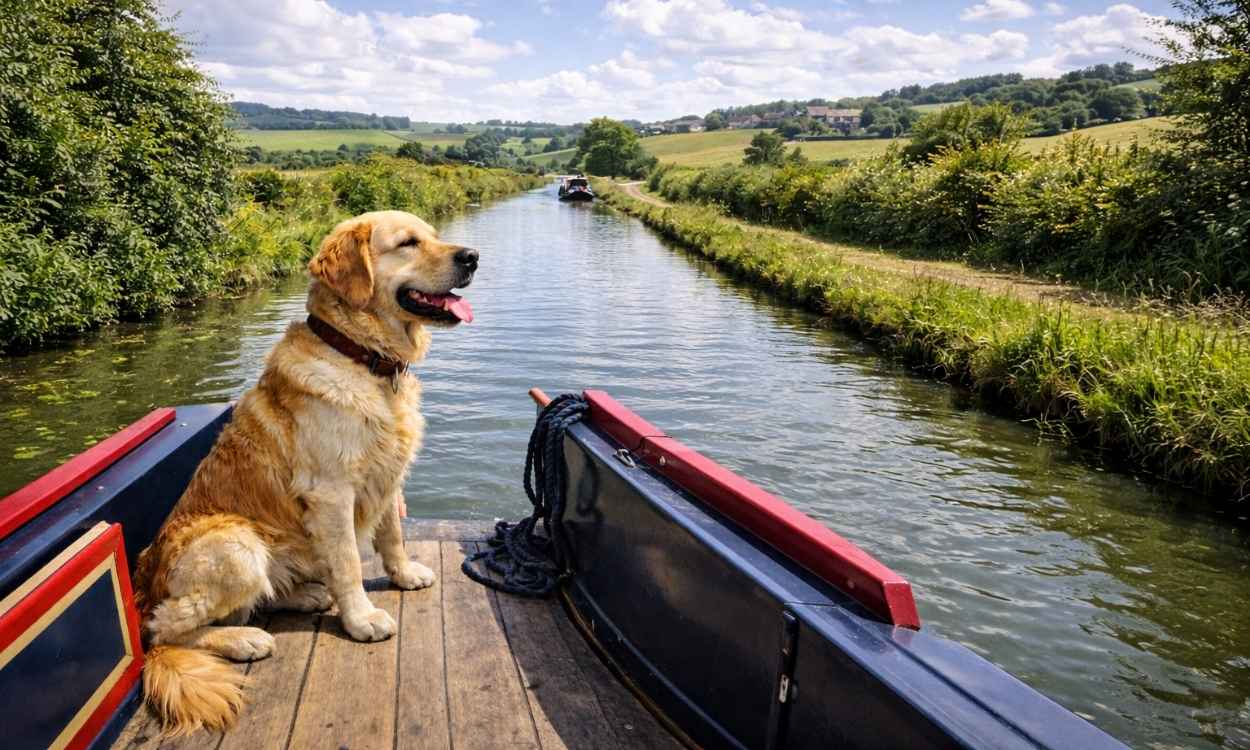
Narrowboat holidays offer unique dog-friendly adventures. Your accommodation floats along scenic waterways while your dog enjoys towpath walks, wildlife watching, and the relaxed pace of canal life. The rhythm of locks, the quiet of rural moorings, and the freedom to stop wherever appeals creates memorable holidays.
This guide covers everything you need to know about narrowboat holidays with your dog.
Why Narrowboats Work for Dogs
The Advantages
For Dogs:
- Towpath walks at every stop
- Constant new smells and sights
- Wildlife to watch
- Outdoor living
- Close to nature
- You're together constantly
For You:
- Unique holiday experience
- Peaceful pace
- No traffic
- Scenic routes
- Freedom to explore
- Built-in accommodation
The Considerations
Think About:
- Confined living space
- Water safety essential
- Getting on and off boat
- Locks can be challenging
- Weather dependent enjoyment
- Learning curve for boat handling
Getting Started
Hire Companies
Most Accept Dogs: Narrowboat hire companies are generally dog-friendly. However:
- Confirm policy when booking
- Check any restrictions (number, size)
- Ask about cleaning fees
- Some boats more suitable than others
Questions to Ask:
- How many dogs allowed?
- Any breed/size restrictions?
- Is there a deck area suitable for dogs?
- Additional charges?
- What dog equipment is provided/needed?
Boat Types
Traditional Narrowboats:
- 57-72 feet typical
- Bow deck and stern deck
- Central cabin
- Comfortable for 2-6 people plus dogs
Widebeam Boats:
- Wider than narrowboats
- More interior space
- Limited to certain waterways
- Can feel more spacious with dogs
For Dogs, Look For:
- Good deck space
- Easy access on/off
- Secure areas on deck
- Suitable sleeping space inside
Water Safety
Critical Importance
Dogs and Water:
- Canals have steep banks
- Getting out can be difficult
- Cold water shock possible
- Locks are dangerous
- Supervision essential
Safety Measures
Essential:
- Dog life jacket (highly recommended)
- Constant supervision near water
- Training for canal edges
- Know how to help dog out of water
- Keep away from locks when operating
The Life Jacket:
- Makes rescue easier
- Keeps dog visible
- Handle for lifting
- Provides flotation
- Worth the investment
Lock Safety
Locks Are Dangerous:
- Turbulent water
- Steep walls
- Moving gates and paddles
- Keep dogs well away
- On lead during lock operation
- Inside boat or far from lock
Daily Life on Board
Routine
Typical Day:
- Morning towpath walk
- Cruise to next location
- Lunch stop (maybe lock break)
- Afternoon cruising
- Evening mooring
- Evening walk
Exercise and Walks
Towpath Walking:
- Walks available at every mooring
- Can walk alongside boat while partner cruises
- Explore at each stop
- Quality walking throughout
At Moorings:
- Evening and morning walks
- Explore local area
- Find off-towpath routes too
Onboard Space
Making It Work:
- Establish dog's sleeping area
- Designated spots for feeding
- Space management important
- Accept cosy living
Feeding
Considerations:
- Space for food storage
- Non-spill bowls important (boat movement)
- Fresh water always available
- Regular feeding times
Choosing Routes
Best Canals for Dogs
Good Choices:
Kennet and Avon Canal: Beautiful route. Good towpath. Varied scenery. Villages and countryside.
Oxford Canal: Rural, pretty. Good walking. Interesting stops.
Llangollen Canal: Dramatic scenery. Wales and borders. Stunning aqueducts.
Monmouthshire and Brecon Canal: Welsh valleys. Beautiful. No locks (unusual!). Perfect for beginners.
Grand Union Canal: Through the Midlands. Varied scenery. Well-serviced.
Norfolk Broads: Not technically canals. Wider waterways. Different experience. See our Norfolk Broads guide.
Route Considerations
For Dogs:
- Good towpath condition
- Interesting walking at stops
- Not too many locks (tiring and dangerous)
- Access to villages/pubs
- Scenic variety
Pace and Distance
Typical Speed: 4 mph maximum on canals.
Daily Distance: 15-25 miles reasonable, depending on locks.
With Dogs:
- Allow time for walks
- Don't rush
- Stop frequently
- Enjoy the pace
Mooring with Dogs
Finding Moorings
Types:
- Towpath moorings (often free)
- Marina moorings (facilities, charges)
- Pub moorings (customer moorings)
- Dedicated visitor moorings
Dog Considerations:
- Access to towpath for walks
- Safety of getting on/off
- Quiet locations for nervous dogs
- Rural moorings often best
Overnight Stops
Planning:
- Know where you'll stop
- Have backup options
- Consider facilities needed
- Rural moorings often more peaceful
Wild Moorings
Remote Spots:
- Peaceful
- Great for dogs
- Limited facilities
- Real canal experience
Practical Tips
Getting Dogs On and Off
The Challenge: Boats are narrow. Banks can be unstable. Water is close.
Solutions:
- Gangplank from some boats
- Lift small dogs
- Train dogs to wait for help
- Choose stable mooring spots
- Don't rush
Wet Dogs
Reality: Dogs may get wet. On a boat this needs management.
Strategies:
- Towels ready
- Dry before entering cabin
- Designated wet dog area
- Dog drying coat
Equipment to Bring
Dog Kit:
- Life jacket (essential for safety)
- Non-slip bowls
- Lead (for towpath walking)
- Towels
- Familiar bedding
- Poo bags
- First aid kit
Helpful Additions:
- Gangplank or ramp
- Dog coat for wet weather
- Cooling mat for hot weather
- Mat for deck area
Seasonal Considerations
Summer
Peak Season:
- Busiest on canals
- Best weather usually
- Longest days
- Heat management for dogs
- Popular moorings busy
Spring/Autumn
Often ideal. Quieter canals. Good weather possible. Dogs comfortable.
Winter
Consider Carefully:
- Cold on boats
- Short days
- Some hire companies don't operate
- Can be magical but challenging
Handling the Boat
Learning Curve
For New Boaters:
- Training provided by hire company
- Not difficult but takes practice
- Locks require learning
- Several people helpful
With Dogs:
- Additional consideration needed
- Dog management during locks
- Managing while steering
- Second adult very helpful
Locks with Dogs
The Challenge: Operating locks while keeping dogs safe requires planning.
Strategies:
- Dog on boat with one person
- Dog well away from lock (long walk around)
- Never near moving water or gates
- Two people makes it much easier
Finding Dog-Friendly Hire Companies
What to Look For
- Explicit dog-friendly policy
- No breed restrictions
- Reasonable charges
- Boats suitable for dogs
- Good safety information
Popular Operators
Many operators welcome dogs across the UK canal network. Research specific routes and contact companies directly.
Frequently Asked Questions
Are narrowboat holidays suitable for dogs?
+Do dogs need life jackets on narrowboats?
+Can I leave my dog on the boat while I operate locks?
+How do dogs cope with boat living?
+What's the best canal for a first narrowboat holiday with a dog?
+Can two or more dogs come on a narrowboat?
+Waterway Adventures Await
Narrowboat holidays offer something genuinely different - floating through the countryside, stopping wherever appeals, walking the towpath, and enjoying the peaceful pace of canal life. With proper safety measures, dogs thrive on this lifestyle.
Get a life jacket. Learn the locks. Enjoy the journey.
Luke dreams of narrowboat adventures with Charlie, Buster, Ember, Simba, Max, and Molly. While six dogs would need a big boat, the appeal of floating through the countryside with the pack is strong.


⚠️ Comments Currently Disabled
We've had to temporarily disable our comment section due to a high volume of spam. We apologise for any inconvenience this may cause to our lovely readers!
If you'd like to share your thoughts, experiences, or feedback, please send us an email directly at info@thedogholiday.co.uk and we'll be happy to add your comment manually.
Thank you for your understanding! 🐾
Leave a Comment