
I'll be honest, our first family dog holiday wasn't entirely smooth sailing. Charlie decided the cottage sofa made an excellent bed, Buster barked at every dog walking past the window, and we somehow managed to leave muddy paw prints across what had been a pristine cream carpet. The owner was gracious about it, but I cringe thinking back to how unprepared we were.
That experience taught me something important: being welcome somewhere and being a good guest aren't the same thing. The UK has thousands of brilliant dog-friendly places to stay, eat, and visit. But keeping them dog-friendly depends on owners like us behaving responsibly. Every badly behaved dog, or more accurately every owner who doesn't manage their dog properly, makes it harder for everyone else.
Good dog holiday etiquette isn't complicated. It's mostly common sense combined with genuine consideration for others. This guide covers everything from accommodation rules to beach behaviour, pub manners to wildlife encounters. Follow this advice and you'll be the kind of guest that owners actually want back.
Understanding the Unwritten Contract
When a hotel, cottage, restaurant, or attraction welcomes dogs, they're taking a risk. They're trusting that your dog won't damage their property, disturb other guests, or create problems that cost them time and money to resolve.
In return for that trust, we have responsibilities. Not just following written rules, though those matter too, but anticipating issues before they occur and managing our dogs proactively. The goal isn't merely avoiding complaints. It's ensuring everyone, owners, staff, other guests, locals, has such a positive experience that they remain enthusiastic about welcoming dogs.
This isn't about being uptight or taking the fun out of holidays. It's about sustainability. Every dog owner benefits when more places stay dog-friendly. Every time a business decides dogs are too much hassle, that's fewer options for all of us.
Accommodation Etiquette
Your holiday accommodation is someone's property, often their livelihood. Treating it with respect should go without saying, but dogs add complications that require extra thought.
Before You Arrive
Read the property's dog rules properly, not just a quick skim. Understand what's expected regarding furniture, gardens, cleaning up, and any areas that are off-limits. If anything is unclear, ask before booking rather than assuming.
Be honest about your dog during the booking process. If they have separation anxiety, don't claim they're fine being left. If they're not fully house-trained, this isn't the trip to chance it. Misrepresenting your dog's behaviour might get you through the door, but it damages trust for every dog owner who follows.
On Arrival
Walk your dog before entering the property. A dog who's been in the car for hours and desperately needs the toilet is more likely to have an accident inside. Give them a proper chance to empty themselves first.
Do a quick check of the accommodation before settling in. Note any existing damage or marks so you're not blamed for them later. Take photos if anything concerns you.
Respect the spaces where dogs aren't permitted. If bedrooms are off-limits, keep the doors closed. If dogs shouldn't go upstairs, use a baby gate or keep them supervised. Simba would absolutely sneak onto beds if given half a chance, so we simply don't give him that chance.
During Your Stay
Never leave your dog alone unless the property explicitly permits it and you're confident your dog won't bark, destroy things, or become distressed. Even then, keep absences short. A neighbour hearing hours of barking reflects badly on all dog owners, not just you.
Clean up immediately after any accidents. These happen occasionally even with well-trained dogs, particularly in unfamiliar environments. Bring enzymatic cleaner specifically for pet messes, as it removes odours completely rather than just masking them.
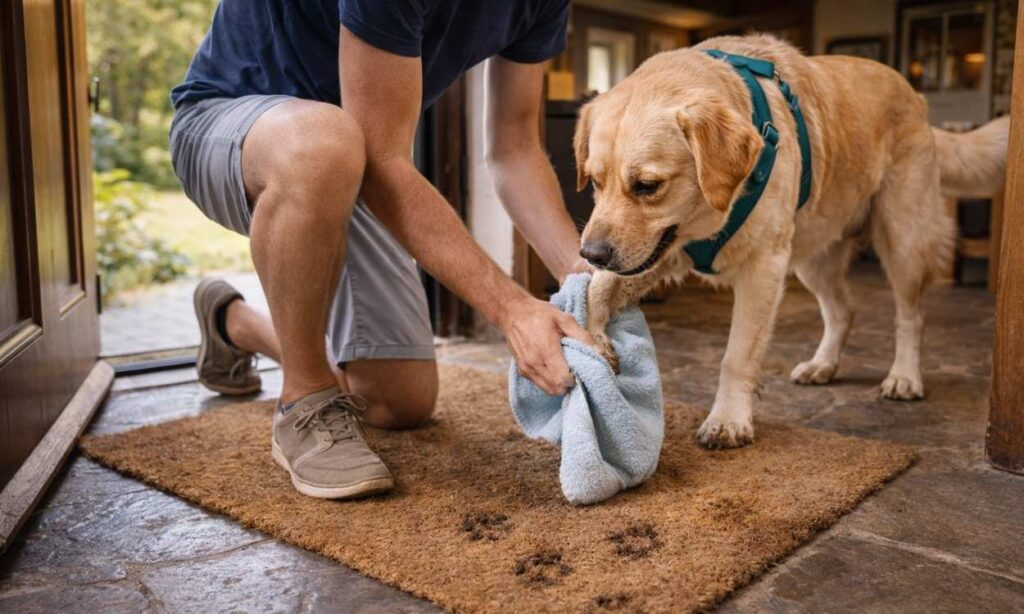
Wipe muddy paws before coming inside. Keep a towel by the door for exactly this purpose. After wet walks, dry your dog thoroughly before they roll on soft furnishings. We learnt this one the hard way when Molly shook herself all over a white sofa.
Don't allow your dog on furniture unless specifically permitted. Even if your dog sleeps on your sofa at home, this is someone else's property. Bring a blanket if you want to protect surfaces, but respect the owner's preferences.
Keep your dog off beds entirely. Even if they're allowed on sofas, beds are different. The thought of sleeping in sheets covered in dog hair isn't appealing to most guests who follow you.
When Leaving
Leave the property as you'd hope to find it. Vacuum any obvious dog hair, wipe paw prints from hard floors, and check gardens for any mess you might have missed. Take all your dog's belongings with you.
Report any damage honestly. Accidents happen, and most owners appreciate honesty over discovering problems after you've gone. Your insurance may cover accidental damage, but only if you declare it.
Behaviour Around Other Guests
Holiday destinations mean encounters with other people, not all of whom will share your enthusiasm for dogs. Some are nervous around dogs, some are allergic, some simply don't want their holiday interrupted by someone else's pet.
In Shared Spaces
Keep your dog on lead in corridors, lobbies, car parks, and any shared areas unless you're certain off-lead is permitted and your recall is genuinely reliable. Not "usually good" reliable, but absolute certainty they'll return immediately regardless of distractions.
Ask before letting your dog greet other guests or their dogs. Not everyone wants interaction, and forcing it creates tension. A simple "Is it okay if they say hello?" respects others' boundaries while still allowing friendly encounters when welcome.
If your dog barks at people, work on this behaviour before holidaying, or accept that certain accommodation types aren't suitable yet. A dog that barks at everyone walking past isn't ready for a hotel stay.
Encounters with Other Dogs
The rise in dog ownership since 2020 brought many lovely dogs into the world, but also many who missed crucial socialisation during lockdowns. Don't assume every dog you meet is friendly. Watch for warning signs in both dogs before allowing close contact.
Look for the Yellow Dog Scheme signals. Yellow ribbons, bandanas, or leads indicate a dog needs space. If you spot these, keep your distance without making a fuss.
If your dog is reactive or anxious around other dogs, that's okay, but manage it proactively. Choose quieter walking times, use a distinctive harness or lead that signals you need space, and don't put your dog in situations that will overwhelm them.
Never let your dog run up to others without permission, regardless of how friendly yours is. The phrase "Don't worry, he's friendly" is meaningless to someone whose nervous dog has just been charged at. Keep yours under control and ask first.
Around Children
Not all children have experience with dogs. Some are frightened, some are overly enthusiastic, and neither extreme leads to good interactions. Keep your dog close around unfamiliar children and intervene if things get too boisterous on either side.
Never leave your dog unsupervised with children you don't know. Even the gentlest dog can react unexpectedly to a child's unpredictable movements, and you're responsible for what happens.
If a child asks to pet your dog, it's perfectly acceptable to say no. "Sorry, she's a bit nervous" or "We're working on training right now" are reasonable responses. You know your dog best.
Pub and Restaurant Etiquette
Dog-friendly pubs and restaurants exist because owners choose to welcome dogs. They can just as easily choose to stop. Our collective behaviour determines whether these places remain available.
The Basics
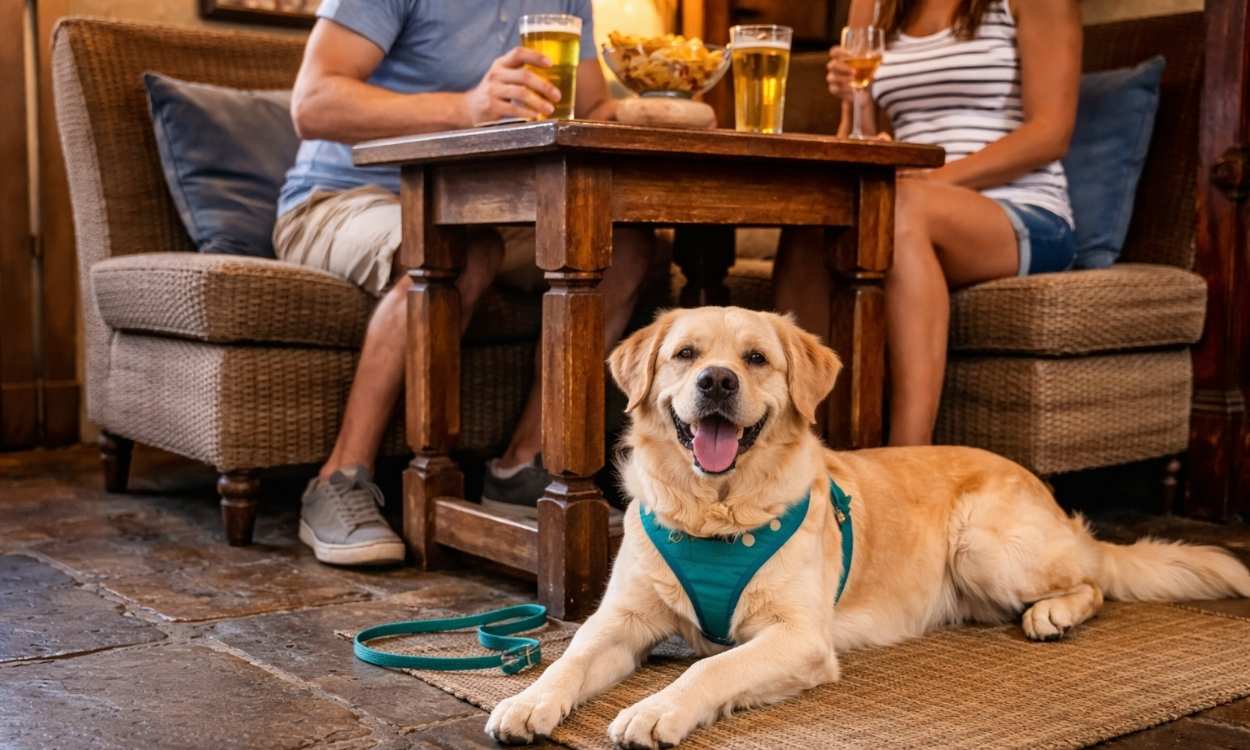
Call ahead or check online to confirm dogs are welcome. Just because a pub allows dogs in some areas doesn't mean they're permitted everywhere. Some restrict dogs to bars but not restaurants, or outdoor areas only.
Don't assume. Even if you've visited before, policies change. Staff changes mean different approaches. A quick call saves awkwardness on arrival.
Arrive with a settled dog. If yours has just bounded out of the car after hours of travel, walk them properly first. A dog who's still wired isn't going to lie quietly under a table.
At the Table
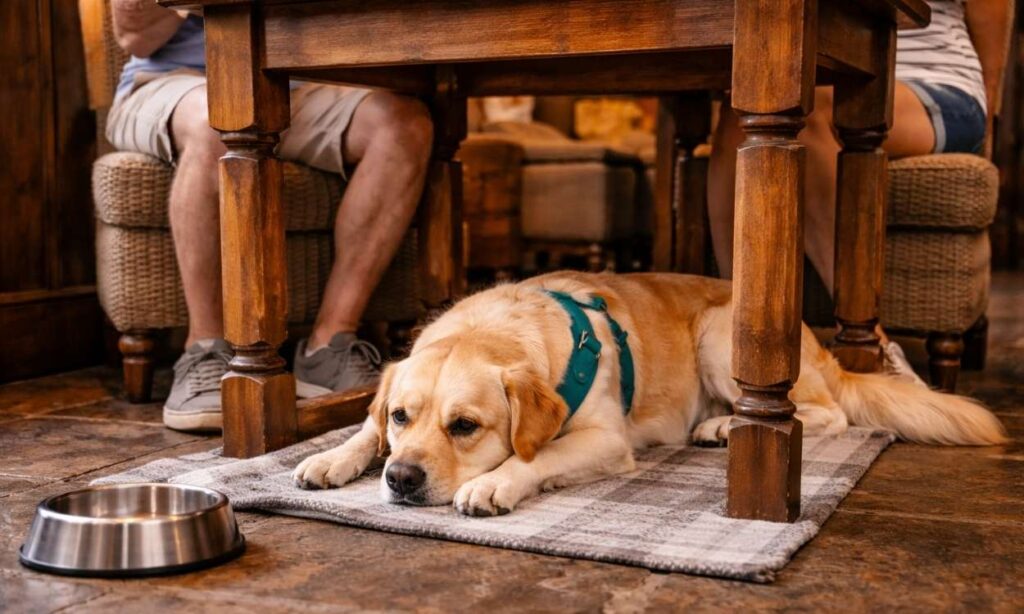
Bring a mat or blanket for your dog to lie on. It protects floors, gives your dog a defined space, and shows you've thought about the impact on the premises.
Keep your dog under the table or beside it, not in the middle of walkways where staff are carrying hot food and drinks. Trip hazards benefit nobody.
Never let your dog eat from the table or off plates. It's unhygienic, it's poorly mannered, and it encourages begging behaviour. Bring their own treats if you want them to have something.
Water your own dog rather than expecting staff to. Carry a collapsible bowl and water bottle. If they offer, that's lovely, but don't assume it's their responsibility.
Don't let your dog approach other tables unless invited. Not everyone wants a furry visitor while they're eating. Keep them focused on you.
Managing Behaviour
If your dog barks, whines, or becomes restless, deal with it immediately. Take them outside for a break if needed. Sitting there hoping they'll settle while other diners are disturbed isn't acceptable.
Ember struggled initially with the stimulation of busy pubs. We started with quiet places at off-peak times, gradually building her confidence. Now she settles anywhere, but it took patient practice.
Never tie your dog outside and go in alone unless they're completely comfortable with this. A stressed dog barking outside isn't any better than one barking inside.
Leaving
Check under and around your table for any mess before leaving. Hair, crumbs, spilled water, anything your dog contributed needs tidying. Leave the space as you found it.
Tip appropriately, especially if staff have made extra effort to accommodate your dog. Recognising that they've gone above the minimum encourages them to continue welcoming dogs.
Beach and Outdoor Etiquette
Dog-friendly beaches and outdoor spaces are precious resources. Keeping them dog-friendly requires everyone to follow both written rules and common sense.
Beach Behaviour
Check and respect seasonal restrictions. These exist for good reasons, usually protecting ground-nesting birds during breeding season. The dates matter, ignore them and you give ammunition to those who'd ban dogs entirely.
Even on unrestricted beaches, some areas may be sensitive. Look for signs indicating wildlife protection zones and keep your dog away from dunes where birds nest.
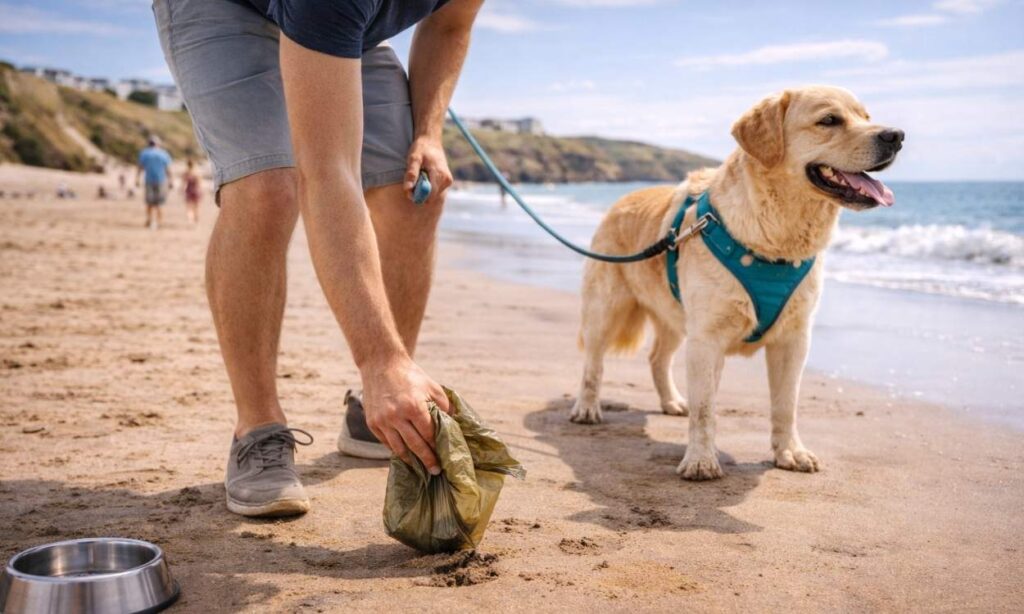
Pick up after your dog, always, everywhere, without exception. The "stick and flick" method isn't acceptable on beaches where children play and families picnic. Bag it and bin it, or take it with you if there's no bin.
Keep your dog under control around wildlife. Seals, nesting birds, and other animals need protecting from well-meaning dogs who "just want to play." What looks like play to your dog looks like a predator to prey.
Rinse your dog after swimming in saltwater. It's better for their skin and coat, and means you won't transfer salt and sand into accommodation.
Walking Trails and Countryside
The Countryside Code applies to everyone, with extra considerations for dog owners. Keep dogs on leads around livestock, particularly during lambing season from March to May.
Stay on marked paths where requested. Dogs wandering through crops or disturbing habitat isn't responsible access. Just because you can go somewhere doesn't mean you should.
Close gates behind you whether or not you see livestock. They might be in the next field, and an open gate creates problems for farmers.
Around Livestock
This cannot be stressed enough: dogs and livestock don't mix. Even the friendliest, most obedient dog can trigger panic in sheep. Pregnant ewes can abort from stress. Cattle can injure or kill dogs and people when they feel threatened.
Keep your dog on a short lead, not an extending one, whenever livestock are present or possible. If you're unsure whether there might be animals, default to lead on.
The one exception is if cattle approach aggressively and you cannot escape. In this situation, let your dog off lead, as they'll be able to outrun the cattle while you make your escape. This isn't an excuse to have dogs off lead around cattle, it's an emergency protocol.
Wildlife Encounters
Dogs can devastate wildlife populations through disturbance alone, without ever catching anything. Ground-nesting birds abandon nests when dogs approach. Seals flee beaches, expending precious energy. Deer panic and injure themselves on fences.
During breeding seasons, typically March to July, be especially cautious. Stick to established paths, keep dogs close, and avoid areas where wildlife is known to congregate.
Molly has a high prey drive that we'll never train out completely. We manage it by keeping her on lead anywhere we might encounter wildlife. It's not a limitation, it's responsible ownership.
Etiquette in Shops and Attractions
More shops and attractions welcome dogs than ever before, but this requires appropriate behaviour from us.
In Shops
Never assume dogs are welcome. Look for signs, or ask before entering. If there's no clear indication either way, ask staff.
Keep your dog close and under control. A dog sniffing products or wandering between customers isn't appropriate, however friendly their intentions.
If your dog marks in a shop, clean it up immediately and apologise. This shouldn't happen with a properly walked dog, but accidents occur. How you handle it matters.
At Attractions
Research policies before visiting. Many National Trust properties welcome dogs in grounds but not inside buildings. Check specific restrictions rather than assuming universal policies.
Follow any rules about where dogs can go, where they must be on lead, and what facilities are available. These exist for reasons, often insurance-related, that aren't optional.
Don't try to sneak dogs into areas where they're not permitted. You're not just risking your own visit, you're potentially causing that attraction to tighten restrictions for everyone.
Using Public Transport
Trains generally welcome dogs, but policies vary. Check with your specific operator before travelling. Dogs must not occupy seats, and must be on leads throughout the journey.
Buses are more variable. Some accept dogs, some don't, and some leave it to driver discretion. Check in advance and accept gracefully if refused.
If your dog is anxious on public transport, practice before attempting a long journey. The travelling with dogs guide covers this in more detail.
Managing Your Dog's Behaviour
Etiquette is only possible if your dog is actually under control. Some groundwork before and during your holiday makes everything easier.
Before You Go
Ensure basic obedience is solid. Commands like sit, stay, down, leave it, and recall should be reliable, not just in your living room, but in distracting environments.
Practise settling in different locations. If your dog can only relax on their own bed at home, they'll struggle in cafes, pubs, and other people's properties. Work on this skill before you need it.
Address any specific issues that will cause problems. A dog who barks at strangers isn't ready for hotels. A dog who pulls constantly on lead will make every walk exhausting. Put in the training work beforehand.
During Your Holiday
Maintain routines as much as possible. Feed at usual times, keep walk schedules similar, provide familiar comfort items. Predictability reduces stress.
Build in rest time. An overtired dog is a badly behaved dog. You don't need to fill every minute with activities. Downtime matters.
Reward good behaviour generously. Your dog settling quietly while you have lunch deserves recognition. Make being calm and well-behaved a genuinely positive experience for them.
If Things Go Wrong
Remove your dog from situations they can't handle before they deteriorate. It's not giving up, it's sensible management. You can work on challenges when you're home and able to train properly.
Don't punish dogs for behaviour that's actually your management failure. A dog who barks because they're stressed isn't being naughty, they're communicating distress. Address the underlying cause.
Ask for help if you're struggling. A break from group activities while your dog calms down isn't failure. Pushing a stressed dog beyond their limits isn't perseverance, it's unfair on them and everyone around you.
Being an Ambassador for Dog Owners
Every interaction you have while on holiday shapes how people perceive dog owners generally. That's not pressure, it's opportunity. You can actively improve things for every dog owner who follows you.
Thank businesses that welcome dogs warmly. A quick review mentioning how dog-friendly they were encourages them to continue.
Leave places better than you found them when possible. If you see someone else's dog mess while you're picking up after your own, deal with it. It takes seconds and makes a real difference.
Be patient with people who are nervous around dogs or don't understand them. Your friendly approach might change their perception entirely.
Speak up when you see dog owners behaving poorly. Not aggressively, but calmly pointing out when behaviour isn't acceptable helps everyone. We're a community, and standards are only maintained if we maintain them.
Frequently Asked Questions
What if my dog has an accident in holiday accommodation?
Clean it up immediately and thoroughly using enzymatic cleaner. If there's any damage or staining you can't fully resolve, tell the owner honestly. Most appreciate honesty and will work with you. Your insurance may cover accidental damage.
Can I let my dog on furniture if I put a blanket down?
Only if the property specifically permits dogs on furniture. A blanket doesn't change the rule, it just protects surfaces. If in doubt, keep dogs on floors with their own bed.
How do I handle my dog barking at other dogs while on holiday?
Remove them from the situation promptly. Walk in the opposite direction, create distance, and let them calm down. If this happens repeatedly, choose quieter walking times and locations. Work on the underlying behaviour when you're home and able to train properly.
What should I do if another dog approaches mine aggressively?
Stay calm, position yourself between the dogs if safe, and remove your dog from the situation. Don't shout or panic as this escalates tension. If injuries occur, exchange details with the other owner and seek veterinary attention if needed.
Is it okay to tie my dog outside a shop while I go in?
Only if they're completely comfortable being tied alone, won't bark, and the situation is safe. Many dogs aren't suited to this, and a stressed dog barking outside is as problematic as inside. If in doubt, one person waits outside with the dog.
How long can I leave my dog alone in holiday accommodation?
Follow the property's stated policy, typically a maximum of four hours. Never leave a dog who isn't comfortable alone or who is likely to bark. Even if permitted, keep absences short and leave them with something to occupy them.
What if a pub says they welcome dogs but then asks us to leave?
Comply immediately and gracefully. Ask calmly if you can know what the problem was, as this helps you avoid issues elsewhere. Sometimes it's not about you but about other guests' complaints or staff changes. Don't argue or make a scene.
Should I tip extra when staff accommodate my dog well?
If service was good and staff went out of their way to welcome your dog, yes. It's not obligatory, but it recognises that accommodating dogs does create extra work and encourages venues to remain dog-friendly.
What if my dog is scared of other dogs and we keep encountering them?
Walk at quieter times, such as very early morning or late evening. Use a yellow bandana or lead to signal your dog needs space. Give other dogs a wide berth and use treats to keep your dog focused on you. Gradually work on confidence building when you're home.
How do I stop my dog pulling towards every dog and person we pass?
This needs consistent training, not just management during holidays. Work on focus and "leave it" commands at home. During holidays, increase distance from triggers and reward attention on you. Keep treats visible and use them frequently to maintain focus.
The Bottom Line
Good etiquette isn't about restricting your holiday or being uptight. It's about ensuring that dog-friendly places remain dog-friendly for years to come. Every positive interaction, every mess cleaned up, every well-behaved dog settling quietly in a pub, contributes to a world where travelling with dogs is easier and more welcome.
The UK is genuinely one of the best places in the world to holiday with dogs. Let's keep it that way.
From our pack to yours, happy and responsible travels.
Luke, Charlie, Buster, Ember, Simba, Max, and Molly


⚠️ Comments Currently Disabled
We've had to temporarily disable our comment section due to a high volume of spam. We apologise for any inconvenience this may cause to our lovely readers!
If you'd like to share your thoughts, experiences, or feedback, please send us an email directly at info@thedogholiday.co.uk and we'll be happy to add your comment manually.
Thank you for your understanding! 🐾
Leave a Comment