
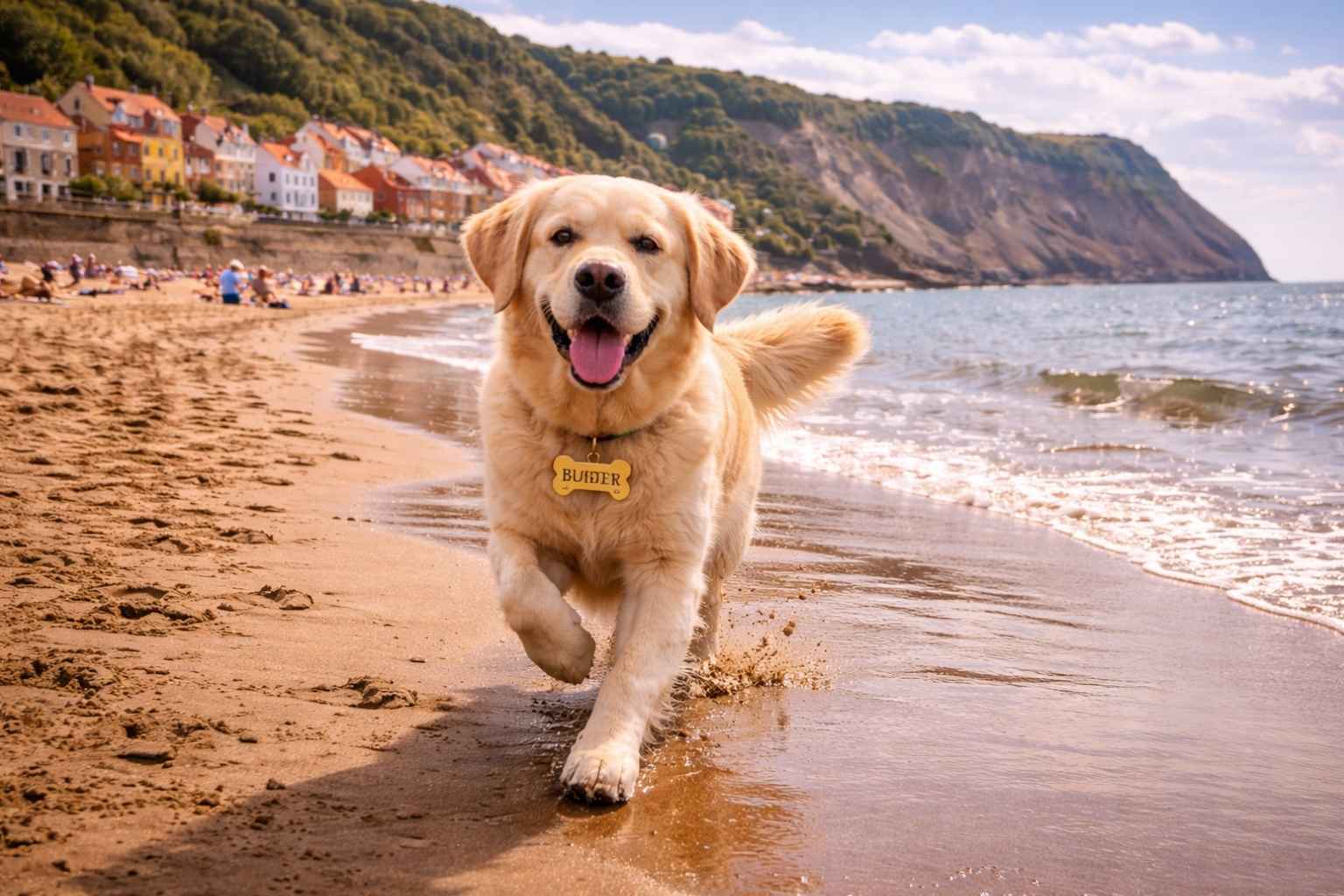
The Yorkshire coast stretches for 90 magnificent miles from the River Tees to Spurn Point, offering everything from dramatic clifftop coves to sweeping sandy bays. For dog owners, this coastline delivers some of Britain's finest beach walking, with several beaches welcoming dogs throughout the year and many more accessible outside peak summer months. Combined with the inland attractions covered in our complete Yorkshire guide, this region offers endless possibilities for dog-friendly holidays.
What makes Yorkshire's coast special for dogs is the variety. You can hunt for Jurassic fossils at Saltwick Bay in the morning, let your dog race across the endless sands of Filey in the afternoon, and finish with fish and chips in dog-friendly Robin Hood's Bay. The fishing villages that dot this coastline genuinely welcome dogs, with excellent pubs, cafes and accommodation that treat four-legged visitors as standard.
Understanding the seasonal restrictions matters here. Between May and September, certain busy beaches restrict dogs to protect family bathing areas. But there are always alternatives, and honestly, the year-round beaches are often the most characterful anyway.
Charlie, Buster, Ember, Simba, Max and Molly have explored this coastline in every season. We have our favourites for different moods and weather. This guide shares what we have learned about finding the perfect Yorkshire beach day with dogs.
Year-Round Dog-Friendly Beaches
These beaches welcome dogs every day of the year, making them reliable choices regardless of when you visit.
Robin Hood's Bay
Location: 6 miles south of Whitby | Parking: Top of village (pay and display) | Postcode: YO22 4SJ
This picture-postcard fishing village tumbles down steep cliffs to a beach that welcomes dogs throughout the year. The beach itself is a mix of sand, shingle and rock pools, exposed fully at low tide when you can walk along the shore towards Ravenscar or north towards Boggle Hole.
Robin Hood's Bay ranks among Yorkshire's most atmospheric coastal spots. The narrow streets of the old village, once a notorious smuggling haven, are lined with dog-friendly pubs and cafes. The steep descent to the beach keeps your dog's attention, and the beach rewards with interesting smells, fossils to discover and plenty of space to explore.
Dog notes: Dogs welcome year-round without restrictions. The beach is best at low tide when sand is exposed. Check tide times as the sea comes right up to the sea wall at high tide. Rock pools provide paddling opportunities. The walk down from the car park at the top of the village is steep and can be slippery when wet.
Fossil hunting: Robin Hood's Bay is part of Yorkshire's Jurassic Coast. Ammonites and other fossils can be found amongst the rock pools and shingle, particularly on the north side of the bay.
Runswick Bay
Location: 9 miles north of Whitby | Parking: Village car park (pay and display) | Postcode: TS13 5HR
Named Sunday Times Beach of the Year in 2020, Runswick Bay combines stunning scenery with a genuinely welcoming atmosphere for dogs. The sandy beach backed by green cliffs creates a natural amphitheatre that feels worlds away from busier resorts.
The tiny fishing village perched on the cliffs adds character. Traditional cottages, a small Methodist chapel built by fishermen's families, and the historic lifeboat station create an authentic coastal atmosphere. The beach itself offers excellent space for dogs to run, paddle and explore rock pools.
Dog notes: Dogs welcome year-round without restrictions. The beach is sandy with good space at all tides. Parking involves a steep walk down to the beach. The beachfront is car-free, giving extra peace of mind. Seals are sometimes spotted in the bay.
Nearby: The Cleveland Way passes through, connecting to walks along the coast. The village has limited facilities but several options for refreshments.
Staithes
Location: 12 miles north of Whitby | Parking: Top of village (pay and display) | Postcode: TS13 5BQ
This working fishing harbour retains its authentic character with narrow streets, traditional cobles (fishing boats) and a genuine connection to the sea. Captain Cook worked here as a grocer's apprentice before his seafaring career began. The beach is smaller than some, but the atmosphere compensates.
Staithes offers two beach areas: Cowbar (to the north) and the harbour beach. Both welcome dogs throughout the year. The village itself is wonderfully atmospheric, with artists' galleries, traditional pubs and genuinely dog-friendly cafes.
Dog notes: Dogs welcome year-round on both beaches. The harbour area can be busy with fishing activity. Keep dogs under control near fishing equipment and boats. The walk from the car park at the top of the village is steep but manageable.
Walking: The coastal path to Port Mulgrave (about 2 miles) was voted one of Britain's top dog walks, offering clifftop views and varied terrain.
Cayton Bay
Location: 4 miles south of Scarborough | Parking: Beach car park | Postcode: YO11 3NP
This long sandy beach backed by cliffs offers a more rural feel than nearby Scarborough. Popular with surfers and sailors, Cayton Bay welcomes dogs throughout the year without restrictions. The lack of a traditional promenade or town backing means it feels wilder and more natural.
The beach is wide and sandy, providing excellent space for dogs to run. At low tide, the beach extends considerably. The cliffs backing the beach offer walking opportunities with coastal views.
Dog notes: Dogs welcome year-round. The beach is sandy and spacious. Popular with surfers so dogs should be kept away from surf zones. The beach has a more wild feel with fewer facilities than resort beaches. Lifeguards patrol during summer months.
Note: Cayton Bay has historically attracted some naturist use, though this is not officially sanctioned.
Saltwick Bay
Location: 1 mile south of Whitby | Parking: Whitby Holiday Park area | Postcode: YO22 4JX
This secluded cove accessible via a clifftop path from Whitby offers one of Yorkshire's best fossil hunting experiences. The beach is a mix of sand, rock and shale, backed by dramatic cliffs. It feels wonderfully remote despite being close to Whitby.
The wreck of the Admiral Von Tromp, a cargo ship that ran aground in 1976, is visible at low tide. The geology here provides excellent opportunities for finding ammonites, belemnites and Whitby jet.
Dog notes: Dogs welcome year-round. Access is via steep steps from the cliff path, which can be eroded and challenging. Not suitable for dogs with mobility issues. Keep dogs away from unstable cliffs. The beach is best explored at low tide.
Fossil hunting: One of Yorkshire's premier fossil locations. Look for ammonites in limestone nodules on the foreshore. Dinosaur footprints have been found here. Do not dig into cliffs or rock platforms.
Sandsend (Sandsend Ness)
Location: 3 miles north of Whitby | Parking: Lythe Bank car park | Postcode: YO21 3SR
Sandsend actually has two beach areas. The main village beach has seasonal restrictions, but Sandsend Ness to the north welcomes dogs year-round. This rugged headland features a shale beach excellent for fossil hunting.
The walk from the village northwards along the beach leads to increasingly wild and secluded areas. At low tide, you can walk considerable distances, though the terrain becomes more challenging.
Dog notes: Sandsend Ness welcomes dogs year-round. The main Sandsend beach has restrictions May to September. Keep dogs away from unstable cliffs. Strong currents make swimming dangerous here. This is not a beach for families but excellent for walking and fossil hunting.
Caution: The beach at Sandsend Ness has dangerous currents. People have lost their lives here. Visit at low tide, stay near the access point, and leave well before the tide returns.
Hunmanby Gap
Location: Between Filey and Flamborough | Parking: Beach access point | Postcode: YO14 0JU
A secluded stretch of golden sand that feels like a well-kept secret. Located where the Yorkshire Wolds meet the coast, Hunmanby Gap offers wide, quiet sands perfect for dogs who need space to run.
This beach attracts fewer visitors than nearby Filey, making it ideal for dogs who prefer quieter environments. The cliffs backing the beach add visual drama, and the expansive sands at low tide seem to stretch forever.
Dog notes: Dogs welcome year-round. The beach is sandy and spacious. Quieter than nearby resort beaches. Good for dogs who need lots of running space. Limited facilities but excellent for peaceful beach walks.
Marske Sands
Location: Near Marske-by-the-Sea | Parking: Beach car park | Postcode: TS11 6AA
Often described as a hidden gem, Marske Sands offers a quieter alternative to the busier beaches further south. This sandy stretch is dog-friendly throughout the year and provides excellent space for running and playing.
The beach connects with Saltburn to the south and Redcar to the north, allowing for extended walks along the coast. The relatively flat terrain makes it accessible for dogs of all ages and abilities.
Dog notes: Dogs welcome year-round. Sandy beach with good space. Connects to longer coastal walks. Quieter than nearby resort beaches, particularly on weekdays.
Saltburn-by-the-Sea
Location: Victorian resort town | Parking: Various car parks | Postcode: TS12 1HQ
This beautifully preserved Victorian resort town features a classic pier, cliff lift and sweeping sandy beach. Dogs face only minimal seasonal restrictions on a small section (Royal Parade to Cobble Landing, May to September), with the majority of the beach accessible year-round.
The town retains its Victorian character with ornate buildings, traditional pier and the oldest remaining water-balanced cliff lift in Britain. The beach is sandy and extensive, backed by impressive cliffs.
Dog notes: Seasonal restriction on a small central section only. The vast majority of the beach welcomes dogs year-round. The pier and promenade areas also welcome dogs. Good facilities in town.
Kettleness
Location: West of Runswick Bay | Parking: Limited roadside | Postcode: TS13 5LP
A remote and peaceful beach beneath dramatic cliffs, Kettleness appeals to those seeking solitude. Access is more challenging than other beaches, but the reward is a genuine sense of escape.
This is a productive fossil hunting location, with ammonites regularly found on the foreshore. Whitby jet also appears here. The beach is not suitable for families due to access difficulties, but appeals to serious walkers and fossil enthusiasts.
Dog notes: Dogs welcome year-round. Access is challenging and not suitable for dogs with mobility issues. The remoteness means you often have the beach to yourself. Keep well away from the eroding cliffs.
Port Mulgrave
Location: Between Staithes and Runswick Bay | Parking: Small car park | Postcode: TS13 5JZ
A tiny former ironstone harbour tucked between cliffs, Port Mulgrave offers atmospheric coastal walking and excellent fossil hunting. The harbour itself is fascinating, a relic of the 19th century ironstone industry that once thrived here.
The coastal path connecting to Staithes and Runswick Bay passes through, making this an excellent stop on a longer walk. The beach is rocky rather than sandy, but rich in fossils.
Dog notes: Dogs welcome year-round. The beach is rocky and best explored at low tide. Excellent fossil hunting location. The walk from Staithes (about 2 miles) is highly recommended.
Flamborough Head Beaches
Location: East of Bridlington | Various postcodes
The dramatic chalk headland of Flamborough offers several beach options, all welcoming dogs throughout the year:
Danes Dyke: A sheltered cove backed by chalk cliffs and ancient woodland. Dogs welcome year-round. A scenic walk through trees leads to the beach. The chalk cliffs here are some of the most important in Europe for nesting seabirds. Parking available at Danes Dyke car park (YO15 1AB).
Thornwick Bay: Rocky cove with impressive caves and interesting geology. Dogs welcome year-round. Access is via steps down the cliff. Excellent for exploring at low tide. Cafe and facilities at the top of the cliff.
North Landing: Traditional launching point for fishing cobles (flat-bottomed boats). Dogs welcome year-round. Can be busy in summer but has good facilities including a cafe. Interesting geology and views of the chalk cliffs.
Selwicks Bay: Secluded cove with rock pools and dramatic views. Dogs welcome year-round. Remote location requires walking from North Landing. Worth the effort for the sense of escape.
South Landing: Sandy beach in a sheltered cove. Dogs welcome year-round. Easier access than North Landing. Popular with families but rarely crowded.
Dog notes: The Flamborough beaches are generally rockier than the sandy bays further north. Chalk cliffs are important for nesting seabirds from March to July, so keep dogs on leads near cliff edges during this period. The RSPB reserve at Bempton Cliffs nearby welcomes dogs on leads.
Beaches with Seasonal Restrictions
These beaches have seasonal dog restrictions (typically 1st May to 30th September) but welcome dogs during the rest of the year. Dog-free zones are clearly signposted, and many restricted beaches retain dog-friendly sections.
Whitby
Whitby has several beach areas with different rules:
Tate Hill Beach (East Side): Dogs allowed year-round but must be kept on leads May to September. This small beach below the Abbey is sheltered and atmospheric.
West Cliff Beach: The main sandy beach has restrictions from May to September. Dogs are not permitted from West Pier to the eastern end of the beach huts during this period. Outside summer, the whole beach is available.
Upgang Beach: Between Whitby and Sandsend. Dogs welcome year-round without restrictions. Less crowded than West Cliff with good surfing conditions.
Dog notes: Outside summer, Whitby's beaches offer excellent space. In summer, Tate Hill Beach (on lead), Upgang Beach and the walks around the harbour provide dog-friendly options. Whitby town is exceptionally welcoming to dogs year-round.
Scarborough
Britain's oldest seaside resort has two main bays:
North Bay: Seasonal restrictions May to September on the main bathing area. Dog-friendly sections remain at the northern end. Quieter than South Bay with Sea Life Centre nearby.
South Bay: Seasonal restrictions May to September on the main bathing area. The southern end near the Spa remains dog-friendly. Classic Victorian resort atmosphere with harbour and castle views.
Dog notes: Outside summer, both bays offer excellent sandy beaches. During summer, the dog-friendly sections are clearly marked. The clifftop walks and harbour area welcome dogs throughout the year.
Filey
This traditional seaside town has a magnificent five-mile beach backed by the dramatic finger of Filey Brigg.
Restrictions: Seasonal dog ban May to September on a small section between Royal Parade and Cobble Landing. The majority of this vast beach remains dog-friendly throughout the year.
Dog notes: Even in summer, most of Filey's enormous beach welcomes dogs. Filey Brigg (the rocky peninsula) is excellent for exploring and fossil hunting. The town retains traditional seaside charm without the crowds of larger resorts.
Bridlington
East Yorkshire's largest resort has extensive beaches:
North Beach: Seasonal restrictions May to September from the north pier to Limekiln Lane. Dog sections remain available.
South Beach: Seasonal restrictions May to September from the south pier to Kingston Road. Extensive beach means dog-friendly areas remain.
Dog notes: Outside summer, Bridlington's beaches are vast and largely empty. The harbour area and promenade remain dog-friendly throughout the year.
Other Restricted Beaches
Hornsea: Seasonal restrictions May to September on central section. South Beach welcomes dogs year-round.
Withernsea: Seasonal restrictions May to September on central section. Sections north and south remain dog-friendly.
Fossil Hunting with Dogs
Yorkshire's coast is part of the Dinosaur Coast, one of Britain's premier fossil hunting destinations. The Jurassic rocks here yield ammonites, belemnites, shells, plant remains and occasionally marine reptile bones. Dinosaur footprints have been found at several locations.
Best Fossil Beaches for Dogs
Saltwick Bay: Premier location for ammonites and Whitby jet. Dogs welcome year-round. Look in limestone nodules along the foreshore.
Robin Hood's Bay: Good for ammonites, especially on the north side. Dogs welcome year-round. Easier access than Saltwick.
Runswick Bay: Ammonites and dinosaur footprints. Dogs welcome year-round. Combine fossil hunting with beach play.
Port Mulgrave: Rich fossil location between Staithes and Runswick. Dogs welcome year-round. More remote access.
Cayton Bay: Excellent variety of Jurassic fossils. Dogs welcome year-round. Good facilities nearby.
Fossil Hunting Guidelines
- Only collect loose material from the foreshore and shingle
- Do not dig into cliffs or rock platforms (these are often protected sites)
- Check tide times and stay aware of incoming tides
- Keep dogs away from unstable cliffs
- Never hammer at rocks near other people or dogs
- Leave significant finds in place and report to local museums
- Many Yorkshire beaches are Sites of Special Scientific Interest (SSSI)
Beach Safety with Dogs
Tide Awareness
Yorkshire's coast has significant tidal ranges. Several beaches become completely covered at high tide. Always:
- Check tide times before visiting
- Arrive on a falling tide for maximum beach time
- Note your exit route before exploring
- Be aware that incoming tides can cut off access to some areas
- Robin Hood's Bay, Runswick Bay and Saltwick Bay require particular care
Cliff Safety
The soft cliffs along this coast are prone to erosion and collapse. Keep dogs away from cliff bases and edges. Never explore caves during incoming tides.
Strong Currents
Several beaches have dangerous currents. Sandsend Ness, Saltwick Bay and exposed headlands can be particularly hazardous. Supervise dogs near water and be aware that conditions change rapidly.
Seasonal Hazards
Spring/Summer: Nesting seabirds on cliffs (keep dogs on leads near cliff edges). Seal pups on beaches (keep dogs well away).
Autumn/Winter: Higher tides and rougher seas. Shorter daylight hours. Slippery access paths.
Planning Your Beach Day
What to Bring
- Fresh water and bowl (seawater makes dogs sick)
- Towels for drying off (several for multiple dogs or wet weather)
- Poo bags (and take them home, bins are not always available)
- Lead (even for well-trained dogs, some areas require them)
- First aid kit for paw injuries on rocks and shells
- Phone with tide times checked before leaving
- Warm layers (Yorkshire coast weather changes quickly)
- Sunscreen for you (sea reflection intensifies UV)
- High-value treats for recall on busy beaches
- Portable water dish for longer beach walks
Best Times to Visit
Early morning: Quietest beaches, best light for photography, coolest temperatures for dogs in summer. Many locals walk early, creating a friendly dog-walking community.
Low tide: Maximum beach space, rock pools exposed, best fossil hunting conditions. Check tide tables (widely available online) and aim to arrive as the tide falls.
Off-season: October to April offers unrestricted access to most beaches, dramatically quieter conditions, and often the most atmospheric weather. The coast in winter has a stark beauty that summer crowds obscure.
Weekdays: Even popular beaches like Robin Hood's Bay are noticeably quieter midweek, particularly outside school holidays.
Beach Etiquette
Dog owners help maintain welcome by following basic courtesies:
- Always clean up after your dog, even on remote beaches
- Keep dogs under control, especially near other beach users
- Respect seasonal restrictions without complaint
- Keep dogs away from other people's picnics and beach equipment
- Control barking, particularly near families and nesting birds
- Dry sandy dogs before entering businesses
- Thank cafe and pub staff who welcome your dog
Weather Considerations
Yorkshire's coast experiences its own microclimate. Sea fret (coastal mist) can roll in quickly, dropping temperatures even on warm days. Wind is common, particularly on exposed headlands. Rain can arrive with little warning.
Summer: Can be surprisingly cool. Sea breeze keeps temperatures down. UV reflection from sand and sea requires sunscreen. Early morning or evening visits avoid heat stress for dogs.
Winter: Dramatic but can be harsh. Short daylight hours limit beach time. Higher tides and rougher seas restrict access. Some car parks close or have limited hours.
Best months: September and October often provide the finest beach conditions. Summer crowds have gone, seasonal restrictions have lifted, and the weather often produces warm, settled spells.
Combining Beaches with Other Activities
A beach visit combines well with:
- Clifftop walks along the Cleveland Way (110 miles from Helmsley to Filey)
- Exploring fishing villages (Staithes, Robin Hood's Bay, Runswick)
- Fish and chips in Whitby (Magpie Cafe is famous, many alternatives)
- Visiting Whitby Abbey (dogs welcome in grounds)
- Fossil hunting experiences (guided tours available)
- Steam railway journeys on the North York Moors Railway (dogs welcome)
- Visiting the RSPB reserve at Bempton Cliffs (dogs on leads welcome)
Accommodation Considerations
When booking coastal accommodation with dogs, consider:
Location: Properties within walking distance of beaches mean fewer car journeys with sandy dogs.
Garden: Enclosed gardens help with sandy paw cleaning before entering.
Flooring: Hard floors cope better with beach sand than carpets.
Dog washing: Some properties provide outdoor showers or dedicated dog washing areas.
Multiple dogs: Coastal cottages often allow two or more dogs. Check policies before booking.
Book Your Stay
Ready to explore Yorkshire's beaches with your dog? Browse our accommodation options to find the perfect coastal base.
FAQs
Which Yorkshire beaches allow dogs all year?
+Are dogs allowed on Whitby beach?
+When do seasonal dog bans start and end in Yorkshire?
+What is the best beach for dogs near Whitby?
+Can dogs go on Scarborough beach?
+Are there any sandy beaches that allow dogs year-round?
+Is fossil hunting allowed with dogs on Yorkshire beaches?
+What should I do if I find a seal on a Yorkshire beach?
+Final Thoughts
Yorkshire's coast offers everything a dog could want from a beach holiday. Year-round access at characterful beaches like Robin Hood's Bay and Runswick Bay means you are never without options. The Jurassic fossils add interest beyond simple beach walking. And the fishing villages that dot this coastline welcome dogs with genuine enthusiasm.
Understanding the seasonal restrictions lets you plan confidently. In summer, head for the year-round beaches or explore the permitted sections of restricted beaches. Outside summer, virtually the entire coast opens up for exploration.
Charlie, Buster, Ember, Simba, Max and Molly each have their favourites. Runswick Bay for running space on a sunny day. Robin Hood's Bay for atmosphere and rock pool exploration. Saltwick Bay when the fossil hunting urge strikes. But we keep discovering new coves and headlands, and this coast keeps rewarding our curiosity.
Start planning your Yorkshire beach adventure and discover why this stretch of coastline remains one of Britain's best kept secrets for dog owners.
Happy beach days.
Charlie, Buster, Ember, Simba, Max, Molly and Luke
Always check current local signage for beach restrictions. Tide times and weather conditions should be verified before visiting coastal locations.



⚠️ Comments Currently Disabled
We've had to temporarily disable our comment section due to a high volume of spam. We apologise for any inconvenience this may cause to our lovely readers!
If you'd like to share your thoughts, experiences, or feedback, please send us an email directly at info@thedogholiday.co.uk and we'll be happy to add your comment manually.
Thank you for your understanding! 🐾
Leave a Comment