
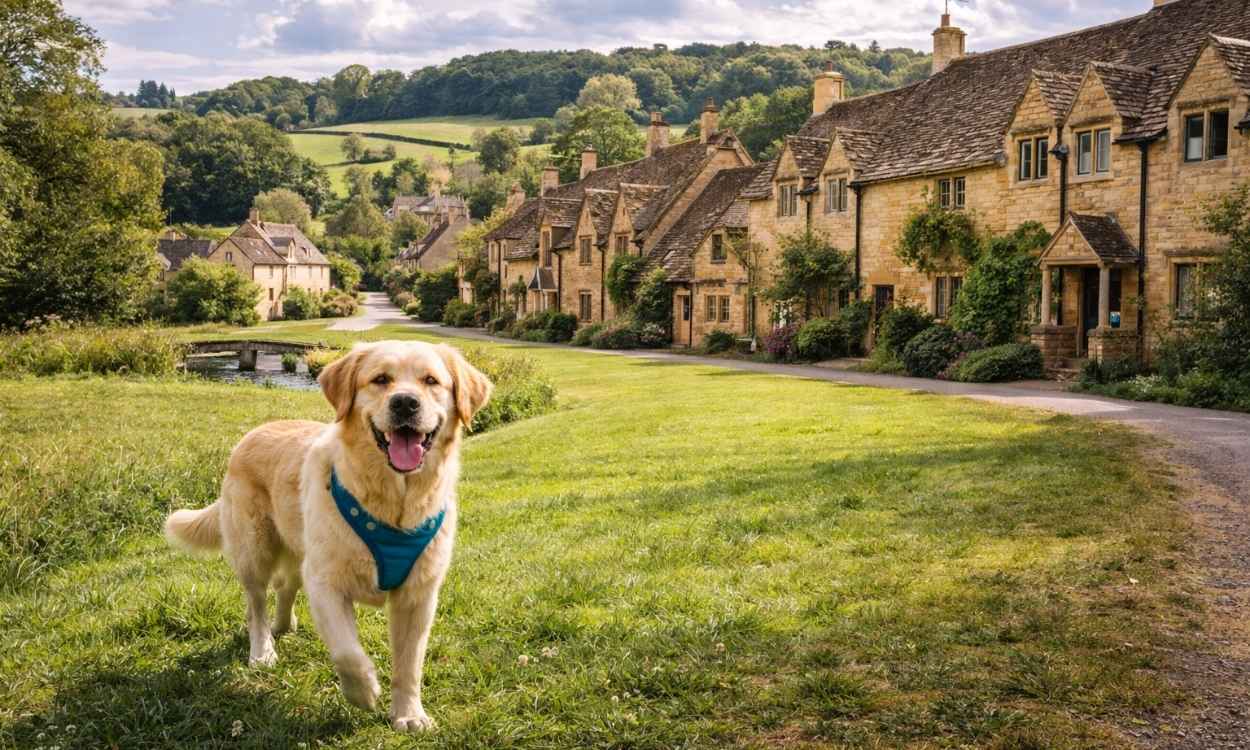
The moment you drive into the Cotswolds, something shifts. The roads narrow, the hedgerows rise, and suddenly you're winding through villages that look like they've been lifted from a period drama. Honey-coloured stone cottages, ancient churches, village greens where time seems irrelevant. And everywhere, dogs. On pub terraces, trotting through market squares, splashing in shallow rivers. The Cotswolds understands dog ownership in a way few places do.
I've brought our pack here countless times, drawn back by the combination of genuinely welcoming pubs, endless walking options, and villages where dogs enhance rather than complicate the experience. This guide covers everything I've learned about exploring England's largest Area of Outstanding Natural Beauty with dogs.
Why the Cotswolds is Perfect for Dogs
The Cotswolds works for dog owners on multiple levels. Understanding why helps you plan trips that make the most of what's available.
First, the walking. Over 3,000 miles of public footpaths cross this region. That's not a typo. Three thousand miles of routes through rolling hills, along river valleys, past ancient woodland, and through some of England's prettiest villages. You could walk here every weekend for years without repeating a route.
Second, the pub culture. Cotswold pubs don't merely tolerate dogs; they celebrate them. Many have dedicated doggy menus. Water bowls appear without asking. Treats sit in jars on bars. The culture here recognises that walkers bring dogs, and walkers spend money. Enlightened self-interest creates genuinely warm welcomes.
Third, the attractions. Unlike many tourist regions where dogs mean missing out, the Cotswolds offers dog-friendly versions of most experiences. Stately home grounds, arboretums, wildlife parks, steam railways, farm shops, and garden centres all welcome four-legged visitors. You don't have to choose between sightseeing and including your dog.
The statistics support this reputation. The Cotswolds consistently ranks among Britain's most dog-friendly destinations in travel surveys. The infrastructure exists because demand created it, and demand exists because the experience genuinely works for dog owners.
Best Dog-Friendly Villages in the Cotswolds
The Cotswolds contains dozens of villages worth visiting with dogs. These represent our favourites, chosen for the combination of beauty, walking access, and dog-friendly facilities.
Bourton-on-the-Water
Bourton-on-the-Water earns its "Venice of the Cotswolds" nickname from the shallow River Windrush running through its centre, crossed by elegant low bridges. Dogs love this river. On warm days, you'll see dozens of them paddling while their owners watch from riverside benches or pub gardens.
The village itself offers excellent dog-friendly facilities. The Cotswold Motoring Museum welcomes dogs inside, making it a genuine rainy-day option. Multiple pubs accept dogs in bar areas. The Duke of Wellington has long welcomed four-legged visitors in its uncarpeted bar, with water bowls available.
Walking options extend in every direction. The route to Lower Slaughter takes about an hour and ranks among the most photogenic walks in England. The model village, Birdland, and other attractions cluster within the village, though some exclude dogs from certain areas.
The Slaughters
Upper and Lower Slaughter sound unfortunate but derive from an Old English word meaning "muddy place." In reality, these twin villages represent Cotswold perfection. Lower Slaughter particularly, with its 19th-century mill, river, and unspoilt cottages, creates scenes that define English village beauty.
The walk connecting the villages takes twenty minutes and suits dogs of all fitness levels. Gentle paths follow the River Eye through meadows and past cottages. The Slaughters Country Inn welcomes dogs in certain areas, providing refreshment options.
These villages work brilliantly as part of longer circular walks. Routes connecting Bourton-on-the-Water, Lower Slaughter, Upper Slaughter, and back create full afternoon adventures with pub stop options.
Stow-on-the-Wold
Stow-on-the-Wold sits at a crossroads where eight roads meet. This hilltop market town has welcomed travellers for centuries, and that hospitality extends enthusiastically to dogs.
The Porch House claims to be England's oldest inn, dating to 947 AD. Dogs are welcome inside this atmospheric pub, making it a favourite with dog owners seeking genuine historic character. The Kings Arms also welcomes dogs, as do several cafes around the market square.
The town's elevated position means walks quickly reach open countryside with panoramic views. Routes towards Broadwell, Lower Swell, and the Swells offer varied terrain and distances. The twice-yearly Stow Horse Fair (May and October) creates atmospheric but crowded conditions when dogs might feel overwhelmed.
Burford
Burford cascades down a steep hill to the River Windrush, its wide main street lined with honey-stone buildings housing antique shops, pubs, and tea rooms. Often called the "Gateway to the Cotswolds," it provides an excellent introduction to the region.
The Lamb Inn welcomes dogs in its bar, lounges, and garden. This 15th-century coaching inn offers character accommodation for overnight stays. The Mousetrap Inn, proudly independent with its own house-blended gin, welcomes dogs and their owners to cosy interiors.
Walking from Burford follows the River Windrush through water meadows. The Cotswold Wildlife Park lies just south, offering the UK's only dog-friendly wildlife park experience. The Tolsey Museum documents local history in a Tudor building overlooking the street.
Broadway
Broadway's wide main street justifies its name. This prosperous village has attracted artists and craftspeople for over a century, creating a concentration of galleries, antique shops, and excellent eating options.
Broadway Tower, a folly on the escarpment above the village, welcomes dogs throughout its grounds and has even installed a dog agility course. The views from this hilltop justify the climb regardless of the tower itself. On clear days, thirteen counties are visible.
The village contains multiple dog-friendly pubs. The Crown and Trumpet offers traditional atmosphere. Walking routes connect to Snowshill, Chipping Campden, and along the Cotswold Way. The Fish Hill climb above the village provides excellent morning exercise.
Chipping Campden
Chipping Campden preserves Cotswold medieval architecture in remarkable condition. The curved High Street, 17th-century Market Hall, and wool church create scenes essentially unchanged for centuries.
The Eight Bells welcomes dogs in its bar area, offering excellent food alongside traditional atmosphere. The Volunteer Inn and Noel Arms Hotel also accept dogs. Cafes around the High Street typically welcome dogs at outdoor tables.
Walking options include the start (or end) of the Cotswold Way, which runs 102 miles to Bath. The route to Broadway via Dover's Hill offers escarpment views and dramatic countryside. The garden at Hidcote Manor (National Trust) welcomes dogs on leads in certain areas.
Bibury
William Morris called Bibury "the most beautiful village in England." The claim remains defensible. Arlington Row, a terrace of medieval weavers' cottages, appears on British passports and countless calendars.
Dogs are welcome to walk through the village, though the most photographed areas can get crowded in peak season. The Swan Hotel welcomes dogs in certain areas. Bibury Trout Farm allows dogs, offering a different kind of attraction.
Circular walks from Bibury explore the Coln Valley. Routes towards Coln St Aldwyns and Barnsley provide quieter countryside and excellent pub options.
Dog-Friendly Walks in the Cotswolds
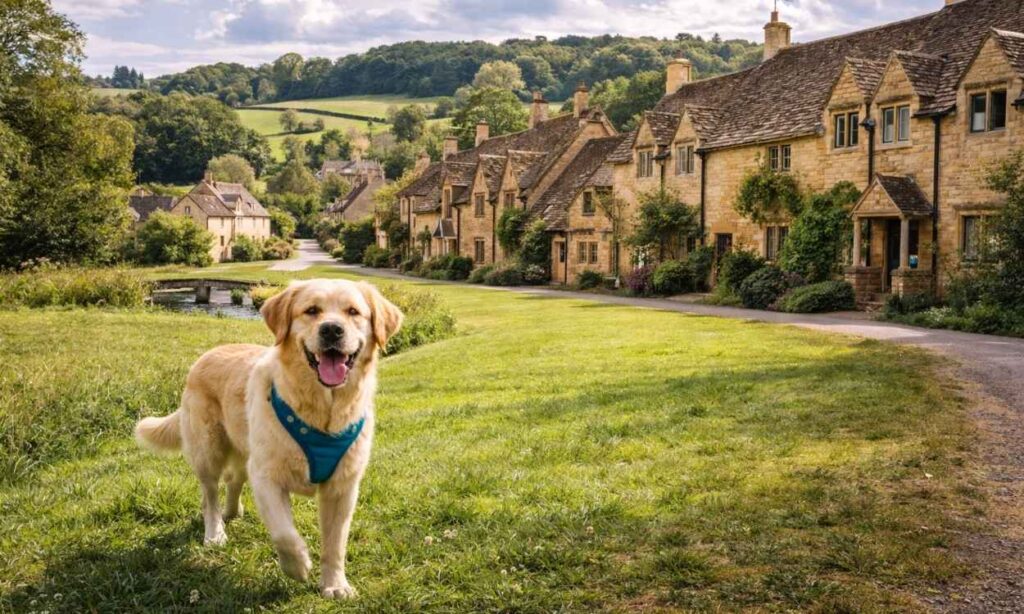
With 3,000 miles of footpaths, selecting the best walks requires focus. These routes represent varied distances and characters, each tested with dogs.
The Slaughters Circular
This classic walk connects Bourton-on-the-Water, Lower Slaughter, and Upper Slaughter in a 7-mile loop. The route follows the River Windrush and River Eye through meadows and past the famous mill.
Terrain suits most dogs, with gentle gradients and well-maintained paths. Stiles exist but most have dog-friendly gaps. Allow 3-4 hours including village exploration time.
The walk rates as the most popular dog-friendly route in the Cotswolds according to AllTrails users, with good reason. Pretty throughout, excellent pub options, and manageable for average fitness levels.
Winchcombe and Sudeley Castle
Winchcombe offers excellent walking combined with the impressive Sudeley Castle. Dogs can explore castle grounds while owners admire the gardens and architecture.
The circular walk from the village passes through the castle estate and climbs to the Cotswold Way escarpment. Views extend across the Vale of Evenlode. Distance varies with route choice, from 4-8 miles.
Winchcombe itself deserves exploration time. The Lion Inn welcomes dogs and serves excellent food. Timbered buildings and independent shops create atmospheric village character.
Broadway Tower Circular
Starting from Broadway, this walk climbs Fish Hill to Broadway Tower before returning via different paths. The tower itself, a folly built in 1798, stands 65 feet tall on one of the Cotswolds' highest points.
Dogs are welcome throughout the tower grounds, including the cafe with dog-friendly seating. The new dog agility course provides entertainment for energetic dogs. Views reward the climb regardless of weather.
The full circular covers about 5 miles with significant elevation gain. Shorter options exist for those wanting tower views without the full walk.
Cotswold Way Sections
The 102-mile Cotswold Way runs from Chipping Campden to Bath along the escarpment edge. Dogs can walk the entire route, though it requires planning for accommodation and logistics.
Day sections work brilliantly for dog owners. Chipping Campden to Broadway (about 10 miles) provides a classic introduction. Cleeve Hill to Winchcombe offers dramatic views. Painswick to Stroud traverses beech woodland.
The path is well-maintained and waymarked throughout. Stiles can slow progress with dogs, but most sections are manageable. Long-distance trails require more planning but offer outstanding experiences.
Chedworth Roman Villa Walk
Combining history with walking, this route visits the remarkably preserved Roman villa at Chedworth. The villa itself welcomes dogs in outdoor areas, though not inside the museum building.
Circular walks from the villa explore the surrounding woodland and valleys. Routes of 3-6 miles suit different time constraints. The National Trust manages the site well for dog owners.
Cotswold Water Park
For dogs who love swimming, the Cotswold Water Park offers 150 lakes across 40 square miles. Not all lakes permit dog access, but many do, providing swimming opportunities unavailable elsewhere in the region.
Walking routes connect multiple lakes with varied scenery. The Gateway Centre provides information and refreshment. Routes range from flat lakeside strolls to longer countryside explorations.
Dog-Friendly Attractions in the Cotswolds
The Cotswolds offers more dog-friendly attractions than almost any other tourist region. These represent highlights worth planning around.
Blenheim Palace
Blenheim Palace ranks among England's grandest stately homes. Birthplace of Winston Churchill and principal residence of the Dukes of Marlborough, its UNESCO World Heritage status reflects genuine significance.
Dogs cannot enter the palace itself, but 2,000 acres of Capability Brown-designed parkland welcome them. The lake, woodland, and open grassland provide hours of exploration. Dogs are also welcome in the first part of the Walled Garden and the Pantry Cafe, which sells doggy ice cream.
Entrance fees are significant, but the grounds alone justify the cost for dog owners. Annual passes make repeat visits economical. Location near Woodstock, just outside Oxford, makes day trips from London feasible.
Westonbirt Arboretum
Westonbirt, The National Arboretum, contains 15,000 trees representing 2,500 species across 600 acres. Two-thirds of the site welcomes dogs, with Silk Wood allowing off-lead walking.
The autumn colours here rank among England's finest. Japanese maples, American oaks, and native species combine in spectacular displays. Spring brings bluebells and magnolias. Summer offers cool shade. Winter reveals tree architecture.
Dogs can explore Silk Wood off-lead if well-behaved. The Downs area requires leads. The cafe welcomes dogs in outdoor seating. Membership makes sense for anyone visiting more than twice yearly.
Batsford Arboretum
Batsford Arboretum near Moreton-in-Marsh provides an alternative to Westonbirt with its own distinct character. Japanese influences reflect the creator's diplomatic service in Japan. Cherry blossom in spring and maples in autumn draw photographers.
Dogs must stay on leads throughout but are welcome in the gardens, garden centre, and cafe. The collection includes 2,850 labelled specimens with particular strength in acers and flowering cherries.
Special "Doggy Days" include canine massage therapists and dog-focused activities. The garden centre stocks quality gardening supplies and makes a destination in itself.
Cotswold Wildlife Park
Cotswold Wildlife Park near Burford allows dogs, making it unique among major UK wildlife attractions. You can see rhinos, giraffes, penguins, and big cats while your dog accompanies you.
Dogs must stay on leads and certain areas restrict access for animal welfare reasons. However, the majority of the park is accessible, creating a genuine family day out that includes four-legged family members.
The manor house and formal gardens add character beyond the animal collection. Picnic areas allow bringing your own food. This represents one of the Cotswolds' most unusual dog-friendly experiences.
Gloucestershire Warwickshire Steam Railway
Steam train enthusiasts can include their dogs on heritage railway journeys. Dogs travel in standard carriages for a flat-rate fare, experiencing the romance of steam travel through Cotswold countryside.
The railway runs through scenic landscapes between Toddington and Cheltenham Racecourse. Special events throughout the year include dining trains and themed journeys. Two dogs maximum per group keeps carriages manageable.
Broadway Tower
Already mentioned as a walking destination, Broadway Tower itself welcomes dogs throughout its grounds. The viewing platform provides stunning Cotswold panoramas. The cafe offers dog-friendly seating.
The new dog agility course adds specific canine entertainment. The tower grounds include exhibition spaces covering nuclear bunker history and William Morris connections. An excellent half-day destination combining walk and attraction.
Farm Shops
Cotswold farm shops welcome dogs almost universally, providing shopping opportunities often impossible with dogs elsewhere. Daylesford Organic, the upmarket farm shop empire, welcomes dogs throughout. Diddly Squat Farm Shop (Jeremy Clarkson's venture) similarly accepts four-legged visitors.
These aren't just shops but destinations. Cafes, restaurants, gardens, and play areas cluster around retail spaces. Spending an hour or two browsing while your dog accompanies you creates relaxed morning or afternoon experiences.
Dog-Friendly Pubs in the Cotswolds
Cotswold pubs set standards for dog-friendly hospitality. These represent highlights, though dozens more welcome dogs enthusiastically.
The Porch House, Stow-on-the-Wold
Claiming to be England's oldest inn (947 AD), The Porch House combines extraordinary history with genuine dog welcome. Atmospheric interiors, excellent food, and accommodation options make this a destination in itself.
The Wild Rabbit, Kingham
Lady Bamford's reinvention of a traditional pub brings Daylesford Organic quality to country dining. Dogs are welcome in bar areas, with gardens providing additional space. Organic, locally-sourced food reflects the Daylesford philosophy.
The Potting Shed, Crudwell
The Potting Shed makes dogs a priority rather than an afterthought. Treats at the bar, water bowls everywhere, and genuine enthusiasm for four-legged guests. Two acres of gardens provide outdoor space. Monthly-changing menus use fresh, local produce.
The Village Pub, Barnsley
Style and substance combine at The Village Pub. Dog-friendly bar areas welcome four-legged visitors. Sheltered courtyard with outdoor heaters extends seasons. Contemporary takes on English pub food change with seasons.
The King's Arms, Didmarton
Previously named most dog-friendly pub in the Cotswolds by dogfriendlycotswolds.com. Dogs welcome in pub and guest rooms. Free treats and water. Doggy beer for sale. Resident pub dogs to meet. Large enclosed garden with pizza oven in summer.
The Ebrington Arms, Ebrington
Traditional 17th-century pub near Chipping Campden. Dogs welcome in bar dining areas. Elevated pub food using local ingredients. Guest ales rotate regularly. Accommodation available for overnight stays.
The Lamb Inn, Burford
15th-century coaching inn welcoming dogs in bar, lounges, and garden. Character accommodation. Central Burford location for exploring the "Gateway to the Cotswolds."
The Hollow Bottom, Guiting Power
Rural pub beloved by locals and visitors alike. Cosy bar, terrace, and covered outdoor area. Donnington ales on tap. Excellent views of Evenlode Valley nearby at Batsford.
Dog-Friendly Accommodation in the Cotswolds
The Cotswolds offers exceptional dog-friendly accommodation ranging from simple cottages to luxury retreats.
Cottages
Self-catering cottages suit dog owners perfectly, providing space, flexibility, and typically enclosed gardens. The Cotswolds has excellent cottage stock, from tiny boltholes for couples to manor houses for groups.
Look for properties with secure gardens, ground-floor access, and proximity to walks. Many cottages specifically market to dog owners with no restrictions on numbers or sizes.
Hotels and Inns
Several dog-friendly hotels serve the Cotswolds. The Pig at Barnsley House (formerly Barnsley House) offers luxury with dog welcome. Traditional coaching inns throughout the region provide character accommodation.
Rooms in pubs combine eating and sleeping conveniently. After dinner, you simply walk upstairs. The Kings Arms Didmarton, Ebrington Arms, and Lamb Inn all offer this option.
Unique Stays
The Cotswolds suits glamping and unusual accommodation. Safari tents, shepherd's huts, and converted buildings provide memorable stays. Many specifically welcome dogs, understanding their appeal to adventurous travellers.
Planning Your Cotswolds Trip
Best Time to Visit
The Cotswolds rewards visits year-round. Spring brings lambs, wildflowers, and cherry blossom at Batsford. Summer offers long days and warm pub gardens. Autumn delivers spectacular colours, particularly at Westonbirt. Winter provides cosy pub fires and empty footpaths.
Peak season (Easter to September) brings crowds to popular villages. Early morning visits to Bourton-on-the-Water or Bibury avoid the worst congestion. Weekdays are quieter than weekends throughout the year.
Getting Around
The Cotswolds covers a large area without comprehensive public transport. Driving provides flexibility essential for dog owners. Roads are narrow and winding but generally well-maintained.
Base yourself centrally to minimise driving. Stow-on-the-Wold, Bourton-on-the-Water, or Burford provide good access to multiple areas. Alternatively, stay in different locations to experience varied villages.
Some bus services connect major villages, and dogs typically travel free. However, relying on public transport with dogs limits options significantly.
What to Pack
Cotswold weather changes quickly. Waterproofs and layers are essential regardless of forecast. Walking boots suit the terrain better than trainers, especially after rain when paths become muddy.
For dogs, bring standard travel essentials plus extra towels. River paddling, muddy paths, and enthusiastic exploration create wet, dirty dogs. Most accommodation appreciates clean dogs before entry.
Frequently Asked Questions
Are dogs allowed in Cotswold villages?
Yes. All Cotswold villages welcome dogs on leads in public areas. Most pubs, many cafes, and numerous shops accept dogs inside. The culture here genuinely welcomes four-legged visitors.
Which is the most dog-friendly Cotswold village?
Bourton-on-the-Water combines dog-friendly pubs, the paddle-friendly river, indoor attractions accepting dogs, and excellent walking access. Stow-on-the-Wold rivals it with outstanding pubs and historic atmosphere.
Can dogs visit Blenheim Palace?
Dogs cannot enter the palace building but are welcome throughout the 2,000-acre parkland, in the first part of the Walled Garden, and at the Pantry Cafe. The grounds alone provide a full day's exploration.
Are there dog-friendly wildlife parks in the Cotswolds?
Yes. Cotswold Wildlife Park near Burford is the UK's only major wildlife park welcoming dogs. Certain areas have restrictions, but most of the park is accessible with dogs on leads.
What's the best walk in the Cotswolds with a dog?
The Slaughters Circular from Bourton-on-the-Water rates highest on AllTrails. The 7-mile route passes through Lower and Upper Slaughter with pub stop options and gentle terrain suitable for most dogs.
Can dogs go on the Cotswold Way?
Yes. Dogs can walk the entire 102-mile route from Chipping Campden to Bath. Day sections work well for those not attempting the full distance. Stiles slow progress but most are manageable.
Are Cotswold pubs dog-friendly?
Most Cotswold pubs welcome dogs, typically in bar areas rather than dining rooms. Many provide water, treats, and dedicated dog menus. The pub culture here specifically caters to walking visitors with dogs.
Can dogs visit Westonbirt Arboretum?
Yes. Dogs can explore two-thirds of the 600-acre arboretum. Silk Wood allows off-lead walking. The Downs area requires leads. The cafe welcomes dogs in outdoor seating.
Is the Cotswolds good for reactive dogs?
The extensive footpath network allows route planning that avoids busy areas. Early mornings and weekdays provide quieter conditions. However, popular villages can be crowded in peak season, requiring management for reactive dogs.
When is the best time to visit the Cotswolds with a dog?
Autumn offers spectacular colours and quieter conditions after summer. Spring brings wildflowers and lambs. Winter provides cosy pubs and empty paths. Summer has longest days but busiest villages.
Start Your Cotswolds Adventure
The Cotswolds represents English countryside at its finest, and the region's genuine welcome for dogs makes it accessible to the whole family. From morning walks through dewy meadows to afternoon pub sessions by crackling fires, every element works with dogs rather than against them.
The combination of 3,000 miles of footpaths, dog-friendly attractions, welcoming pubs, and beautiful villages creates something special. Add the practical aspects, including excellent cottage accommodation and good transport links, and you have Britain's most complete dog-friendly destination.
For other stunning UK destinations with different characters, explore our guides to Cornwall, the Lake District, and Yorkshire. Each offers unique experiences, but the Cotswolds' combination of beauty, culture, and canine welcome makes it essential for any dog-owning traveller.
Your dog will fit right in here. Everyone else's does too.
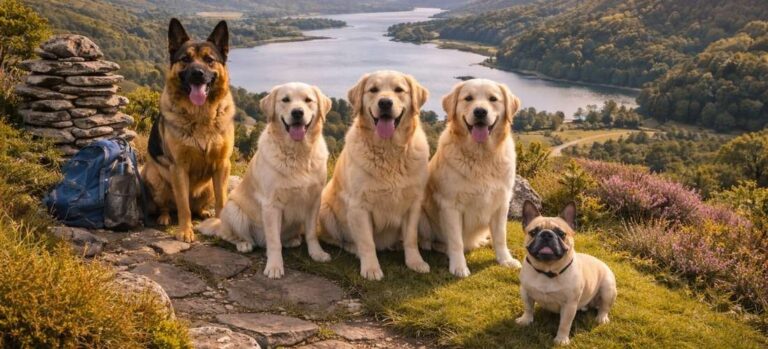
Luke explores the UK with Charlie (German Shepherd), Buster and Ember (Golden Retrievers), Simba and Max (Labradors), and Molly (French Bulldog). This six-dog pack has tested beaches, trails, pubs, and cottages throughout Britain, providing the genuine experience behind every guide on this site.



⚠️ Comments Currently Disabled
We've had to temporarily disable our comment section due to a high volume of spam. We apologise for any inconvenience this may cause to our lovely readers!
If you'd like to share your thoughts, experiences, or feedback, please send us an email directly at info@thedogholiday.co.uk and we'll be happy to add your comment manually.
Thank you for your understanding! 🐾
Leave a Comment