
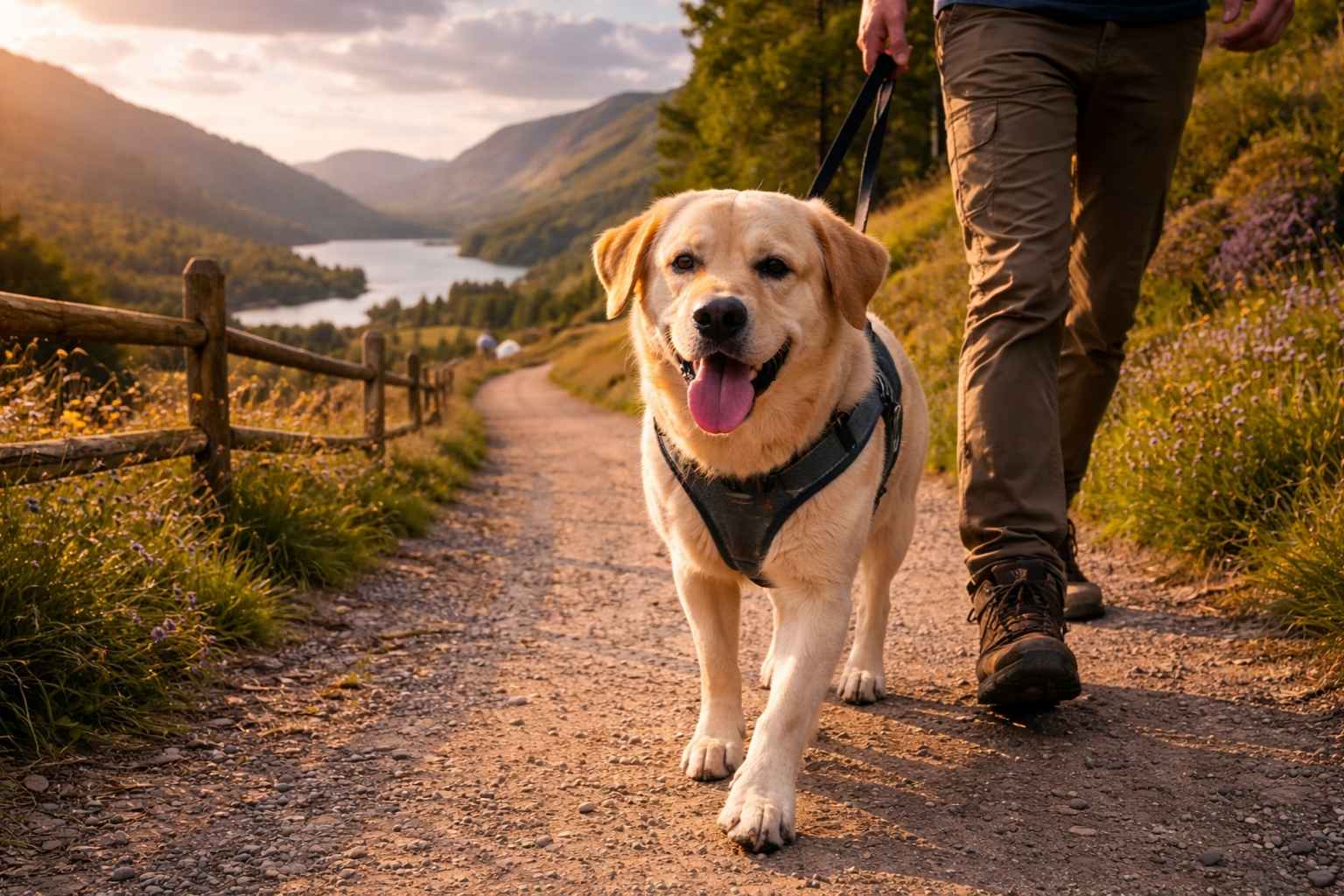
Hip dysplasia shouldn't mean the end of adventures. With thoughtful planning and appropriate adaptations, dogs with this common joint condition can enjoy wonderful holidays. The key is working with your dog's limitations rather than against them, choosing destinations that suit their mobility, and prioritising their comfort throughout.
This guide shares everything we've learned from travelling with Charlie, our German Shepherd who has hip dysplasia. From choosing appropriate walks to managing travel comfort, here's how to create enjoyable, safe holidays for dogs with joint conditions.
Understanding Hip Dysplasia and Travel
What Hip Dysplasia Means for Travel
Hip dysplasia is a malformation of the hip joint that causes pain, stiffness, and reduced mobility.
Travel Implications:
- Limited walking distance
- Difficulty with certain terrain
- Stiffness after rest
- Potential pain flare-ups
- Need for comfortable rest
- Medication management
Not the End of Adventures: Dogs with hip dysplasia can still enjoy holidays. The approach simply needs adaptation.
Severity Varies
Hip dysplasia ranges from mild to severe.
Mild Cases:
- May handle moderate walks
- Occasional stiffness
- Responds well to management
Moderate Cases:
- Limited walking distance
- Regular medication needed
- Careful terrain selection
- Rest breaks essential
Severe Cases:
- Very limited mobility
- Significant pain management
- Highly adapted activities
- Comfort is priority
Know Your Dog: Work with your vet to understand your dog's specific limitations and plan accordingly.
Planning Holidays
Choosing Destinations
Ideal Characteristics:
- Flat or gentle terrain
- Accessible walks nearby
- Accommodation with ground floor
- Not too remote (vet access)
- Comfortable environments for rest
Good Destinations:
Norfolk: Flat terrain, accessible beaches, gentle coastal walks. See our Norfolk guide.
Coastal Villages: Flat beach walks, nearby cafes for rest stops, gentle exploration.
Cotswolds Villages: Short walks between characterful locations, pub stops, gentle terrain.
Urban Breaks: Flat pavements, frequent rest opportunities, accessible environments.
Challenging Destinations:
- Lake District (steep terrain)
- Scottish Highlands (challenging access)
- Dartmoor (uneven ground)
- Yorkshire Dales (hilly)
These can still work with careful route planning and realistic expectations.
Activity Planning
The Key Principle: Quality over quantity.
Good Approach:
- Multiple short walks rather than one long walk
- Rest between activities
- Swimming as low-impact exercise
- Gentle exploration at dog's pace
- Flexible schedule that adapts to how dog feels
Avoid:
- Marathon walking days
- Challenging terrain
- Rushed schedules
- Overestimating capabilities
Accommodation Considerations
Essential Features
Ground Floor:
- Stairs are problematic
- Quick outdoor access for toilet breaks
- Easy entry/exit
- No jumping onto furniture
Comfortable Flooring:
- Hard floors can be slippery
- Rugs or carpet provide grip
- Bring non-slip mats if needed
Space for Bed:
- Supportive bedding essential
- Room for orthopedic bed
- Away from drafts
- Quiet rest space
Best Accommodation Types
Ground Floor Cottages: Direct outdoor access, space for dog, own comfortable setup.
Ground Floor Hotel Rooms: Quick garden access, level surfaces, staff assistance if needed.
Holiday Park Lodges: Often single-level, parking nearby, level access.
Accessible Apartments: Designed for accessibility, level throughout, easy access.
What to Bring
Bedding:
- Orthopedic dog bed (don't rely on accommodation providing)
- Memory foam or supportive mattress
- Familiar blankets
Mobility Aids:
- Ramps for car access
- Non-slip mats
- Support harness if used
Transport Considerations
Car Travel
Car travel can be comfortable or problematic depending on setup.
Challenges:
- Getting in and out
- Long periods in one position
- Stiffness after travel
Solutions:
- Ramp for entry/exit (essential)
- Supportive, padded surface
- Regular breaks to move
- Comfortable temperature
- Familiar bedding in car
Journey Planning:
- Break long journeys
- Stop every 1-1.5 hours
- Short walk at each stop
- Let dog move and stretch
- Don't rush
Train Travel
Trains can work well.
Advantages:
- Dog can adjust position
- Floor space to lie down
- Regular stops for movement
- No lifting required
Tips:
- Choose quieter services
- Bring supportive bedding
- Water available
- Position comfortably
Ferries
For longer crossings, consider comfort.
Pet-Friendly Cabins:
- Dog can rest on familiar bedding
- Temperature controlled
- Space to adjust position
- Preferable to vehicle deck
Managing Comfort
Medication Management
Before Travel:
- Consult vet about travel plans
- Adequate medication supply (plus extra)
- Know dosage schedule
- Understand what to do if pain increases
During Travel:
- Maintain medication routine
- Have pain relief accessible
- Know signs of increased pain
- Emergency vet numbers ready
Physical Comfort
Daily Management:
- Gentle warm-up walks in morning
- Medication timing appropriate
- Rest after activity
- Comfortable sleeping arrangements
- Appropriate exercise level
Signs Dog is Uncomfortable:
- Reluctance to walk
- Limping or bunny-hopping
- Difficulty rising
- Changed posture
- Behavioural changes
Response:
- Rest
- Medication if appropriate
- Reduce activity level
- Consult vet if concerned
Weather Considerations
Cold Weather:
- Stiffness often worse in cold
- Keep dog warm
- Gentle warm-up essential
- Consider coat for cold walks
Hot Weather:
- Heat can reduce stiffness
- Don't overdo activity because dog seems more mobile
- Maintain sensible limits
Best Activities
Swimming
Swimming is excellent for dogs with hip dysplasia.
Benefits:
- Low-impact exercise
- Builds muscle without joint stress
- Many dogs enjoy it
- Maintains fitness without pain
Considerations:
- Access to water (gentle entry, not jumping)
- Support getting in and out
- Don't overdo duration
- Dry thoroughly after
Great Destinations:
- Lake District tarns (gentle access)
- Quiet beaches with gentle entry
- Rivers with shallow access points
Gentle Walking
Ideal Walks:
- Flat terrain
- Good surfaces
- Appropriate length
- Rest opportunities
- Interesting for dog (sniffing, exploring)
Adaptations:
- Multiple short walks vs one long walk
- Turn back when dog shows fatigue
- Choose circular routes that can be shortened
- Avoid steep hills
Rest-Focused Activities
Perfect for Hip Dysplasia Dogs:
- Cafe visits
- Pub stops
- Garden relaxation
- People watching
- Scenic drives with short stops
- Gentle exploration
Practical Tips from Experience
What We've Learned with Charlie
Planning:
- Research walk terrain before committing
- Always have backup shorter options
- Accommodation choice matters hugely
- Vet access at destination
During Trips:
- Morning walk when stiffest, keep short
- Longer walk midday when limbered up
- Evening gentle stroll
- Rest periods are not optional
Best Discoveries:
- Beach holidays work well (flat, sand is forgiving)
- Cottages with gardens provide flexible exercise
- Swimming destinations ideal
- Quality of walks matters more than quantity
Packing for Hip Dysplasia Dogs
Essential Items:
- Orthopedic bed (don't compromise)
- All medications (plus extra)
- Ramp for car
- Non-slip mats
- Support harness (if used)
- Comfortable bedding for car
- Joint supplements
- Emergency vet information
Nice to Have:
- Heat pad for stiffness
- Massage tools
- Extra supportive bedding
- Raised food bowls
Working with Your Vet
Before Travel
Discuss:
- Specific limitations for your dog
- Medication adjustments if needed
- What activities are appropriate
- Warning signs to watch for
- Emergency protocols
Obtain:
- Adequate medication supply
- Written summary of condition and treatment
- Emergency vet recommendations
During Travel
Stay Alert:
- Monitor for changes
- Maintain medication schedule
- Adjust activity based on how dog presents
- Don't push through pain
Seek Help If:
- Significant increase in pain
- Loss of mobility
- Refusing to walk
- Behavioural changes indicating distress
Realistic Expectations
What's Possible
Dogs with hip dysplasia can enjoy:
- Beach holidays with gentle walks
- Cottage breaks with garden time
- Urban exploration at gentle pace
- Swimming destinations
- Scenic drives with short stops
- Cafe and pub culture
- Quality time in beautiful places
What May Not Work
Be realistic about:
- Long-distance hiking
- Challenging terrain
- Full days of walking
- Rushed schedules
- Remote locations without vet access
The Right Mindset
Focus On:
- Quality of experience, not distance covered
- Dog's comfort and happiness
- Shared time in new places
- Adapting plans to what works
Remember:
- A short walk in a beautiful place is still wonderful
- Rest and comfort are legitimate activities
- Your dog cares about being with you, not covering miles
Frequently Asked Questions
Can dogs with hip dysplasia still enjoy holidays?
Absolutely. With appropriate planning, comfortable accommodation, and adapted activities, dogs with hip dysplasia can have wonderful adventures.
What's the best destination for a dog with hip dysplasia?
Flat coastal areas like Norfolk work well. Swimming destinations are excellent. Avoid mountainous or challenging terrain.
How much walking can a dog with hip dysplasia do?
This varies by severity. Work with your vet to understand your dog's specific limitations. Multiple short walks often work better than one long one.
Is swimming good for dogs with hip dysplasia?
Yes, excellent. Low-impact exercise that builds muscle without stressing joints. Ensure gentle water access and don't overdo duration.
What accommodation suits dogs with hip dysplasia?
Ground floor with direct outdoor access. Comfortable flooring. Space for orthopedic bed. Not too remote from veterinary care.
Should I bring my dog's bed on holiday?
Yes. Supportive, familiar bedding is essential. Don't rely on accommodation providing appropriate orthopedic support.
How do I manage car travel with a dog with hip dysplasia?
Ramp for entry/exit (essential). Comfortable, supportive surface. Regular breaks. Don't rush journeys.
What if my dog's condition worsens during holiday?
Know emergency vet locations. Have medication available. Be prepared to rest and reduce activity. Seek veterinary advice if concerned.
Adventures Without Limits
Hip dysplasia changes how you approach holidays, but it doesn't end them. With thoughtful planning, appropriate destinations, and focus on comfort, dogs with joint conditions can enjoy wonderful experiences alongside their owners.
The best adventures aren't measured in miles walked but in quality time shared. A gentle beach stroll, a comfortable pub stop, or a peaceful garden rest can be just as precious as any mountain summit.
Charlie the German Shepherd has hip dysplasia but hasn't let it stop his adventures. From flat Norfolk beaches to gentle Cotswolds walks, he's proved that adapting to limitations opens up new ways to enjoy travel together.

⚠️ Comments Currently Disabled
We've had to temporarily disable our comment section due to a high volume of spam. We apologise for any inconvenience this may cause to our lovely readers!
If you'd like to share your thoughts, experiences, or feedback, please send us an email directly at info@thedogholiday.co.uk and we'll be happy to add your comment manually.
Thank you for your understanding! 🐾
Leave a Comment