
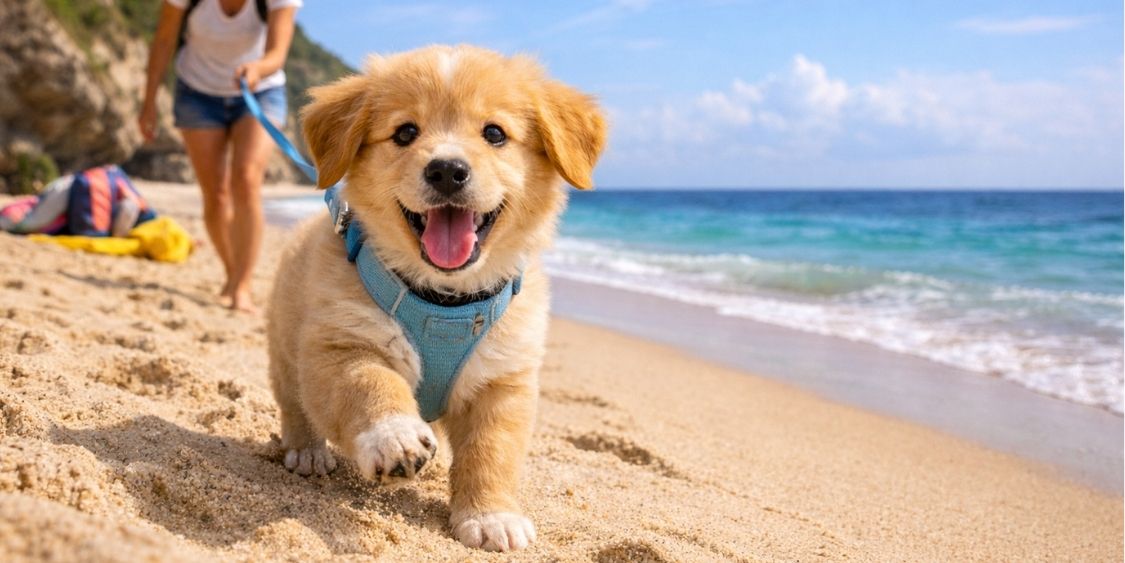
Your puppy's first holiday is exciting but requires careful planning. Young dogs have different needs, limited stamina, and are still learning about the world. Getting early travel experiences right sets the foundation for a lifetime of adventures together.
This guide covers everything you need to know about travelling with puppies.
When Can Puppies Travel?
Vaccination Considerations
Before Vaccinations Complete:
- Keep away from areas with unknown dogs
- Avoid public dog areas
- Garden and private spaces only
- Carry puppy rather than walk in public areas
After Vaccinations Complete:
- Usually 10-12 weeks minimum
- Check with your vet
- Then safe for public spaces
- Can begin proper adventures
Age Guidelines
8-12 Weeks:
- Too young for proper holidays
- Focus on home settling
- Short car journeys for practice
- Garden exploration only
12-16 Weeks:
- Vaccinations typically complete
- Short trips possible
- Day trips ideal
- Overnight stays with preparation
4-6 Months:
- Ready for first proper holidays
- Still limited stamina
- Short walks only
- Socialisation focus
6-12 Months:
- Longer holidays possible
- Building stamina
- Still growing (protect joints)
- Increasing adventure capability
Physical Development
Growth Plates:
- Not closed until 12-18 months (breed dependent)
- Limit jumping and intense exercise
- Protect developing joints
- Appropriate activity levels
Preparing for First Trips
Car Travel Practice
Before Holiday:
- Multiple short car journeys
- Positive associations (treats, praise)
- Gradually increase duration
- Practice crate or restraint
- Address travel sickness early
Building Positive Associations:
- Car = good things happen
- Short trips to fun places
- Treats and comfort
- Calm, relaxed journeys
Socialisation Opportunities
Travel as Socialisation:
- New environments
- Different surfaces and sounds
- Meeting people
- Seeing other dogs
- Building confidence
Crate Training
Why It Matters for Travel:
- Safe car travel
- Familiar space anywhere
- Settling in new places
- Management tool
Before Travelling:
- Crate should be positive space
- Puppy comfortable and relaxed
- Practiced at home extensively
Choosing First Destinations
Ideal First Holiday Destinations
What to Look For:
- Not too far (shorter journey)
- Quiet environment
- Enclosed garden essential
- Safe, controlled spaces
- Good for socialisation without overwhelming
Good First Choices:
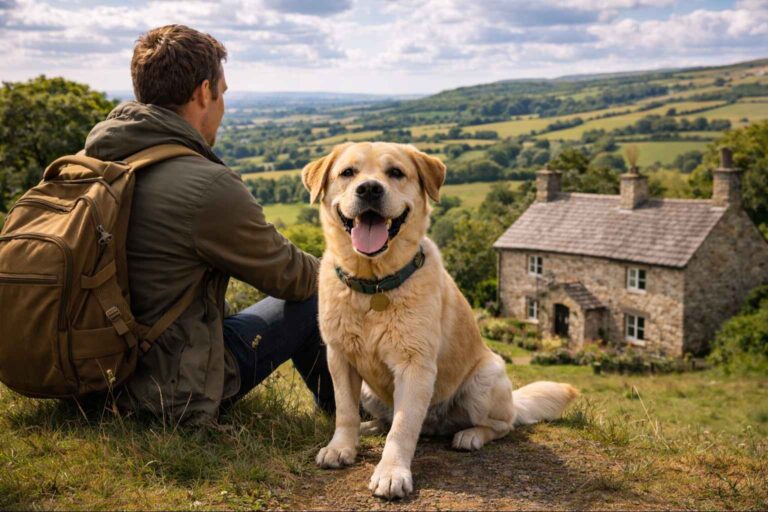
- Quiet countryside cottages
- Rural locations with gardens
- Peaceful coastal areas (off-peak)
- Farm stays with secure grounds
What to Avoid Initially
Too Challenging:
- Very busy tourist destinations
- Long journeys
- Remote locations (vet access)
- Extreme weather destinations
- Challenging terrain
Distance Considerations
First Holidays:
- 1-2 hours maximum journey
- Easy return if problems
- Not too far from home comforts
- Build up to longer trips
Accommodation Needs
Essential Features
Enclosed Garden:
- Absolutely essential for puppies
- Secure fencing (puppy-proof)
- Check for gaps
- Safe toilet training space
- Supervised play area
Ground Floor:
- No stairs for young joints
- Easy garden access
- Quick toilet breaks
- Safer for growing puppies
Safe Environment:
- Puppy-proofed as much as possible
- No hazards
- Secure spaces
- Easy to supervise
Questions to Ask
Before Booking:
- Is the garden fully enclosed and puppy-proof?
- Are there any gaps in fencing?
- Is the property ground floor or has stairs?
- Any hazards to be aware of?
- How far to nearest vet?
Exercise Guidelines
Protecting Growing Joints
The General Rule: 5 minutes of exercise per month of age, twice daily.
Examples:
- 3 months old: 15 minutes twice daily
- 4 months old: 20 minutes twice daily
- 5 months old: 25 minutes twice daily
- 6 months old: 30 minutes twice daily
Important:
- This is structured exercise
- Free play in garden additional
- Quality over quantity
- Rest is important
What Counts as Exercise
Structured Exercise:
- Lead walks
- Training walks
- Purposeful activity
Additional Okay:
- Garden play
- Free pottering
- Sniffing and exploring
- Mental stimulation
Activities to Avoid
Until Growth Plates Close:
- Jumping on/off heights
- Excessive running
- Long hikes
- Rough play
- Stairs repeatedly
- High-impact activities
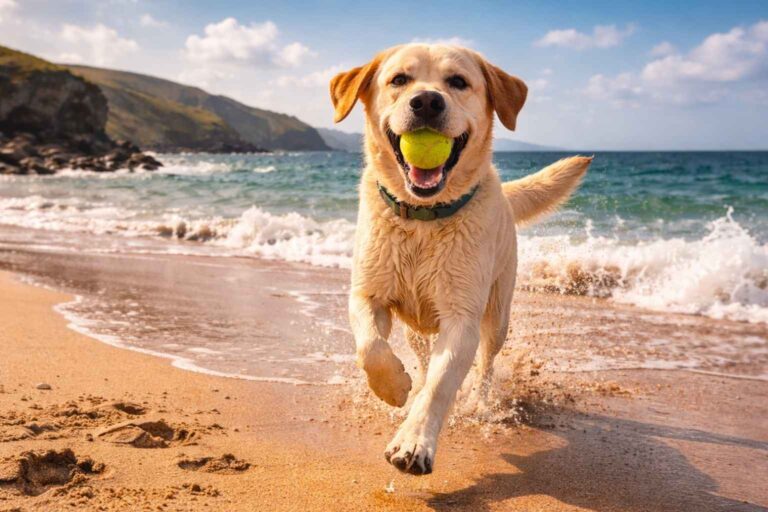
Beach Visits
Puppies and Beaches:
- Short visits appropriate
- Soft sand is tiring
- Don't overdo distance
- Swimming supervision essential
- Check water safety
- Rinse salt water off
Routine Maintenance
Why Routine Matters
Puppies Need:
- Consistent feeding times
- Regular toilet breaks
- Predictable schedule
- Adequate sleep
- Familiarity within new experiences
Holiday Routine
Maintain:
- Same meal times
- Same food (bring from home)
- Regular toilet schedule
- Training consistency
- Sleep schedule
Allow Flexibility:
- New experiences within routine
- Exploration at appropriate pace
- Rest when needed
Toilet Training on Holiday
Maintaining Progress
Continue Training:
- Regular toilet opportunities
- Praise for outdoor toileting
- Same commands as home
- Patience in new environment
Expect Setbacks:
- New place = some accidents
- Don't punish
- Increase toilet breaks
- Maintain positive approach
Setting Up for Success
On Arrival:
- Straight to garden for toilet
- Show puppy outdoor toilet area
- Praise for success
- Frequent breaks initially
Sleep and Rest
Puppies Need Lots of Sleep
Sleep Requirements:
- 18-20 hours per day for young puppies
- Reduces as they age
- Overtired puppies are difficult puppies
- Rest is growth time
Holiday Sleep
Ensure:
- Quiet space for naps
- Familiar bed/blanket
- Regular rest periods
- Don't overstimulate
- Enforce calm times
Overtired Signs
Watch For:
- Biting/nipping increases
- Unable to settle
- Hyperactive behaviour
- Grumpy or reactive
- Not themselves
Response:
- Enforced rest time
- Quiet space
- Calm environment
- Let them sleep
Socialisation Focus
Holiday as Socialisation
New Experiences:
- Different environments
- Various surfaces (sand, grass, gravel)
- New sounds
- Meeting people
- Seeing other dogs
- Building confidence
Positive Experiences Only
Ensure:
- Don't overwhelm
- Let puppy approach at own pace
- Positive associations
- Remove from scary situations
- Build confidence gradually
What to Expose Them To
Good Holiday Socialisation:
- Quiet beaches
- Countryside sounds
- Friendly people (asking first)
- Well-behaved calm dogs
- Different surfaces
- Gentle new experiences
Feeding on Holiday
Maintain Normal Food
Important:
- Bring puppy's regular food
- Don't change diet on holiday
- Same feeding schedule
- Same portions
Why:
- Digestive upset likely with change
- Holiday stress enough without food change
- Familiar food is comfort
Bring Enough
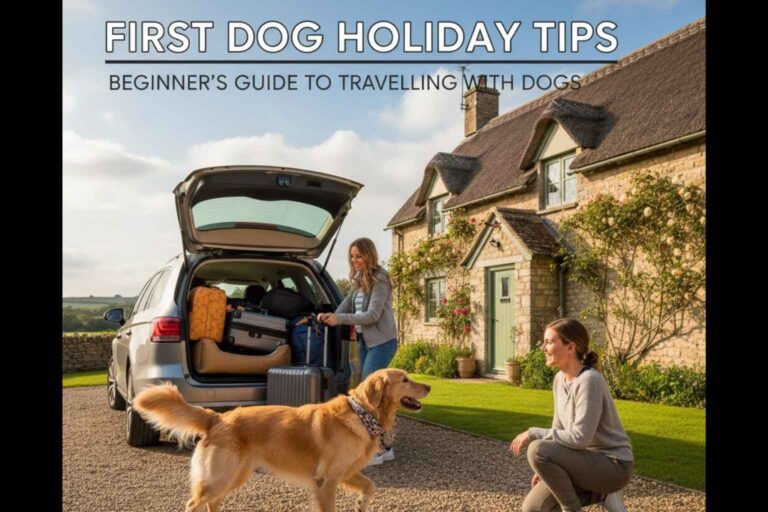
Pack:
- Full holiday supply plus extra
- Treats
- Any supplements used
- Familiar bowls
Health Considerations
Vet Access
Before Going:
- Research emergency vet at destination
- Know how to get there
- Have numbers saved
- Carry insurance details
Common Puppy Issues
Be Prepared For:
- Digestive upset (new environment)
- Tiredness
- Minor injuries
- Eating things they shouldn't
What to Bring
Health Kit:
- First aid basics
- Any medications
- Worming/flea treatment if due
- Vet's contact details
- Insurance documents
Training Continuation
Maintain Training
On Holiday:
- Continue basic training
- Practice in new environments
- Recall in safe spaces
- Positive reinforcement
- Consistency matters
Training Opportunities
Use Holiday For:
- Proofing commands in new places
- New environment training
- Socialisation training
- Building focus with distractions
Packing for Puppies
Essentials
Must Bring:
- Puppy food (full supply plus extra)
- Bowls
- Lead and collar with ID
- Crate if used
- Familiar bedding
- Favourite toys
- Treats
- Poo bags
- Vaccination records
Helpful Items
Consider:
- Puppy pen/barriers
- Extra towels
- Cleaning supplies for accidents
- Long line for recall practice
- Chew toys for settling
- Familiar-smelling blanket
Managing Expectations
What to Expect
First Holidays:
- Some challenges
- Toilet accidents possible
- Sleep disruption possible
- Shorter activities than adult dogs
- Learning curve for everyone
Success Markers
Good First Holiday:
- Puppy enjoys experiences
- Positive associations made
- No major stress or fear
- Some new socialisation
- Everyone survives!
Building for Future
Remember:
- First trip sets foundation
- Positive experiences crucial
- Better to do less successfully than too much badly
- Future travels depend on good early experiences
Frequently Asked Questions
How old should my puppy be for first holiday?
After vaccinations complete (usually 12+ weeks). First proper holiday around 4-6 months ideal. Build up with shorter trips first.
How far can I walk my puppy?
Rule of thumb: 5 minutes per month of age, twice daily. A 4-month puppy = 20 minutes twice daily maximum structured exercise.
Will my puppy's toilet training regress on holiday?
Possibly slightly. New environment can cause some accidents. Maintain routine, increase toilet breaks, stay positive.
Can puppies go to the beach?
Yes, with caution. Short visits, don't overdo exercise, supervise water access, rinse salt off, watch for tiredness.
Should I take my puppy's crate on holiday?
If crate trained, yes. Familiar space helps settling. Safe transport. Useful management tool.
What if my puppy is overwhelmed?
Remove from situation. Give quiet time. Don't force exposure. Let puppy set pace. Keep experiences positive.
First Adventures Together
Your puppy's first holidays create foundations for a lifetime of travel together. Take it slowly, keep experiences positive, and prioritise your puppy's wellbeing over ambitious itineraries.
Start small, build confidence, and enjoy watching your puppy discover the world.
Luke remembers early holidays with each member of the pack - Charlie, Buster, Ember, Simba, Max, and Molly. Those first beach visits, first cottage stays, and first adventures created the confident travelling dogs they are today.

⚠️ Comments Currently Disabled
We've had to temporarily disable our comment section due to a high volume of spam. We apologise for any inconvenience this may cause to our lovely readers!
If you'd like to share your thoughts, experiences, or feedback, please send us an email directly at info@thedogholiday.co.uk and we'll be happy to add your comment manually.
Thank you for your understanding! 🐾
Leave a Comment