Reactive dogs - those who bark, lunge, or struggle around other dogs - can still enjoy holidays. With careful planning, strategic timing, and appropriate destination choices, you can create positive experiences while managing your dog's reactivity. This guide offers practical strategies for travelling with dog-reactive dogs.
Understanding Reactivity
What Is Reactivity?
Reactivity Defined: An over-the-top response to certain triggers - typically other dogs, but sometimes people, vehicles, or other stimuli.
Common Signs:
- Barking and lunging
- Pulling towards or away from triggers
- Inability to focus
- Fixation on other dogs
- Defensive body language
Important: Reactivity isn't aggression, though they can overlap. Many reactive dogs are frustrated or fearful rather than aggressive.
Why It Matters for Travel
Challenges:
- Encountering other dogs is likely
- New environments may increase stress
- Limited quiet walking options at popular destinations
- Management requires constant attention
- Can affect your enjoyment
But Also:
- Carefully chosen holidays can be positive
- Quiet destinations exist
- Strategic timing helps
- You deserve holidays too
Choosing Destinations
Ideal Destinations
What to Look For:
- Rural, less popular areas
- Wide open spaces (easier to maintain distance)
- Quiet beaches with space
- Accommodation with private garden
- Less dog-dense locations
Good Options:
Remote Scotland: Space, freedom, fewer encounters. Scottish Highlands offer vast quiet areas.
Off-Season Anywhere: Popular destinations become manageable off-peak.
Rural Wales: Quieter valleys and hills. See our Wales guide.
Remote Northumberland: Empty beaches, quiet countryside. See our Northumberland guide.
Norfolk (Off-Peak): Wide beaches, space to maintain distance. See our Norfolk guide.
Destinations to Avoid
Potentially Challenging:
- Popular destinations in peak season
- Small beaches with limited space
- Busy coastal paths
- Tourist hotspots
- Very dog-popular locations
Not Forever: You might choose to avoid these now but work towards them as management improves.
Accommodation Strategy
Essential Features
Must-Haves:
Enclosed Private Garden:
- Essential for toilet breaks
- Safe exercise space
- No other dogs
- Reduces on-lead time needed
Secluded Location:
- Not next to other properties
- Private access
- Unlikely to meet dogs at doorstep
- Space around property
Ground Floor:
- Easy garden access
- Quick toilet breaks
- Avoids common corridors
Avoid
Problematic Accommodation:
- Shared spaces with other dogs
- Close-proximity holiday parks
- Hotels with communal areas
- Sites where meeting other dogs is likely
Questions to Ask
Before Booking:
- Are there other dogs on site/nearby?
- How close are neighbouring properties?
- Is the garden fully private?
- What's the access like (will we meet other dogs)?
- Are there quiet walking options nearby?
Managing Walks
Timing Strategy
Best Times:
- Early morning (before others)
- Late evening
- Mealtimes (fewer walkers)
- Bad weather (others stay in)
Avoid:
- Mid-morning
- Weekend afternoons
- Popular times at known dog areas
Route Selection
Choose:
- Wide open spaces (easier to create distance)
- Multiple escape routes
- Less popular trails
- Areas where you can see ahead
- Routes you've researched
Avoid:
- Narrow paths
- Blind corners
- Known dog-popular routes
- Pinch points
Creating Distance
Techniques:
- Keep scanning ahead
- Change direction early when you see dogs
- Use available space
- Have retreat routes planned
- Maintain comfortable distance
What's Comfortable Distance? Varies by dog. Know your dog's threshold. Stay outside it.
When You See Another Dog
Options:
- Change direction - Turn and go another way
- Create distance - Move off path, increase gap
- Use barriers - Put obstacles between you
- Wait it out - Let them pass at safe distance
- Retreat - Go back the way you came
Don't:
- Hope it will be fine
- Push your dog over threshold
- Feel embarrassed about managing
- Apologise for protecting your dog's space
Equipment
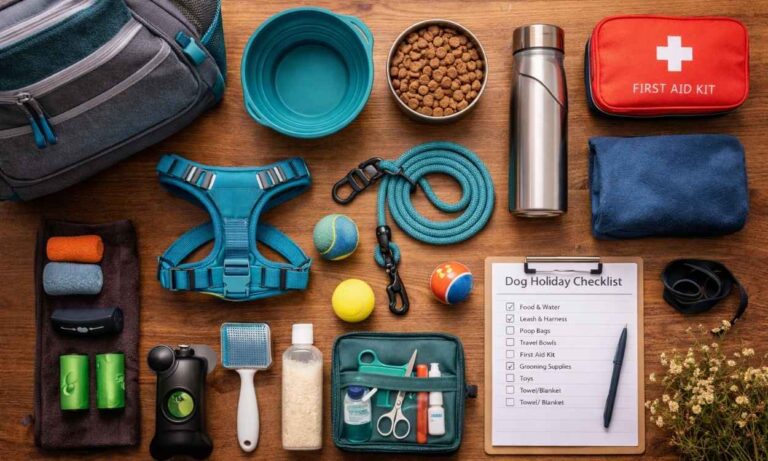
Helpful Gear
Essential:
- Well-fitted harness (more control)
- Standard lead (not extending)
- High-value treats
- Water and bowl
Helpful:
- Yellow "nervous dog" accessories (bandana, lead sleeve)
- Long line for quiet areas
- Treat pouch for quick access
Yellow Signals: Yellow accessories indicate dogs need space. Increasingly recognised. Worth using.
What to Avoid
Problematic:
- Extending/retractable leads (less control)
- Too-long leads in risky areas
- Equipment that restricts quick response
Daily Management
Routine Matters
Establish Pattern:
- Same walk times
- Same routes initially
- Predictable schedule
- Reduce surprise encounters
Exercise Needs
Meeting Needs Safely:
Garden Exercise: Use private garden for play, training, exercise.
Quiet Time Walks: Early morning, late evening.
Mental Stimulation: Sniff walks, training, puzzle feeders reduce physical exercise needs.
Consider: Two quiet walks may be better than one walk with multiple encounters.
Between Walks
At Accommodation:
- Enrichment activities
- Training games
- Rest and relaxation
- Quality time
This Isn't Wasted Time: Mental enrichment and bonding are valuable holiday activities.
If Encounters Happen
Staying Calm
Your Response Matters:
- Stay calm (dogs read you)
- Move away smoothly
- Don't panic
- Support your dog
Don't:
- Shout or punish
- Tighten lead aggressively
- Get frustrated visibly
- Make it worse
Recovery
After Difficult Encounter:
- Move away
- Give dog time to decompress
- Don't continue walking immediately
- Perhaps head back
- Let stress hormones settle
Cortisol Reality: Stress hormones take time to reduce. Don't stack encounters.
Working on Reactivity
Holiday vs Training
A Holiday Isn't Training: Focus on management and enjoyment, not fixing reactivity.
However: Positive experiences can help. Seeing dogs at distance without reactions builds good associations.
Professional Help
If Reactivity Is Severe: Work with a qualified behaviourist at home before expecting travel to improve things.
Recommended:
- ABTC registered behaviourist
- Force-free methods only
- Ongoing support
Realistic Expectations
What's Achievable
Realistic Goals:
- Enjoyable holiday for both of you
- Minimal stressful encounters
- Positive experiences
- Rest and bonding time
- Successful management
Not Realistic:
- Curing reactivity on holiday
- Zero encounters
- Perfect behaviour
- Same experience as non-reactive dogs
Accepting Limitations
It's Okay That:
- You need to avoid popular times
- You can't go everywhere
- Some walks are cut short
- You manage differently
You Still Deserve:
- Holidays with your dog
- Enjoyable experiences
- Rest and relaxation
- Quality time together
Frequently Asked Questions
Can reactive dogs enjoy holidays?
+
Yes, with appropriate planning. Quiet destinations, strategic timing, and good management can enable positive experiences.
What's the best destination for reactive dogs?
+
Remote, quiet locations with plenty of space. Off-season travel and private accommodation with an enclosed garden work best.
Should I muzzle my reactive dog on holiday?
+
If your dog is already muzzle-trained and it helps you feel more relaxed, yes. Never use a muzzle on an untrained dog.
What if we have a bad encounter?
+
Create distance and allow your dog time to decompress. Do not push on immediately. Returning to the accommodation is fine. One bad moment does not ruin the holiday.
Will travel make reactivity worse?
+
Not if it is managed well. Avoid stacking stressful encounters. Positive, well-managed experiences can help.
Should I avoid holidays until reactivity is fixed?
+
Not necessarily. Good management allows holidays now while continuing to work on reactivity at home.
Adventures Are Still Possible
Reactive dogs can enjoy holidays. The destinations may be quieter, the timing more strategic, and the management more conscious, but the adventures, bonding, and enjoyment are still available.
Plan carefully. Manage thoughtfully. Enjoy your time together.
Luke understands that every dog is different and some need more management than others. The principles of thoughtful planning and appropriate expectations apply to all dogs who find certain situations challenging.
5.0
out of 5
20 global ratings
Top reviews
★★★★★5.0
Reactive dog guide gave us hope
Our rescue lurcher Finn is reactive to other dogs and I'd almost given up on holidays. This guide changed everything. The tips about choosing quieter destinations, walking at off-peak times, and giving space to decompress were brilliant. We went to the Yorkshire Dales in November, used the early morning strategy, and Finn was so much calmer.
Helpful
This is exactly why we wrote that guide, Michael. Reactive dogs deserve holidays too. So happy you and Finn finally got that break.
★★★★★5.0
Finally felt understood
Every other guide assumes your dog is sociable and wants to meet other dogs. This one understands that reactive dogs need space and careful management. Our German shepherd Max is dog-reactive and this guide helped us plan a Scottish Borders holiday where he could decompress. First holiday in three years. We both needed it.
Helpful
That feeling of finally being able to take a break is so important for reactive dog owners too. So glad you and Max got that time away.
★★★★★5.0
The early morning strategy works
The suggestion to walk very early before other dogs appear transformed our holiday. Our reactive collie Scout and I were out at 6am every morning in the Peak District - empty paths, no triggers, relaxed dog. By afternoon we'd stay in the cottage garden. This structured approach from the guide made everything manageable.
Helpful
6am walks with empty paths - that's the reactive dog dream! So glad Scout got to enjoy the Peak District stress-free.
★★★★★5.0
Changed how we think about holidays
This guide changed our whole approach. Instead of trying to make our reactive rescue greyhound Willow fit into a normal holiday, we designed the holiday around her needs. Quiet cottage, isolated walks, no pressure to visit busy places. She actually relaxed by day three - something I'd never seen. Worth every adjustment.
Helpful
Willow relaxing by day three is huge progress! Designing holidays around the dog's needs rather than forcing it is the key. Beautiful.
★★★★★5.0
Remote cottage was the answer
The emphasis on finding remote accommodation was spot on. We found an isolated cottage in Wales for our reactive terrier mix Buster. No neighbours, no passing dogs, private garden. He decompressed completely by day two. The guide's advice about prioritising seclusion over amenities was exactly right for us.
Helpful
Seclusion is everything for some reactive dogs! Buster decompressing in Wales sounds perfect. That private space makes all the difference.
★★★★★5.0
Gave us confidence to try again
We'd had a disastrous holiday two years ago when our reactive spaniel Milo had a meltdown. This guide gave us confidence to try again with better planning. Chose Northumberland in November, scouted quiet walking routes, kept sessions short. Completely different experience. Milo actually enjoyed himself. We're so grateful.
Helpful
Coming back from a bad experience takes courage. So proud of you for trying again with better strategies. Milo deserved that success!
★★★★★5.0
The escape route planning was clever
Never thought about planning escape routes before reading this. Now we always know where we can duck off a path if we see another dog coming. Used this on every walk in the Lake District with our reactive lab mix Poppy. Reduced our stress massively knowing we always had an out.
Helpful
Escape routes are game-changers for reactive dog walks! That reduced stress benefits both you and Poppy. Smart planning.
★★★★★5.0
Off-season is the key
This guide confirmed what we suspected - off-season travel is essential for reactive dogs. We took our dog-reactive rottweiler Bruno to Cornwall in February. Empty beaches, hardly any other dogs, he could actually relax and enjoy himself. The emphasis on avoiding peak times throughout was so helpful.
Helpful
February Cornwall for a reactive rottie - smart choice! Empty beaches are the dream. Bruno deserved that space to just be a dog.
★★★★☆4.0
Really helpful, wanted more specific locations
The strategies and mindset advice in this guide are excellent - really gets reactive dogs. The off-peak timing, escape routes, and decompression time suggestions all worked for our reactive shepherd cross. Four stars only because I'd have loved specific destination recommendations known for being quiet. But the approach advice is brilliant.
Helpful
Great feedback! We could definitely add specific quiet destination suggestions. Glad the strategies helped your shepherd cross.
★★★★★5.0
Hiring enclosed fields was genius
The tip about hiring enclosed fields for safe off-lead time was genius. Our reactive rescue Storm can't go off-lead on normal walks but needs to run. Found a private hire field in Devon through this guide's suggestion and she ran until she was exhausted. Came back to the cottage and slept for hours. Game-changer.
Helpful
Those private hire fields are incredible for reactive dogs! Storm getting to properly run must have been wonderful to watch.
★★★★★5.0
Made us feel less alone
Living with a reactive dog can be isolating. This guide made us feel less alone - someone else understands the constant vigilance, the planning, the stress of seeing another dog approach. Our reactive collie Skye had her first successful holiday thanks to this. The validation alone was worth reading it.
Helpful
You're absolutely not alone. So many people navigate this daily. Thrilled that Skye had a successful break - you both deserved it.
★★★★★5.0
Accommodation questions to ask were helpful
The list of questions to ask accommodation owners was really helpful. Things like nearest neighbours with dogs, busy paths nearby, garden visibility to passing dogs. Found a perfect isolated cottage in Scotland by asking these questions. Our reactive boy Jake had no triggers all week. Preparation is everything.
Helpful
Those questions save so much potential stress! An isolated Scottish cottage sounds ideal for Jake. Well done on the thorough research.
★★★★★5.0
The decompression day advice was key
The suggestion to allow a full decompression day on arrival was key for us. Our reactive terrier Alfie usually takes time to settle in new places. We did nothing on day one - just let him explore the cottage and garden. By day two he was noticeably calmer and we could start gentle walks. This advice alone was worth the read.
Helpful
That decompression day makes such a difference! Alfie getting to settle at his own pace before facing the world is so important.
★★★★★5.0
Finally a holiday we all enjoyed
First holiday in years where I actually relaxed instead of constantly scanning for other dogs. The strategies in this guide - early walks, quiet locations, escape routes, remote accommodation - meant our reactive spaniel Barney was calm and I wasn't stressed. That's what holidays should be. Thank you.
Helpful
Owner stress travels down the lead - so important that you got to relax too! Glad you and Barney both got a proper break.
★★★★★5.0
Training during holiday section was useful
Appreciated that this guide doesn't expect reactive dogs to be perfect. The section on maintaining training during holidays while not putting too much pressure on was realistic. We kept up Luna's counter-conditioning at a distance during quiet walks. She actually made progress! But no pressure if she hadn't.
Helpful
That balanced approach is so important - holidays can be training opportunities but shouldn't be bootcamps. Luna making progress is a bonus!
★★★★★5.0
The 'B walks' concept was brilliant
The concept of 'B walks' - boring, predictable routes with low trigger potential - was brilliant. We mapped out several boring field walks near our Suffolk cottage before even arriving. Our reactive whippet Jasper knew what to expect and stayed under threshold all week. Boring has never been so good!
Helpful
Boring walks for the win! Predictability is so calming for reactive dogs. Jasper's threshold management sounds excellent.
★★★★★5.0
Partner finally understands the planning needed
Shared this guide with my partner who didn't understand why our reactive dog needed so much holiday planning. Now he gets it. We planned our Norfolk trip together using these strategies and it was our best holiday ever. Our reactive rescue Bella was calm and my partner finally saw that good planning equals good outcomes.
Helpful
Getting everyone on the same page is so important! Glad your partner understands now and Bella benefited from the team effort.
★★★★★5.0
Driving route tips for reactive dogs
The section on managing the journey was helpful. Stopping at quiet spots rather than busy service stations, walking in quiet corners, keeping the dog calm throughout. Our reactive shepherd Duke arrived at our Peak District cottage relaxed instead of already stressed. The journey sets the tone for the whole trip.
Helpful
Journey management is so often overlooked! Duke arriving relaxed rather than triggered makes everything easier. Smart approach.
★★★★★5.0
Nighttime walks opened up a new world
The suggestion about nighttime or dusk walks was something we'd never tried. Our reactive girl Rosie is much calmer when she can't see as far. We did evening walks in the Yorkshire Dales and she was brilliant - couldn't see distant dogs so didn't react. Added a whole new dimension to our holiday.
Helpful
Nighttime walks are a reactive dog secret! Reduced visibility means reduced triggers. Rosie discovering calm evening walks is wonderful.
★★★★★5.0
Emergency management advice gave us confidence
The section on what to do if you have an unexpected trigger encounter gave us confidence. Knowing how to handle it, how to help the dog decompress afterwards, when to call it a day. Our reactive dog Max had one incident in Wales but we managed it using these tips and didn't let it ruin the trip.
Helpful
Incidents happen even with the best planning. Managing it well and not letting it spiral is the skill. Well done with Max!


⚠️ Comments Currently Disabled
We've had to temporarily disable our comment section due to a high volume of spam. We apologise for any inconvenience this may cause to our lovely readers!
If you'd like to share your thoughts, experiences, or feedback, please send us an email directly at info@thedogholiday.co.uk and we'll be happy to add your comment manually.
Thank you for your understanding! 🐾
Leave a Comment