
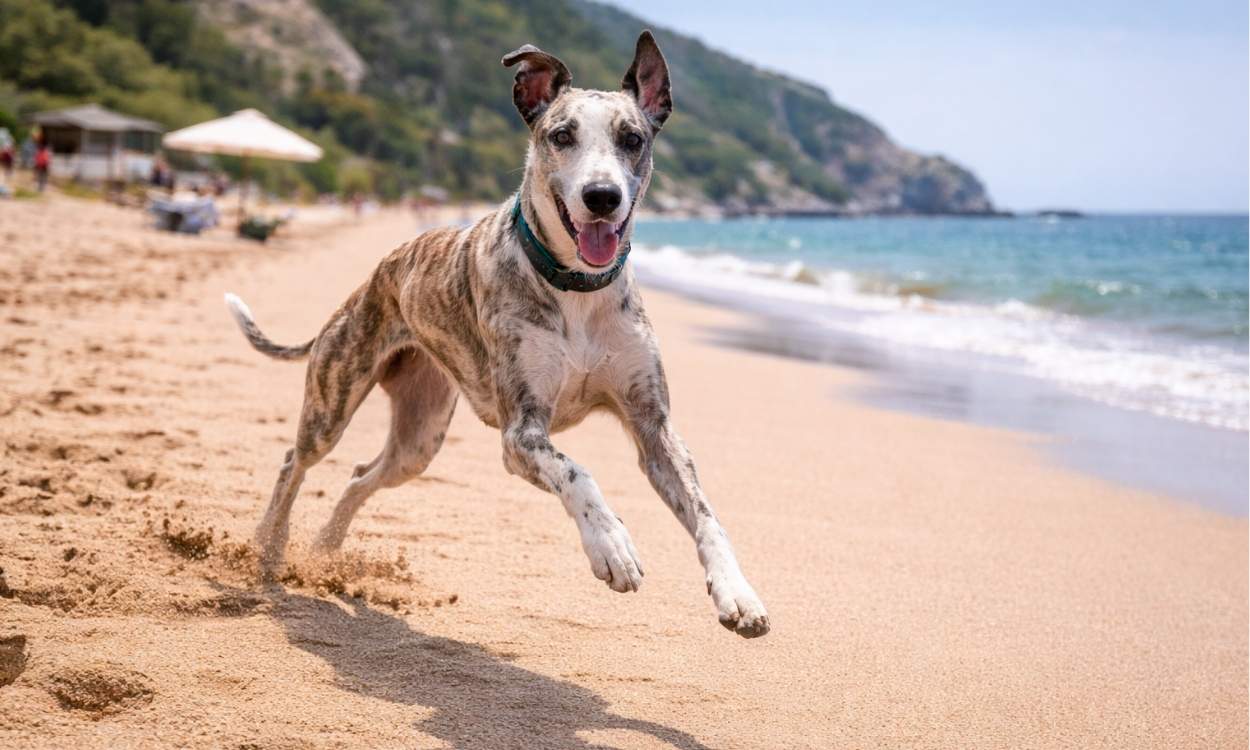
Whippets and Greyhounds are elegant travel companions who combine bursts of speed with remarkable calm. These sighthounds adapt well to holidays, requiring less exercise than many imagine but needing particular consideration for their unique characteristics - from prey drive to temperature sensitivity. This guide covers both breeds, as their travel needs are similar.
Understanding Sighthound Travel Needs
Breed Characteristics
What Makes Them Great Travellers:
- Generally calm and gentle
- Lower exercise needs than expected
- Quiet indoors
- Adaptable
- Travel well in vehicles
- Good in accommodation
- Love comfort
Important Considerations:
- Prey drive (squirrels, rabbits, cats)
- Recall can be challenging
- Thin coats (temperature sensitive)
- Thin skin (injury prone)
- Need comfortable bedding
- Can be anxious in new situations
Whippet vs Greyhound
Whippets:
- Smaller (manageable size)
- Often slightly more energetic
- Generally good recall possible
- Popular family dogs
Greyhounds:
- Larger
- Often ex-racers
- May have trauma history
- Generally very gentle
- Lower exercise needs often
Both travel well with appropriate planning.
Best Destinations
Ideal Sighthound Destinations
Wide Open Spaces: Sighthounds need safe running space. Beaches are ideal.
The vast, empty beaches of Northumberland offer perfect sighthound territory - space to run without obstacles or traffic. Similarly, Norfolk's year-round beaches provide safe galloping ground.
Enclosed Running Options: If recall is unreliable, enclosed dog fields or secure gardens become essential.
Gentle Terrain: Sighthounds aren't built for rough ground. Their thin skin and delicate feet suit softer terrain.
Norfolk's flat, gentle landscape works well, as does the Suffolk Coast and lowland Yorkshire.
Destinations to Consider Carefully
Livestock Areas: Prey drive can be triggered by sheep. Extra vigilance needed in farming country.
The Lake District, Yorkshire Dales, and Peak District require careful management around livestock.
Rocky/Rough Terrain: Thin skin and delicate feet mean rocky areas like Dartmoor or Snowdonia need careful route selection.
Wildlife-Rich Areas: Rabbits, deer, and other prey can trigger instincts. Always keep under control.
Exercise Needs
The Reality
Often Misunderstood: Sighthounds need less exercise than many expect. They're sprinters, not marathon runners.
Typical Needs:
- 30-60 minutes daily
- Short, intense bursts of running
- Followed by extensive rest
- Two shorter walks often ideal
On Holiday: Don't over-exercise. Sighthounds tire faster than they show and then need long recovery.
Activity Ideas
Perfect Sighthound Activities:
Beach Running: Safe, soft surface. Space to sprint. Excellent for sighthounds. Our Beach Holidays guide covers the best options.
Enclosed Field Running: Secure fields for hire provide safe sprinting. Research local options.
Gentle Walks: Countryside strolls at moderate pace. Not marathon hikes.
Sniff Walks: Let them explore at their pace. Mentally enriching.
Activities to Manage:
Off-Lead in Open Areas: Only if recall is solid. Risk of chasing and not returning.
Hiking: Shorter, gentler routes only. Not built for all-day mountain walks.
The Recall Challenge
Understanding Prey Drive
The Issue: Sighthounds were bred to chase. When triggered, hearing and response shut down.
Triggers:
- Rabbits
- Squirrels
- Cats
- Small dogs running
- Deer
- Birds
Management Strategies
Safe Off-Lead Options:
- Empty beaches (no livestock, minimal wildlife)
- Enclosed dog fields
- Secure gardens
- Areas you know are safe
When to Keep On-Lead:
- Near livestock
- Unknown areas
- Wildlife-rich zones
- Anywhere you're uncertain
Long Line: Useful for controlled freedom. 10-15 metre line allows running while maintaining connection.
Training
Possible But Challenging: Some sighthound owners achieve reliable recall. Many don't. Know your individual dog.
Work On:
- Solid "stop" or emergency command
- Recall with high-value rewards
- Management as backup
For dogs with recall challenges, see our guide on travelling with reactive dogs which covers similar management approaches.
Temperature Sensitivity
The Thin Coat Problem
Sighthounds Get Cold: Thin coats and low body fat mean they feel cold quickly.
When to Protect:
- Cool/cold weather
- Wind
- Wet conditions
- Evening walks
Coats and Protection
Essential: Waterproof coat for wet weather. Fleece for cold. Many sighthound owners carry coats year-round.
See our Winter guide for cold-weather management and pack coats even for autumn trips.
Heat Sensitivity
Also a Problem: Can also overheat. Don't exercise in hot weather. See our Summer guide.
Accommodation
What Works
Essential:
- Comfortable bedding (they need cushioning)
- Warm accommodation
- Space to stretch out
- Quiet environment
Ideal Features:
- Enclosed garden (safe running)
- Soft flooring areas
- Cosy spaces
- Ground floor preferred
When booking accommodation, mention your sighthound. Some owners don't realise how gentle they are.
Sighthound Comfort
They Need:
- Soft bedding (essential for thin-skinned dogs)
- Warmth
- Quiet rest space
- Comfortable surfaces
Pack thick bedding. Hard floors aren't comfortable for sighthounds. Our packing checklist should include extra bedding for these breeds.
Travel
Car Journeys
Usually Excellent: Sighthounds often travel very well. Curl up and sleep.
Tips:
- Comfortable bedding in car
- Temperature control
- Space to stretch
- Secure properly (crate, guard, or harness)
See our Travelling with Dogs guide.
Train Travel
Can Work Well: Generally calm on trains. Good size for train travel (Whippets especially).
See our Train Travel guide.
Social Aspects
With Other Dogs
Generally Good: Usually gentle with other dogs.
Watch For:
- Small fluffy dogs triggering chase
- Running dogs triggering chase
- Rough play (thin skin injuries)
With People
Usually Excellent: Generally gentle and sociable. Good in pubs and cafes.
In Accommodation
Naturally Clean: Often very clean dogs. Minimal smell. Good house guests.
Ex-Racing Greyhounds
Special Considerations
Adoption Background: Many Greyhounds are ex-racers. May have:
- Limited life experience
- Fear of certain situations
- Unknown histories
- Need for patience
Travel Readiness: Build up gradually. New experiences may be overwhelming. See our anxious dogs guide.
Muzzle Requirement
Some Rescues Require Muzzles: Check your adoption agreement. Some require muzzling in certain situations.
Frequently Asked Questions
How much exercise do Whippets/Greyhounds need on holiday?
Less than you'd think. 30-60 minutes with running opportunities. Sprinters, not marathon runners.
Can Whippets/Greyhounds be off-lead?
Depends on individual dog and location. Many have unreliable recall when prey drive triggers. Safe spaces essential.
Best destination for sighthounds?
Big beaches with few distractions. Norfolk and Northumberland ideal. Enclosed gardens at accommodation.
Do they need coats on holiday?
Often yes. Pack waterproof and fleece. They feel cold quickly.
Are they good travellers?
Generally excellent. Calm in cars. Sleep during journeys. Settle in accommodation.
What about ex-racers?
Build experiences gradually. May be nervous in new situations. Patient approach needed.
Elegant Adventures Await
Whippets and Greyhounds are wonderful travel companions - calmer than many breeds, adaptable, and content with less exercise than expected. Manage the prey drive, protect from cold, provide soft bedding, and enjoy their graceful companionship on every adventure.
Luke appreciates the gentle elegance of sighthounds. Their calm temperament and adaptability make them rewarding travel companions for owners who understand their unique needs.

⚠️ Comments Currently Disabled
We've had to temporarily disable our comment section due to a high volume of spam. We apologise for any inconvenience this may cause to our lovely readers!
If you'd like to share your thoughts, experiences, or feedback, please send us an email directly at info@thedogholiday.co.uk and we'll be happy to add your comment manually.
Thank you for your understanding! 🐾
Leave a Comment