
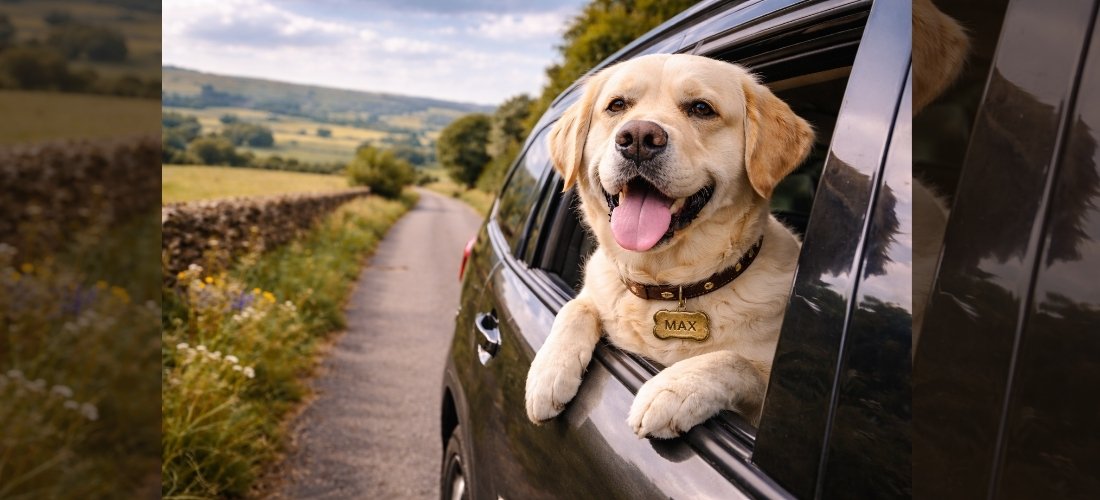
Getting from A to B with your dog should be part of the adventure, not a source of stress. Whether you're heading to the Lake District for a walking holiday, catching the sleeper train to Scotland, or planning a ferry trip to the Isle of Wight, understanding the rules and planning ahead makes all the difference.
I've travelled thousands of miles across Britain with Charlie, Buster, Ember, Simba, Max and Molly. We've driven through snowstorms to Highland lodges, caught trains along the West Coast Main Line, and sailed to Scottish islands on CalMac ferries. Along the way, I've learned what works, what doesn't, and how to keep six dogs comfortable on every type of journey.
This guide covers everything you need to know about travelling with dogs in the UK, from the legal requirements for car travel to practical tips for stress-free train journeys. When you're ready to plan your trip, our dog-friendly holidays guide will help you find the perfect destination.
Car Travel with Dogs
For most dog owners, the car remains the primary mode of transport. It offers flexibility, space for multiple dogs, and the freedom to stop whenever you need. But there are legal requirements you must follow.
The Law: Highway Code Rule 57
The Highway Code is clear about travelling with dogs in vehicles. Rule 57 states:
"When in a vehicle make sure dogs or other animals are suitably restrained so they cannot distract you while you are driving or injure you, or themselves, if you stop quickly."
This isn't just guidance. While the Highway Code itself doesn't carry direct penalties, failing to restrain your dog properly can result in charges of driving without due care and attention. The consequences can be severe:
- Fines up to £5,000
- Up to nine penalty points
- Potential driving ban
- Invalidated car insurance
A third of UK drivers with dogs are unaware of Rule 57, according to research by Auto Trader. Don't be one of them.
Restraint Options
The Highway Code specifies acceptable restraint methods:
Seat Belt Harness A harness that clips into the seat belt buckle, securing your dog to the rear seats. The harness should fit properly around your dog's chest (never the collar) and allow them to sit or lie down comfortably without being able to reach the front seats.
Dog Crate or Cage A secure crate in the boot, ideally tethered to lashing points. Crates should be large enough for your dog to stand, turn around and lie down comfortably. Crash-tested crates offer the highest safety standards and are what police use for their dogs.
Dog Guard A barrier between the rear seats and boot, keeping dogs confined to the boot area. Dogs should still be secured with a harness or crate within this space for maximum safety.
Pet Carrier For smaller dogs, a secure carrier on the rear seats or boot floor. Never place carriers in the front seat due to airbag risks.
Safety Tips for Car Travel
Before the Journey
- Don't feed your dog for at least two hours before travelling to reduce motion sickness
- Take your dog for a good walk to burn energy and encourage toilet breaks
- Ensure your dog is microchipped and wearing an ID tag with current contact details
- Check the weather forecast and plan for temperature management
During the Journey
- Never let your dog ride unrestrained, even on short trips
- Keep windows partially open for ventilation, but not wide enough for dogs to put their heads out (debris can injure eyes)
- Stop every two to three hours for toilet breaks, water and leg stretches
- Carry fresh water and a portable bowl
- Use sun shades on windows during hot weather
- Never leave dogs in parked cars, even for a few minutes. Temperatures can rise to dangerous levels within minutes
For Anxious Travellers Some dogs find car travel stressful. Consider:
- Building up to longer journeys with short, positive trips
- Using calming products (sprays, diffusers, supplements)
- Covering crates to create a den-like environment
- Playing calming music designed for dogs
- Consulting your vet about anti-nausea or anti-anxiety medication for particularly difficult travellers
Best Cars for Dogs
While you can travel with dogs in almost any car, some features make life easier:
- Low boot lips for easy access (especially important for older or larger dogs)
- Flat boot floors without awkward wheel arches
- Easy-clean interior materials
- Good ventilation and air conditioning
- Split rear seats for flexibility
- Rear privacy glass to keep the boot cooler
Estate cars and SUVs typically offer the best combination of space and practicality for dog owners. Popular choices include the Skoda Superb Estate, Volvo V60, Land Rover Discovery and Ford Focus Estate. For multiple large dogs, estates and larger SUVs provide necessary boot space while keeping dogs safely contained.
Motion Sickness
Some dogs suffer from travel sickness, which can make journeys stressful for everyone. Signs include:
- Excessive drooling
- Whining or restlessness
- Vomiting
- Lethargy
If your dog suffers from motion sickness:
Short-term solutions:
- Don't feed for 2 to 3 hours before travel
- Keep the car cool and well-ventilated
- Take frequent breaks
- Let your dog see out of the window (some dogs feel worse if they can't see)
- Drive smoothly, avoiding harsh acceleration and braking
Longer-term approaches:
- Gradually desensitise your dog to car travel with short, positive trips
- Use a crate covered with a sheet for nervous travellers
- Try calming products (Adaptil spray, Pet Remedy, calming supplements)
- Consult your vet about anti-nausea medication for persistent cases
Many dogs grow out of motion sickness as they become more accustomed to travel. Patience and positive associations help enormously.
Train Travel with Dogs
Trains offer a genuinely relaxing way to travel with dogs, avoiding motorway stress while watching the countryside roll past. The rules across the UK rail network are straightforward and dog-friendly.
National Rail Rules
Under National Rail Conditions of Travel:
- Up to two dogs travel free per passenger
- Dogs must be kept on a lead throughout the journey (or in a pet carrier)
- Dogs are not allowed on seats
- Dogs are not permitted in restaurant or buffet cars (except assistance dogs)
- Dogs are welcome in both Standard and First Class
- Train staff reserve the right to refuse entry to dogs causing nuisance or disturbance
These rules apply across all National Rail train operators, making planning straightforward.
Train Operators and Exceptions
Most major train operators follow the standard National Rail rules, making planning straightforward. Here are the key operators and any specific notes:
LNER (London to Scotland/Yorkshire): Standard rules apply. Dogs welcome in both Standard and First Class. First Class passengers can bring dogs into the lounge car.
Avanti West Coast (London to Birmingham/Manchester/Glasgow): Standard rules apply. Dogs welcome in First Class with at-seat service meaning you don't need to visit the buffet.
Great Western Railway (London to West/Wales): Standard rules apply. First Class passengers can bring dogs into lounge areas. If you have more than two dogs, additional dogs cost half the adult fare up to £5 single or £10 return.
CrossCountry (Cross-country routes): Standard rules apply throughout their network connecting Scotland, the Midlands, Southwest and South Wales.
TransPennine Express (North of England): Standard rules apply across their northern network.
ScotRail (Scotland): Standard rules apply throughout Scotland's rail network. Excellent access to the Highlands, Borders and Scottish islands via connecting ferries.
Northern (North of England): Standard rules apply on local and regional services.
Southern, Southeastern, South Western Railway (South of England): Standard rules apply on commuter and regional services. Pet carriers should not exceed 85 x 60 x 60cm.
Greater Anglia (East of England): Standard rules apply. Additional dogs beyond two cost half the adult fare, up to £5 single or £10 return.
A few exceptions to note:
Eurostar: Does not allow pet dogs (only assistance dogs). This is the main barrier for car-free travel to Europe.
Manchester Metrolink: Dogs not allowed.
Glasgow Subway: Dogs must travel in a secure container.
Northern Ireland Railway: Dogs not permitted before 9:30am.
Caledonian Sleeper: Dogs welcome with advance booking. A £30 cleaning charge per room applies for pets in sleeper cabins. Worth every penny for the experience of arriving in the Highlands with your dog after an overnight journey from London.
Tips for Stress-Free Train Travel
Before You Travel
- Check for any engineering works or rail replacement buses (not all coaches accept dogs)
- Avoid peak hours when trains are crowded
- Take your dog for a good walk and toilet break before departing
- Bring water, treats, and a mat or blanket for your dog to lie on
Booking and Planning
- While you don't need to book a space for your dog, consider reserving seats near the doors for easy exits
- First Class often offers more space and is typically quieter
- Check the station layout for step-free access if travelling with crates or elderly dogs
On the Platform
- Keep your dog on a short lead near platform edges
- Be aware of the gap between train and platform when boarding
- Carry smaller dogs if possible when boarding
- Use lifts rather than escalators with dogs
During the Journey
- Find a quiet spot away from the aisle
- Lay down a mat for your dog to settle on
- Bring treats to reward calm behaviour
- Keep leads short to avoid tripping other passengers
- Be prepared to move if your dog becomes unsettled
Sleeper Trains
Both the Caledonian Sleeper (London to Scotland) and Night Riviera (London to Cornwall) accept dogs, making them excellent options for longer journeys. Dogs travel in your cabin with you, allowing evening departure and morning arrival with your dog by your side. Book well ahead and inform the operator you're travelling with a pet.
Ferry Travel with Dogs
Ferries open up islands, coastal destinations and European adventures. Most UK ferry services welcome dogs, though policies vary considerably between operators and routes.
Domestic UK Ferries
Isle of Wight Reaching the Isle of Wight with dogs is straightforward, with two main operators offering excellent facilities.
Wightlink operates from Portsmouth to Fishbourne (car ferry) and from Portsmouth to Ryde (foot passenger catamaran). Dogs travel free and can stay with you in designated areas throughout the crossing. The Fishbourne route takes about 45 minutes while the Ryde catamaran takes just 22 minutes.
Red Funnel sails from Southampton to East Cowes (car ferry) and offers a Red Jet passenger service to West Cowes. Dogs are welcome on both services at no extra charge. The car ferry takes about an hour while the Red Jet takes approximately 25 minutes.
Both operators provide water bowls and designated pet areas. The Isle of Wight itself is wonderfully dog-friendly with over 500 miles of footpaths, year-round beaches and welcoming pubs throughout.
Scottish Islands CalMac Ferries serve the majority of Scotland's west coast islands and provide excellent facilities for dog owners. Routes cover popular destinations including Skye, Mull, Islay, Arran, Lewis, Harris and the Outer Hebrides.
Dogs travel free on CalMac services. They can access outdoor deck areas throughout the journey and many routes have designated indoor pet-friendly lounges. On longer crossings, pet-friendly cabins are available for booking. Staff are consistently welcoming, and the outdoor deck areas provide stunning views of Scotland's coastline and islands.
Popular routes for dog owners include:
- Oban to Mull (45 minutes)
- Mallaig to Skye (30 minutes, though the bridge is now more common)
- Ardrossan to Arran (55 minutes)
- Ullapool to Stornoway (2 hours 45 minutes)
- Uig to Harris/North Uist (1 hour 40 minutes)
Northlink Ferries connect mainland Scotland with Orkney and Shetland. The overnight crossing from Aberdeen to Lerwick (Shetland) takes approximately 12 hours, while Scrabster to Stromness (Orkney) takes about 90 minutes. Pet-friendly cabins are available on overnight routes, allowing dogs to stay with you rather than in kennels. Outdoor exercise areas on deck make longer crossings more comfortable.
Isles of Scilly The Scillonian III passenger ferry sails from Penzance to St Mary's between March and November. The crossing takes approximately 2 hours 45 minutes. Dogs are welcome on the outdoor deck areas and in designated indoor spaces. The islands themselves are incredibly dog-friendly with beautiful beaches and walking trails.
Isle of Man Steam Packet operates ferries from Liverpool and Heysham to Douglas. Crossings take between 2 hours 45 minutes (fast craft) and 4 hours (conventional ferry). Dogs are welcome in designated pet lounges and on outside decks. Pet-friendly cabins are available on some services.
Channel Crossings
If you're heading to France or beyond, several options exist:
Eurotunnel (Le Shuttle) Dogs remain in your vehicle throughout the 35-minute crossing. The simplest option for car travellers heading to France. Dogs must stay in the car, but the journey is short enough that this rarely causes issues.
P&O Ferries (Dover to Calais) Dogs must remain in vehicles for the crossing. No access to pet deck or passenger areas with dogs.
DFDS (Dover to Dunkirk/Calais) Similar rules to P&O. Dogs stay in vehicles.
Brittany Ferries Offers pet-friendly cabins on longer routes to France and Spain. Dogs can stay with you in the cabin rather than in kennels or cars. Excellent for longer crossings to Santander, Bilbao or Brittany.
Stena Line (Harwich to Hook of Holland) One of the most dog-friendly options for foot passengers. Pet-friendly cabins available where dogs stay with you. Dogs can exercise on the pet deck. A great option for car-free travel to the Netherlands and beyond.
P&O (Hull to Rotterdam) Pet-friendly cabins recently added. Overnight sailing with dogs in your cabin rather than kennels.
DFDS (Newcastle to Amsterdam) Pet-friendly cabins available on overnight sailings. Dogs can stay with you rather than in kennels.
Ferry Tips
- Book pet-friendly cabins well in advance as they're limited
- Exercise your dog thoroughly before boarding
- Bring familiar bedding for cabin stays
- Check specific ferry policies as they vary significantly
- For car travel, ensure you have water and ventilation sorted for the crossing
- Some ferries have designated pet exercise areas on deck
Flying with Dogs
Flying with dogs in the UK is complicated, primarily due to strict government regulations designed to prevent rabies entering the country.
The Key Rule
Pets cannot fly into the UK in the cabin or as checked baggage. They must travel as cargo.
This is UK government policy, not airline choice. Only registered assistance dogs are exempt. This rule applies to all flights arriving in the UK, regardless of airline.
Flying Out of the UK
Flying out of the UK with your dog in the cabin is possible on some airlines:
Airlines Allowing Cabin Travel from UK:
- Aegean Airlines (to Greece, except from Gatwick)
- KLM (to Amsterdam and beyond)
- Air France (to Paris and beyond)
- Lufthansa (to Germany)
- LOT Polish Airlines (to Poland)
- KM Malta Airlines (to Malta, from Heathrow only)
Weight limits typically apply (usually 8kg including carrier), and carriers must fit under the seat in front. Book well in advance as pet spaces are limited.
Domestic Flights
Loganair is the only UK airline allowing pets as checked baggage on domestic routes within the UK, Channel Islands and Isle of Man. A £50 one-way charge applies, and pre-approval is required.
Isles of Scilly Travel operates small planes between Land's End and the Isles of Scilly with a built-in dog crate, allowing dogs to sit beside their owners on the short flight.
Cargo Travel
For most international travel to or from the UK, dogs must fly as cargo (also called manifest cargo). This involves:
- Booking through specialist pet transport companies
- Appropriate crate meeting IATA Live Animal Regulations
- Veterinary health certificates
- Considerable expense (often £1,000+)
Companies like PetAir UK, IAG Cargo and specialist pet relocation services handle this process.
The Practical Reality
For most UK dog owners, flying with dogs isn't practical for short breaks. The alternatives are better:
- Drive and take ferries for European travel (Eurotunnel, Brittany Ferries, Stena Line)
- Explore the UK where dogs travel easily by car, train and domestic ferry
- If flying is essential, consider pet-taxi services through Eurotunnel or flying to Paris/Amsterdam and travelling to the UK by ferry or train
Buses and Coaches
Bus travel with dogs is less straightforward than trains.
Local Buses
Policies vary by operator and often by driver. General guidance:
- Small dogs in carriers are usually accepted
- Larger dogs on leads may be accepted at driver's discretion
- Peak hours may see stricter enforcement
- Be prepared for potential refusal
National Express
Does not allow dogs except registered assistance dogs. This limits coach options for longer UK journeys.
Megabus
Similarly restrictive. Assistance dogs only.
Local and Rural Services
Rural bus services often have more relaxed attitudes, particularly in tourist areas where dog owners are common passengers. Services in the Lake District, Scottish Highlands and coastal areas frequently welcome dogs.
Public Transport in Cities
London
London Underground: Dogs allowed free of charge. Must be carried on escalators or use lifts. Avoid peak hours with anxious dogs.
London Buses: Dogs welcome at driver's discretion. Small dogs preferred in carriers.
DLR: Dogs allowed.
Overground: Dogs allowed under National Rail conditions.
Elizabeth Line: Dogs allowed.
River Buses: Dogs generally welcome on outdoor decks.
Other Cities
Most urban transport systems accept dogs with some restrictions:
Edinburgh: Buses and trams welcome dogs at driver/operator discretion.
Glasgow: Subway requires dogs in containers. Buses vary by operator.
Manchester: Metrolink does not allow dogs. Buses vary.
Birmingham: Metro and buses generally accept dogs.
Tips for Urban Travel
- Travel outside peak hours
- Keep dogs on short leads
- Stand rather than sitting in priority seating areas
- Be prepared to wait for a less crowded service
- Have a backup plan if refused
Taxis and Private Hire
Taxi policies regarding dogs vary significantly:
- Black cabs must accept assistance dogs by law but can refuse other dogs
- Private hire (Uber, Bolt, local firms) is at driver discretion
- Pet-specific taxi services exist in many areas
- Book in advance and confirm dog acceptance
- Bring a blanket to protect seats
- Tip well for dog-friendly drivers
Some areas have dedicated pet taxi services for airport transfers, vet visits and general transport.
Planning Your Journey
Pre-Trip Checklist
Documentation:
- Microchip details up to date
- ID tag with current contact information
- Vaccination records (especially for ferry travel abroad)
- Pet passport or Animal Health Certificate for European travel
Health:
- Check your dog is fit for travel
- Motion sickness medication if needed
- Any regular medications packed
- Travel insurance covering your pet
Comfort:
- Familiar bedding or blanket
- Water bottle and collapsible bowl
- Treats for rewards
- Poop bags
- Towel for wet or muddy dogs
- Any calming products that help your dog
Timing Considerations
- Allow extra time at every stage
- Plan toilet breaks into journeys
- Avoid travelling during extreme heat
- Consider your dog's routine (feeding times, walks)
- Build in rest days for longer trips
Book Your Stay
Once you've planned your journey, you'll need somewhere dog-friendly to stay. We've gathered the UK's best dog-friendly accommodation on our booking page, from cosy cottages to luxury lodges.
Book Your Dog-Friendly Accommodation
Find properties with enclosed gardens, walking distance to beaches, and genuine welcomes for dogs of all sizes.
FAQs
Do dogs have to be restrained in cars UK?
+Can I take my dog on the train for free UK?
+Are dogs allowed on UK buses?
+Can I fly with my dog in the UK?
+Do I need documents to take my dog on a ferry?
+Can dogs go on the London Underground?
+How long can I leave my dog in the car?
+What's the best way to travel with a dog in the UK?
+Final Thoughts
Travelling with dogs in the UK has never been easier. Trains welcome them free of charge, ferries offer pet-friendly cabins, and with proper restraint, car journeys are safe for everyone. The key is understanding the rules, planning ahead, and considering your dog's comfort at every stage.
Charlie, Buster, Ember, Simba, Max and Molly have accompanied me on countless adventures across Britain. From the Highlands to Cornwall, the Lake District to the Norfolk coast, we've explored together by car, train and ferry. Every journey has been part of the adventure, creating memories that wouldn't exist if they'd been left behind.
Your dog wants to go with you. With the right preparation, they can.
Here's to many happy miles together.
Charlie, Buster, Ember, Simba, Max, Molly and Luke
Continue Planning Your Trip
Now you know how to get there, it's time to plan what to pack. Our dog travel essentials guide covers everything from car harnesses to first aid kits. For destination inspiration, explore our regional guides covering the Lake District, Scotland, Yorkshire, Cornwall, Wales and Devon.
If you're travelling with a specific breed, our breed guides offer tailored advice for German Shepherds, Golden Retrievers, Labradors and French Bulldogs.
For accommodation, browse our guides to dog-friendly cottages, dog-friendly lodges, dog-friendly hotels and dog-friendly glamping.
Travel rules and operator policies change regularly. Always verify current requirements with transport operators before travelling. This guide provides general information and should not replace checking specific policies for your journey.
🐕 Explore More
- Travelling with a Husky
- Travelling with a Golden Retriever
- Travelling with a Border Collie
- Travelling with a Springer Spaniel
- Travelling with a Dachshund
- Travelling with a Whippet or Greyhound
- Travelling with a Jack Russell Terrier
- Travelling with a Miniature Schnauzer
- Travelling with Puppies
- Travelling with Senior Dogs
- Travelling with Multiple Dogs
- Travelling with Reactive Dogs
- Train Travel with Dogs UK
- Leaving Dogs Alone on Holiday
- Returning Home After a Dog Holiday
- Emergency Vet Guide for Dog Holidays
- Photography Tips for Dog Holidays
- Planning Your First Dog Holiday: Milestone Moments Guide
- Ultimate Dog Holiday Checklist

⚠️ Comments Currently Disabled
We've had to temporarily disable our comment section due to a high volume of spam. We apologise for any inconvenience this may cause to our lovely readers!
If you'd like to share your thoughts, experiences, or feedback, please send us an email directly at info@thedogholiday.co.uk and we'll be happy to add your comment manually.
Thank you for your understanding! 🐾
Leave a Comment